
The quadratic function, or second-degree polynomial, stands as a cornerstone in the mathematical landscape and extends its influence profoundly into the practical realms of science, engineering, economics, and beyond. Its fundamental form, expressed as y = ax² + bx + c, encapsulates a broad spectrum of phenomena characterized by curvature and symmetry. The versatility of quadratic functions emerges from their inherent properties, such as the parabola shape, the vertex for optimization, and the roots for solving equations, which collectively underpin numerous real-world applications. Recognized for their elegance and utility, quadratic functions serve as crucial tools in modeling, analysis, and problem-solving across diverse disciplines. This comprehensive exploration aims to elucidate the extensive role of quadratic functions in applied sciences and everyday life, emphasizing their importance and demonstrating their relevance through detailed examples and explanations, with insights drawn from authoritative sources and research.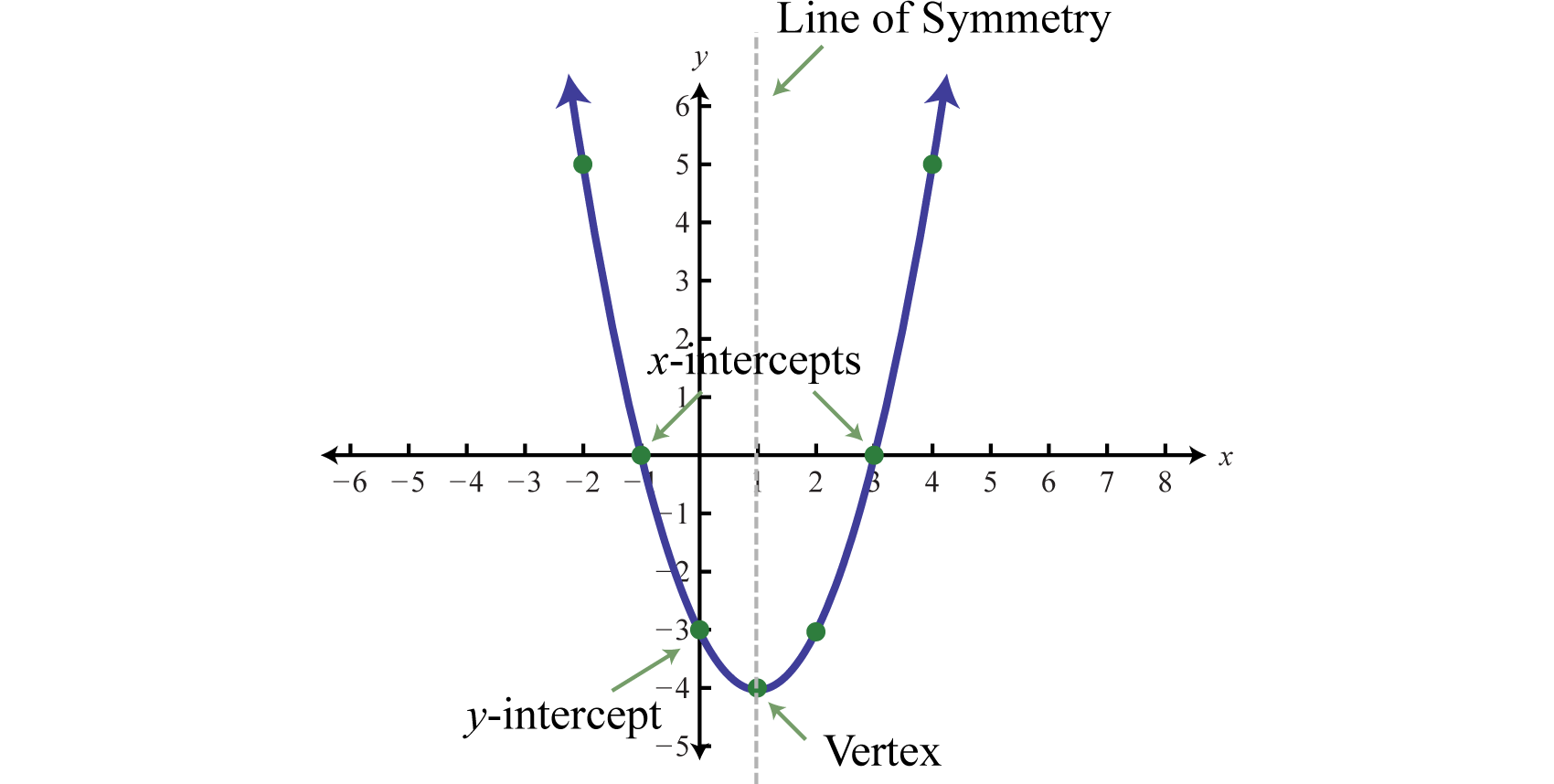
Mathematical Foundations and Geometric Significance
Understanding the broad applications of quadratic functions begins with a solid grasp of their mathematical structure. The standard quadratic form, y = ax² + bx + c, where a ≠ 0, describes a parabola that opens upward if a > 0 and downward if a < 0. The geometric interpretation of this curve reveals properties vital for numerous applications, including the vertex, the focus, the directrix, and the roots.
Vertex Form and Optimization
One of the most useful representations for analyzing quadratic functions is the vertex form: y = a(x – h)² + k. Here, (h, k) denotes the vertex of the parabola, which corresponds to the maximum or minimum point of the function, depending on the parabola’s orientation. This form is especially significant in optimization problems, where the goal is to find the maximum profit, minimum cost, or optimal design parameters. For instance, in economics, the vertex of a profit function indicates the production level that maximizes profit, a critical insight for decision-making.
Intercept Form and Roots
The intercept form, y = a(x – p)(x – q), directly reveals the roots or x-intercepts of the quadratic function, p and q. These roots are solutions to the quadratic equation ax² + bx + c = 0 and are essential in solving problems such as determining the time at which a projectile hits the ground or the break-even point in a business context.
Completing the Square: Transformation and Analysis
Transforming a quadratic into its vertex form via completing the square provides a powerful technique for solving equations and analyzing the function’s behavior. This process involves rewriting the quadratic into a perfect square plus a constant, illuminating the function’s symmetry and the location of its extremum. Such methods are fundamental in algebra and are widely used in calculus, physics, and engineering applications.
Physics and Engineering Applications of Quadratic Functions
Projectile Motion and Trajectory Analysis
One of the most classical and visually intuitive applications of quadratic functions in physics involves projectile motion. When an object is launched into the air under the influence of gravity, its vertical displacement over time can be modeled by a quadratic function derived from Newton’s laws of motion:
h(t) = -½ g t² + v₀ t + h₀
where g represents the acceleration due to gravity (~9.81 m/s² on Earth), v₀ is the initial velocity, h₀ is the initial height, and t is time. The parabola captures the ascent and descent of the projectile, with the vertex indicating the maximum height achieved. This mathematical model enables precise predictions of landing points, maximum altitude, and flight duration, which are critical in fields such as ballistics, sports science, and aerospace engineering.
Mechanical Systems and Hooke’s Law
Quadratic functions also underpin the behavior of elastic mechanical systems, notably springs. Hooke’s Law states that the restoring force exerted by a spring is proportional to its displacement from equilibrium, expressed as F = -kx. The potential energy stored in a spring, given by V = ½ k x², is a quadratic function of displacement. This relationship is fundamental in designing shock absorbers, suspension systems, and vibration isolators, where understanding the energy stored and released during oscillations is essential.
Optical Systems: Mirrors, Lenses, and Focal Lengths
In optics, quadratic equations are central to the mirror and lens equations, which relate object distance (do), image distance (di), and focal length (f):
1/f = 1/do + 1/di
Rearranged into quadratic form, these equations facilitate calculations of image formation, magnification, and focus adjustments. Parabolic mirrors, for instance, utilize the geometric properties of quadratics to focus light or radiation precisely, vital in telescopes, satellite dishes, and headlights.
Electrical Engineering and Circuit Design
In electrical engineering, quadratic functions appear in the analysis of circuits, especially in the design of filters and oscillators. For example, the transfer function of a simple RLC circuit, which determines its resonant frequency and damping characteristics, can be expressed as a quadratic polynomial. The roots of this quadratic provide insights into the circuit’s stability and response, essential for designing reliable electronic devices.
Economic and Financial Applications
Profit and Revenue Modeling
The quadratic function’s capacity to model profit and revenue curves makes it indispensable in business analysis. Consider a company with a revenue function R(x) = -a x² + b x + c, where x represents units produced or sold. The parabola opens downward, indicating diminishing returns after a certain sales volume, with the vertex representing the maximum revenue point. This information guides strategic decisions on production levels and marketing efforts.
Cost Analysis and Optimization
Similarly, cost functions often follow quadratic patterns, especially when considering economies and diseconomies of scale. The total cost C(x) = d x² + e x + f captures how costs change with production volume. Minimizing this quadratic function helps identify the most cost-effective production levels, crucial for manufacturing efficiency and competitive pricing strategies.
Financial Modeling and Options Pricing
Quadratic equations underpin models like Black-Scholes for options pricing, where the value of financial derivatives depends on quadratic relationships involving volatility, interest rates, and time. Quadratic programming techniques are also used for portfolio optimization, balancing risk and return by solving quadratic objective functions under linear constraints.
Mathematics: Geometry, Roots, and Conic Sections
Conic Sections and Parabolas
Quadratic functions are intimately connected with conic sections, especially parabolas. These geometric figures arise from the intersection of a plane with a cone and are characterized by their reflective properties, which are exploited in satellite dishes and headlight design. The algebraic form of a parabola directly relates to the quadratic function, allowing precise analysis of their properties, such as focus, directrix, and axis of symmetry.
Solving Quadratic Equations and Roots
The quadratic formula, x = (-b ± √(b² – 4ac)) / 2a, provides a universal method for solving quadratic equations. The discriminant, Δ = b² – 4ac, determines the nature of the roots—real and distinct, real and repeated, or complex conjugates—guiding problem-solving strategies in algebra, calculus, and applied sciences.
Computer Science and Technological Innovations
Computer Graphics and Curve Representation
Quadratic functions are foundational in computer graphics, especially in curve modeling. The quadratic Bezier curve, defined by three points, employs quadratic equations to generate smooth, scalable curves used in vector graphics, font design, and animation. These curves enable the creation of complex shapes with computational efficiency and precision.
Signal Processing and Spectral Analysis
In digital signal processing, quadratic functions assist in spectral analysis, filtering, and Fourier transforms. Quadratic phase functions are used to analyze signal frequencies and develop algorithms for noise reduction, data compression, and pattern recognition, essential in telecommunications and multimedia applications.
Cryptography and Security
Elliptic curve cryptography (ECC) relies heavily on solving quadratic equations over finite fields. The properties of these quadratic equations underpin the security of encrypted communications, digital signatures, and key exchange protocols, forming the backbone of modern cybersecurity.
Environmental Science and Ecology
Population Dynamics and Growth Models
Quadratic functions provide simplified models of population growth and decay, especially in ecological systems where resources are limited. The logistic growth model, which incorporates quadratic terms, describes how populations expand rapidly before leveling off at a carrying capacity, critical for conservation efforts and resource management.
Environmental Impact and Pollution Analysis
Models using quadratic functions evaluate environmental impacts of pollutants, habitat destruction, and climate change. These models facilitate long-term predictions, influencing policy decisions and remediation strategies. For example, quadratic relationships between pollutant concentration and ecological damage help determine safe exposure levels.
Medicine, Biology, and Pharmacology
Drug Dosage, Pharmacokinetics, and Response Curves
In pharmacology, quadratic models describe how drugs are metabolized and how the body’s response varies with dosage. These models optimize drug regimens to maximize efficacy while minimizing adverse effects. The Michaelis-Menten equation, a quadratic form, is fundamental in enzyme kinetics, aiding in drug discovery and enzyme characterization.
Enzyme Kinetics and Biochemical Reactions
Enzyme activity often follows quadratic relationships with substrate concentration, helping scientists understand reaction mechanisms and rate-limiting steps. Accurate modeling of these reactions informs the design of pharmaceuticals and biotechnological applications.
Social Sciences and Behavioral Studies
Psychological Response and Learning Curves
Quadratic functions model human learning and adaptation, capturing phenomena such as response to stimuli, mood fluctuations, and cognitive development. These models assist psychologists in designing effective interventions and understanding behavioral patterns over time.
Economic Preferences and Utility Functions
In behavioral economics, quadratic utility functions describe individuals’ preferences and risk attitudes, enabling better predictions of decision-making under uncertainty. Such models contribute to policy formulation aimed at improving economic well-being and social outcomes.
Summary and Broader Perspectives
The applications of quadratic functions extend beyond mere mathematical exercises into the core of scientific inquiry, technological innovation, economic analysis, and artistic expression. Their capacity to model curved phenomena, optimize systems, and analyze complex relationships makes them indispensable across disciplines. From predicting the arc of a projectile to designing efficient circuits, from modeling population dynamics to creating digital art, the quadratic function’s reach is vast and profound.
As research continues to evolve, the importance of quadratic functions only deepens, especially with advancements in computational power and data analysis techniques. Their role in emerging fields such as artificial intelligence, machine learning, and nanotechnology promises further groundbreaking applications, emphasizing the need for a comprehensive understanding of their properties and potentials.
In practical terms, mastering quadratic functions involves not only solving equations but also applying their principles creatively and analytically to solve complex problems. Whether it is engineering a better vehicle suspension, optimizing financial portfolios, or understanding biological systems, quadratic functions remain fundamental tools that bridge theory and practice, highlighting their timeless relevance and unmatched versatility.
For further exploration and detailed mathematical resources, readers are encouraged to consult authoritative texts such as “Algebra and Trigonometry” by Robert F. Serway and “Mathematical Methods for Physics and Engineering” by K.F. Riley, M.P. Hobson, and S.J. Bence. The platform Free Source Library offers a wealth of open educational resources that delve into quadratic functions and their myriad applications, supporting learners and professionals alike in harnessing the power of this fundamental mathematical concept.