
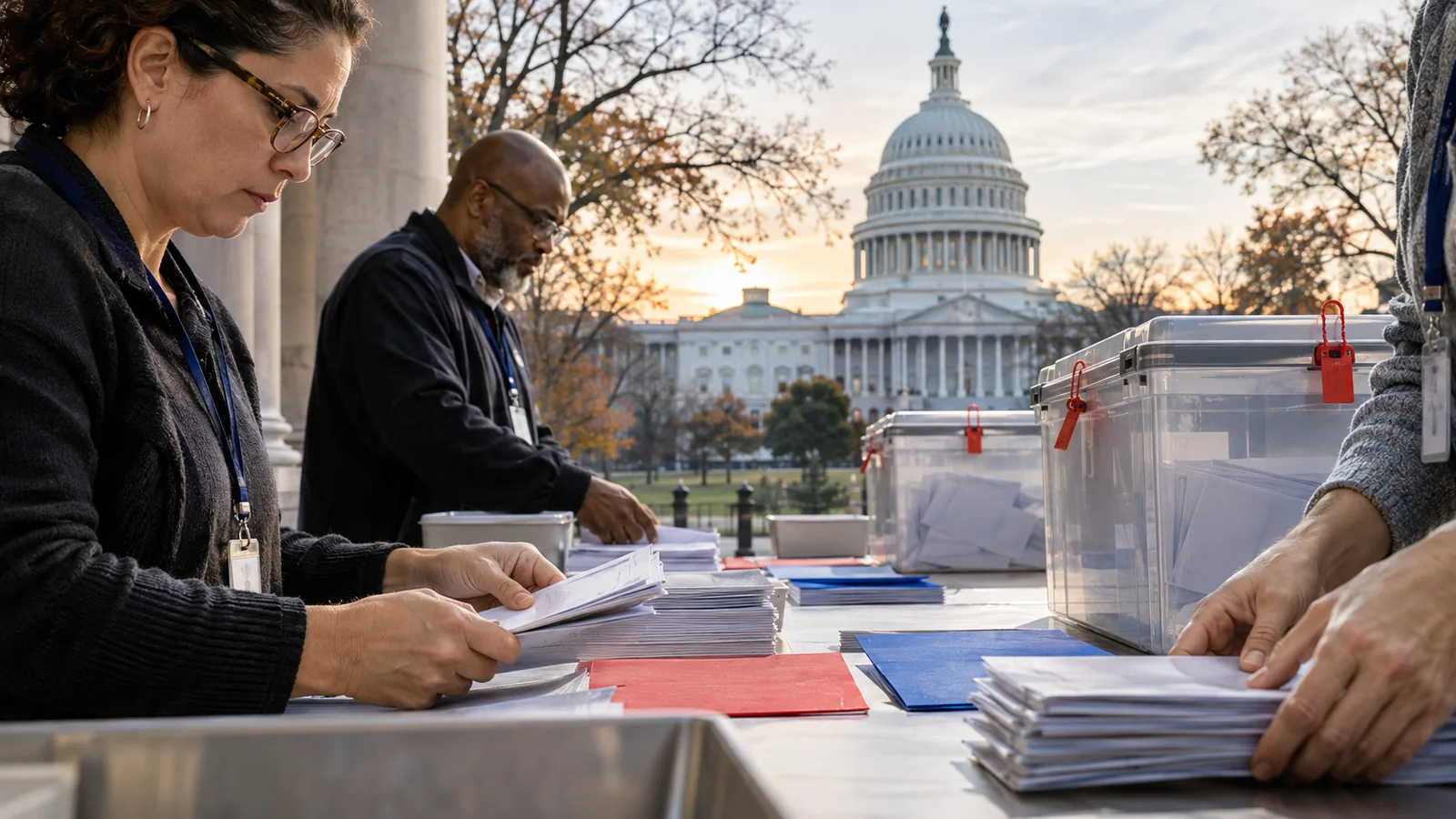
The 2026 US midterm election results changed the balance of power in Washington: Democrats won control of both the House of Representatives and the Senate, while voters also produced major shifts in governors’ races and state contests. The result was not one isolated upset. It was a broad response to concerns about living costs, government integrity, tariffs and the war with Iran, expressed through hundreds of separate elections held under different state rules.
The first hours after an election invite sweeping conclusions, but responsible analysis separates what is settled from what is still being counted. Control of Congress is clear, according to race calls reported by the Associated Press, yet final seat totals, turnout figures and some close margins can change as valid mail, provisional and overseas ballots are processed. This guide explains what changed, why congressional control matters, how to read incomplete returns and what the new alignment can realistically do when the 120th Congress begins in January 2027.
2026 US midterm election results at a glance
| Question | What is known on November 4, 2026 |
|---|---|
| Who won the House? | Democrats secured enough called races to take control and flipped more than two dozen districts, according to the Associated Press. |
| Who won the Senate? | Democrats won the chamber after gaining seats including Republican-held contests in North Carolina and Texas. |
| What drove the vote? | AP voter reporting highlighted high prices, the Iran war and concerns about corruption among the prominent issues. |
| Are all results final? | No. Control is settled, but close races and certified totals may remain outstanding. |
| When does control change? | The newly elected Congress convenes in January 2027; the current Congress remains in office during the lame-duck period. |
The constitutional structure helps explain why a midterm can transform national politics without changing the president. All 435 voting seats in the House are contested every two years. Senators serve six-year terms, with roughly one-third of the 100 seats on the ballot in each federal election cycle. The official USAGov explanation of congressional elections provides the durable rules behind the fast-moving results.
What changed in the House of Representatives
The House is designed to respond quickly to changes in public opinion. Its short terms mean every district faces voters at the same time, although district boundaries, local candidates and regional issues make the national result uneven. In 2026, Democrats converted dissatisfaction with the administration into victories in competitive suburbs and in several districts that had recently favored Republicans.
Winning the House gives Democrats the ability to choose the speaker, chair committees, set much of the floor schedule and decide which bills receive votes. Committee chairs can issue subpoenas under applicable rules, hold oversight hearings and direct investigations. Those powers are consequential even when legislation cannot become law, because hearings and document requests shape public debate and can expose how agencies implemented policy.
A House majority is not a blank check. Internal factions must still agree on budgets, rules and priorities. A narrow majority can make a small group of members decisive, particularly on procedural votes. The exact size of the majority therefore matters, and that number should not be treated as final until the remaining races are called and states certify their results.
How the Senate result changes governing
The Senate’s importance extends beyond ordinary legislation. Senators confirm federal judges, ambassadors and senior executive nominees. They ratify treaties with a two-thirds vote and conduct impeachment trials. Control determines the majority leader and committee leadership, which strongly influences the pace and sequence of confirmations.
Democratic gains in North Carolina and Texas were especially significant because they came in states Republicans had relied upon for national power. Former North Carolina governor Roy Cooper won a Republican-held Senate seat. In Texas, Democrats won the Senate contest as part of a wider state-level breakthrough reported by AP. Michigan also elected Abdul El-Sayed to the Senate. Each race had its own candidates and local dynamics, but together they expanded the map of genuinely competitive states.
Senate control does not eliminate the filibuster. Most legislation still needs 60 votes to end debate unless it qualifies for a special process such as budget reconciliation or senators change the rules. Nominations generally move under different thresholds. Readers should be skeptical of claims that a simple majority can instantly enact an entire agenda.
Why voters moved away from the president’s party
Midterms often punish the party holding the White House. Supporters of the opposition are usually highly motivated, while some presidential voters participate less consistently when the president is not on the ballot. That historical tendency is context, not a complete explanation. The scale and geography of the 2026 outcome show that current conditions mattered.
High prices remained a daily concern even where headline economic indicators appeared resilient. Voters experience the economy through rent, groceries, insurance, fuel, borrowing costs and job security. A household can hear that inflation is slowing while still paying permanently higher prices than several years earlier. Campaigns that connected national decisions to those concrete costs had a message voters could immediately test against their own budgets.
The war with Iran also altered the political environment. Military action can initially produce a rally around national leadership, but prolonged conflict, casualties, fuel-price effects and unclear objectives can reverse that reaction. Voters who supported a promise to avoid new foreign entanglements could see escalation as a breach of expectations. Foreign policy therefore became inseparable from household economics and trust.
Government corruption was another recurring concern in AP’s voter reporting. “Corruption” can mean different things to different voters—conflicts of interest, favoritism, misuse of office or a belief that wealthy insiders receive special treatment. Its political force comes from connecting several grievances into one judgment about fairness.
Texas was the clearest symbol of the shift
Texas attracted national attention because Democrats won a US Senate seat and reclaimed the governorship after decades of Republican dominance. The state has changed demographically and economically for years, yet population growth alone does not guarantee a partisan realignment. Turnout, candidate quality, persuasion and the distribution of voters across urban, suburban and rural areas still determine outcomes.
The result matters beyond one cycle. Republicans have depended on Texas’s large electoral-vote bloc in presidential elections, while Democrats have repeatedly hoped that metropolitan growth would make the state competitive. A breakthrough gives Democrats a governing record to defend and Republicans a strong incentive to reassess their coalition. It does not prove that Texas will vote the same way in 2028. Midterm electorates differ from presidential electorates, and voters can split tickets.
Historic firsts in the 2026 elections
The election also changed who holds high office. Deb Haaland became the first Native American woman elected governor in US history. Florida and Wisconsin elected their first Black governors, Byron Donalds and David Crowley, respectively. These milestones matter both symbolically and institutionally: representation can expand the experiences present in executive decision-making, while individual officeholders remain accountable for policy like anyone else.
Historic identity should not be used as a substitute for examining platforms, coalitions and performance. It is possible to recognize a barrier being broken while maintaining normal scrutiny of the winner’s proposals. That combination—context plus accountability—produces more useful civic coverage than celebration or dismissal alone.
What divided government will look like
From January 2027, a Republican president will face a Congress controlled by Democrats. That is divided government, not automatic paralysis. Measures with cross-party constituencies—disaster relief, defense authorization, infrastructure implementation or selected technology rules—can still advance. Must-pass deadlines can also force negotiation.
The central conflicts are likely to involve spending, taxation, immigration, war powers, tariffs, health policy and oversight. The House controls the initiation of revenue bills, but both chambers must pass identical legislation before it reaches the president. President Trump can sign or veto bills. Congress can override a veto only with two-thirds support in both chambers, a threshold neither party is likely to reach on most disputed issues.
Control of appropriations creates leverage and risk. Congress funds federal agencies through annual laws. If the branches cannot agree before deadlines, shutdown threats may return. A shutdown is not a neutral bargaining tool: it disrupts services, delays work, imposes costs and can harm people who depend on government operations. Political incentives may still encourage brinkmanship, especially if each side believes voters will blame the other.
Oversight, investigations and subpoenas
A change in committee leadership brings a change in oversight priorities. Democratic chairs can examine executive actions, procurement, ethics, military policy and regulatory decisions. The Senate can use hearings to scrutinize nominees and administration conduct. Requests may lead to negotiation, litigation or claims of privilege, so a subpoena does not guarantee immediate disclosure.
Oversight is most credible when it asks a defined factual question, uses consistent standards and produces evidence the public can assess. It is least useful when hearings are designed only to create short video clips. Readers should distinguish a committee opening an inquiry from proof that misconduct occurred.
Does the result make impeachment likely?
The House has the sole power to impeach by a simple majority, but impeachment is an accusation, not removal from office. The Senate conducts a trial, and conviction requires a two-thirds vote of senators present. Democratic control makes investigations or articles of impeachment procedurally possible. It does not make conviction likely without substantial bipartisan support.
Speculation immediately after an election often runs ahead of evidence and leadership decisions. A responsible forecast should ask whether committees have identified specific conduct, whether facts meet an articulated constitutional standard and whether lawmakers are building a public record. Control alone is not an allegation.
How to read election-night numbers correctly
- A race call is not a certification. News organizations project winners when their analysis concludes the trailing candidate cannot close the gap. State and local officials later certify official totals.
- Percent reporting can mislead. The remaining vote may come from areas that lean heavily toward one party, and jurisdictions report batches at different speeds.
- Mail ballots are valid votes. States set deadlines and verification rules. Counting them after election night is a normal part of the process where law permits.
- Provisional ballots require review. Officials determine eligibility before adding valid ballots to the total.
- Recounts are not evidence of fraud. They are statutory quality-control procedures triggered by close margins or requested under state law.
Election misinformation often exploits the gap between an unofficial result and final certification. A late change in a total can reflect a county uploading a batch, correcting a transposition or completing required review. Claims of wrongdoing require evidence about the specific process, not merely a chart that moved.
What happens between Election Day and January
States canvass and certify their results according to individual calendars. Newly elected members hire staff, select offices and prepare committee preferences. Party caucuses choose their leaders. Meanwhile, the outgoing Congress remains empowered to legislate during the lame-duck session.
That overlap can be important. Funding deadlines, emergency measures and nominations do not pause because an election occurred. The current majorities may try to complete priorities before control changes. Journalists and citizens should therefore watch both the transition and the actions of the still-seated Congress.
What the result means for the 2028 presidential race
Midterm success gives Democrats momentum, candidates and evidence that states such as Texas can be contested. It also creates responsibility. Once a party controls Congress, voters expect it to use that power. A record dominated by investigations without a credible cost-of-living agenda could disappoint the coalition that produced the victory.
Republicans have time to adapt. They can change policy, emphasize different issues, recruit new candidates or argue that Democratic congressional control creates instability. Presidential turnout will be larger and differently composed. Two years is long enough for wars, the economy, court decisions and unforeseen events to reshape public priorities.
The strongest conclusion is therefore limited but important: the 2026 electorate rejected Republican control decisively enough to transfer both chambers of Congress and produce breakthroughs in states once considered safely Republican. That is a governing mandate to check the administration and address the issues voters emphasized. It is not a permanent partisan realignment.
Frequently asked questions
Did Democrats win both the House and Senate in 2026?
Yes. Race calls reported by the Associated Press established Democratic control of both chambers. Exact seat totals can remain incomplete until outstanding races are called and results are certified.
Can the new Congress remove the president?
The House can approve articles of impeachment by a simple majority, but removal requires conviction by a two-thirds vote in the Senate. Democratic control alone does not meet that threshold.
When do the winners take office?
Members of the new Congress take office in January 2027. Gubernatorial and state-office inauguration dates vary by state.
Why are some races still counting?
States lawfully process mail, provisional, military and overseas ballots on different schedules. Close contests take longer because analysts cannot make a reliable projection until enough of the remaining vote is understood.
The bottom line
The 2026 US midterm election results produced a clear transfer of congressional power and a warning to the administration. Democrats gained the House, won the Senate and broke through in major state races, including Texas. Voters connected national leadership to prices, war and trust in government.
The practical effects will unfold slowly. The new Congress can investigate, control committees, shape spending and block or negotiate legislation, but it must still work within Senate rules and the presidential veto. Follow certified state totals for final numbers, and treat viral claims cautiously. For background, explore our coverage of economy and politics and the UN Global Risk Report 2026.
Sources: Associated Press election results overview, Associated Press reporting on Texas, and USAGov’s congressional elections guide. Results are described as of November 4, 2026.
