Programming languages
The Address Programming Language
The Address Programming Language: An Overview The Address programming language, often referred to simply as “Address,” was an early effort in the development of…
The Address Programming Language: An Overview The Address programming language, often referred to simply as “Address,” was an early effort in the development of…
Vienna Development Method (VDM) Specification Language: A Comprehensive Overview The Vienna Development Method (VDM) represents one of the most influential formal methods in the…
The SK8 Programming Language: A Comprehensive Overview In the vast and diverse landscape of programming languages, many languages, though highly specialized, remain relatively unknown…
Visual J++: A Historical Overview of Microsoft’s Java-Integrated IDE In the mid-1990s, the rise of Java as a programming language was undeniable, and Microsoft,…
Liber Abaci: The Introduction of the Arabic Numeral System to Europe The “Liber Abaci,” written by Leonardo of Pisa—better known as Fibonacci—was a pivotal…
The Etruscan Numerals: An Ancient System of Counting and Its Influence The Etruscan numerals, used by the Etruscan civilization in ancient Italy, represent one…
The CueCat Barcode Scanner: A Historical Overview of Its Rise and Fall In the annals of technological innovation, few products have experienced such a…
The ALOHAnet: A Pioneering Networking Protocol In the realm of computer networks, few innovations have had as profound an impact as the ALOHAnet, a…
SPARQCode: A Cutting-Edge Barcode Format with Advanced Features In the rapidly evolving digital world, the need for efficient data encoding and quick identification has…
Roman Numerals: An Exploration of Their History, Usage, and Significance Roman numerals, a system of numerical notation that originated in ancient Rome, have maintained…
Greek Numerals: An Ancient Numerical System Rooted in History The Greek numeral system, known as “Greek numerals”, is a unique and historically significant numerical…
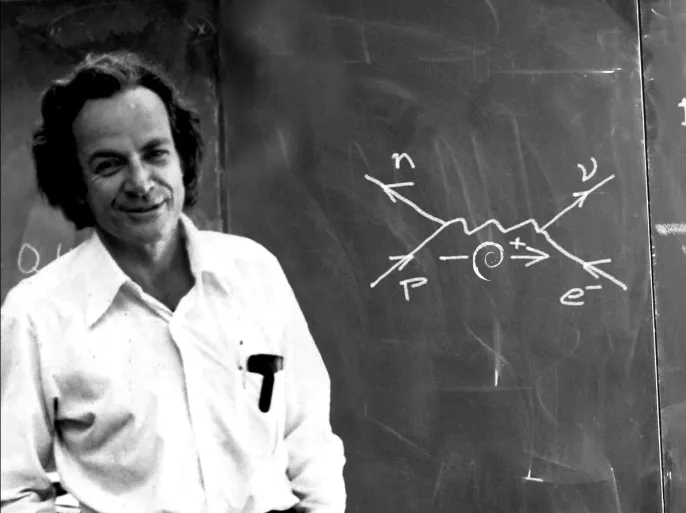
The Feynman Diagram: A Gateway to Quantum Physics Feynman diagrams, first introduced by physicist Richard P. Feynman in 1948, represent one of the most…
Essential storage runs the site and remembers this choice. Optional analytics helps us understand how the library is used. Article advertising remains enabled, but advertising-storage and personalization signals stay disabled.
Allowing analytics lets our self-hosted Matomo and Google Analytics measure visits and interactions. Rejecting keeps optional measurement cookies off. Google may still receive limited technical requests required to serve non-personalized or limited ads inside individual articles.