
 Free Source Library — Exploring the profound influence of the Earth’s equator on African nations reveals a fascinating tapestry of geography, climate, ecology, and human culture that shapes life in these regions.
The Earth’s Equator: A Geographic and Climatic Boundary
The equator is an imaginary horizontal line situated equidistant from the North and South Poles, circumnavigating the Earth at approximately 0° latitude. Its significance extends beyond mere geography—it defines a zone of intense climatic activity, ecological richness, and cultural diversity. As the planet’s primary latitudinal marker, the equator influences weather patterns, ocean currents, and biodiversity distributions in ways that create unique environments in each nation it touches.
In Africa, the equator slices through several countries, establishing regions of tropical climate, dense rainforests, savannas, and arid deserts. Its passage affects daily temperature cycles, rainfall patterns, and the overall ecosystem dynamics. Understanding the impact of the equator on African countries involves examining not only their geographic coordinates but also the complex chain of environmental and socio-economic effects that radiate from this invisible line.
Geographical Context and Tracking the Equator in Africa
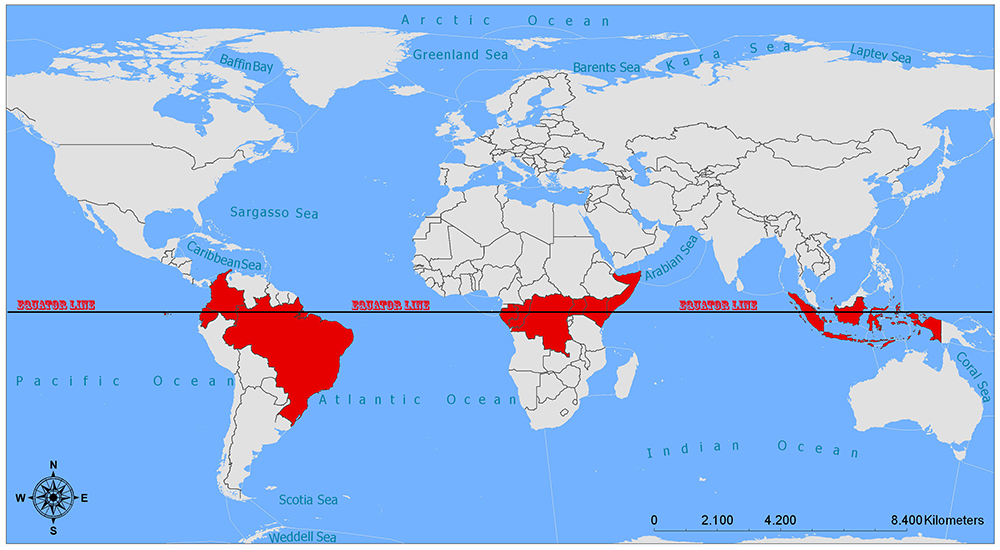
In terms of geographic specifics, the equator traverses seven African nations: Gabon, the Republic of the Congo, the Democratic Republic of the Congo (DRC), Uganda, Kenya, Somalia, and Sao Tome and Principe. Each country’s interaction with the equator differs, resulting in diverse environmental conditions, societal adaptations, and economic activities. Mapping the equator’s path within Africa reveals a mosaic of ecosystems, from lush tropical forests to sprawling savannahs, each shaped by the proximity to this pivotal latitude.
Advanced geographic tools and satellite imagery continue to refine the exact routes where the equator passes through these nations. In local contexts, marked monuments, such as Uganda’s famous equator crossing and the Kenyan Nanyuki marker, serve as cultural and tourist attractions, highlighting the human fascination with this invisible boundary.
Country-by-Country Analysis of the Equator’s Influence
Gabon: The Heart of Central Africa’s Rainforests
Gabon lies on the west coast of Central Africa, with the equator skimming about 20 kilometers north of its capital, Libreville. The proximity of the equator profoundly influences Gabon’s climate, which is classified as tropical rainforest climate. This results in consistently high temperatures averaging around 25–30°C (77–86°F), high humidity, and negligible temperature variation throughout the year.
The dense equatorial forests in Gabon form part of the vast Congo Basin, the second-largest tropical rainforest area after the Amazon. These forests cover approximately 85% of Gabon’s landmass, making forest conservation vital for biodiversity and ecological stability. The region supports a multitude of endemic and endangered species, including the western lowland gorilla, forest elephants, and numerous bird species such as hornbills and kingfishers.
Economic activities in Gabon are intertwined with its forests. Timber extraction, sustainable logging initiatives, and recent discoveries of oil reserves form core industries. Ecotourism is gaining momentum as the country seeks to balance resource exploitation with conservation efforts. Establishing protected zones like Lopé National Park helps preserve critical habitats amidst increasing human pressures.
Impact of the Equator: Gabon’s equatorial location fosters continuous biodiversity, influences local weather patterns critical for agriculture, and sustains the forests that underpin national economic and ecological strategies.
Republic of the Congo: The Jewel of the Congo Basin
The Republic of the Congo, often referred to as Congo-Brazzaville, shares similar equatorial influences with Gabon. Its northern regions, where the equator crosses, exhibit a hyper-tropical climate with perennial high temperatures, humidity, and rainforest coverage that is slightly less dense but equally rich in biodiversity.
Ecologically, the country is home to the Congo rainforest, a haven for wildlife such as western lowland gorillas, bonobos, African grey parrots, and forest antelopes. The rainforests here are vital for maintaining regional and global climate stability through carbon sequestration. However, logging, mining, and infrastructure development increasingly threaten these ecosystems, prompting calls for sustainable management.
Economic activities include forestry, hydroelectric power generation, and burgeoning ecotourism efforts centered on safaris and national park visits. Indigenous groups, such as the Baka and the Kota, maintain traditional ways of life closely tied to the forests they inhabit.
Impact of the Equator: Their positioning within the equatorial zone enhances the high biodiversity levels but also presents challenges of conservation amid economic development pressures.
Democratic Republic of the Congo: The Lungs of Africa
One of Africa’s most geographically vast nations, the DRC’s northern provinces intersect the equator near the city of Mbandaka. The DRC’s extensive Congo Rainforest stretches across the central part of the country, being the second-largest tropical rainforest in the world after the Amazon.
The climate here is quintessentially equatorial: humid, hot, and lush, with annual rainfall often exceeding 2,000 mm (79 inches). The Congo Basin’s forests are biodiversity hotspots, hosting endangered species such as the mountain gorilla, okapi, Congo peacock, and the elusive Congo giant squirrel.
Beyond biodiversity, the Congo rainforest sustains millions of local populations. Roots in traditional subsistence farming, hunting, and gathering intertwine with modern logging, mineral extraction, and infrastructure projects. Yet, deforestation, illegal poaching, and land degradation pose significant threats to the health of these vital ecosystems.
Environmental policies within the DRC are critical not only for local ecological stability but also for climate change mitigation on a global scale. The DRC’s challenge lies in balancing resource extraction with ecological preservation and social development.
Impact of the Equator: Provides a climatic backbone for the forest, influencing rainfall distribution and biodiversity richness, but also complicates conservation amidst socio-economic conflict.
Uganda: The “Pearl of Africa”
Straddling the equator, Uganda is celebrated for its diverse landscapes, from mountains and savannas to lakes and rainforests. The equator’s presence in Uganda is marked by internationally recognized monuments and tourist sites, particularly near the town of Masaka.
Uganda’s climate is characterized by two rainy seasons—March to May and October to December—and two dry seasons, fostering a vibrant agricultural sector. Coffee, tea, and other horticultural products thrive in this environment, accounting for significant portions of the economy.
The country boasts remarkable biodiversity, including mountain gorillas in Bwindi Impenetrable National Park, chimpanzees in Kibale Forest, and myriad bird species. The equator’s influence helps sustain these habitats, providing fertile grounds for ecotourism and scientific research programs.
Tourism concentrated around the geographic marker combines cultural experience with wildlife viewing, contributing to local livelihoods. Moreover, the regions around the equator support traditional agriculture, facilitating food security and rural development.
Impact of the Equator: Regulates climate, promotes biodiversity, and enhances Uganda’s status as an ecotourism destination, fostering sustainable development initiatives.
Kenya: From Forests to Savannas
In East Africa, Kenya is notable for its varied ecosystems: montane forests, sprawling savannas, and coastal mangroves. The equator passes near Nanyuki, a town in central Kenya, making it a key site for tourism and geographic interest.
Kenya’s climate varies with altitude; the coastal regions are hot and humid, while the highlands experience cooler temperatures. The equatorial forests of Mount Kenya National Park shelter endemic species like the Mount Kenya mole-rat and the satyr tragopan. In contrast, the savannas host Africa’s iconic wildlife, including elephants, lions, rhinoceroses, and the big five.
Kenya’s economic reliance on tourism, agriculture, and conservation efforts underscores the importance of the equatorial environment. The Maasai Mara Reserve and Amboseli National Park draw worldwide visitors keen to witness Africa’s wildlife spectacle against a lush, diverse backdrop.
Climate stability provided by the equator benefits crop production and sustains grazing lands, which are crucial for pastoral communities.
Impact of the Equator: Ensures relatively stable climatic conditions that support biodiversity, agriculture, and the burgeoning eco-tourism industry.
Somalia: A Predominantly Arid Landscape
Bordered by the Gulf of Aden and the Indian Ocean, Somalia’s geographic position along the equator results in a primarily arid climate dominated by deserts, semi-deserts, and coastal plains. While the equator’s influence yields persistent heat, the distribution of rainfall remains seasonal and sparse.
The interior features the Somali Desert and the Ethiopian Highlands in the south, with coastal plains supporting mangroves and coral reefs. Despite ecological challenges, Somalia’s ecosystems harbor unique flora and fauna, including migratory birds, desert-adapted plants, and marine biodiversity along its extensive coastline.
The economy revolves around pastoralism, fishing, and limited agriculture, shaped by the challenging environment. Climate change and desertification threaten these livelihoods, underscoring the need for sustainable resource management.
Historically, Somalia’s strategic position along the equator facilitated trade and cultural exchanges in antiquity, visible in archaeological sites and historic ports.
Impact of the Equator: Produces extreme temperature regimes and influences seasonal droughts, which directly affect the sustainability of local ecosystems and socio-economic activities.
Sao Tome and Principe: The Archipelago’s Tropical Paradise
The independent island nation of Sao Tome and Principe is located directly on the equator in the Gulf of Guinea, consisting of two main islands—Sao Tome and Principe—and several smaller islets. Its entire landmass is embedded within the equatorial zone, lending it a distinctive tropical climate year-round.
The islands’ climate is characterized by high temperatures, humidity, and consistent rainfall, creating prime conditions for lush rainforests, volcanic peaks, and thriving marine ecosystems. Endemic species such as the Sao Tome grosbeak and the Principe paradise kingfisher exemplify the islands’ unique biodiversity.
The marine environment supports coral reefs, sea turtles, and abundant fish populations, making Sao Tome and Principe a notable ecotourism destination focused on diving, birdwatching, and nature conservation.
The cultural heritage reflects Portuguese colonization, African traditions, and local artisanal crafts, which are promoted within sustainable tourism frameworks.
Impact of the Equator: Provides stable tropical conditions that sustain endemic species, support vibrant ecosystems, and foster eco-tourism development.
The Broader Impact of the Equator on Climate, Biodiversity, and Socio-Economic Development
| Aspect | Influence of the Equator | Implications for These Countries |
|---|---|---|
| Climate Stability | Ensures relatively uniform temperatures and consistent rainfall patterns | Supports agriculture, biodiversity, and sustainable tourism |
| Biodiversity | Creates ideal conditions for rainforests and endemic species | Necessitates conservation efforts amid habitat loss |
| Economic Activities | Influences sectors like forestry, agriculture, and tourism | Facilitates resource-based economies with potential for ecotourism growth |
| Cultural Significance | Symbolic for indigenous and local communities | Attracts tourism and fosters national identity |
Challenges and Opportunities in Equatorial Regions
Environmental Challenges
- Deforestation and habitat destruction driven by logging, agriculture, and mining
- Climate change exacerbating droughts, floods, and species extinction
- Illegal poaching and wildlife trade threatening endemic species
Socio-Economic Opportunities
- Ecotourism development harnessing rich biodiversity and unique landscapes
- Sustainable forestry and agroforestry initiatives to balance economic growth with conservation
- Capacity-building and technological innovation for climate resilience
Policy and Conservation Strategies
- Strengthening protected areas and national parks with international aid and expertise
- Adopting sustainable land management and resource extraction practices
- Engaging indigenous communities in conservation and sustainable livelihoods
Practical Steps for Engaging with the Equatorial Regions
Research and Data Collection
Utilize remote sensing tools, geographic information systems (GIS), and local ecological studies to map and monitor environmental changes. Partnering with organizations such as conservation groups enhances data accuracy.
Community Empowerment and Education
Encourage local participation in conservation projects, eco-tourism, and sustainable agriculture. Educational programs focusing on environmental awareness foster long-term stewardship.
Policy and International Collaboration
Countries can develop policies aligned with global climate goals, participate in ecological preservation agreements, and leverage funding from international agencies such as the United Nations Environment Programme (UNEP).
Comparative Analysis: African Equatorial Countries and Other Global Regions
| Region | Coverage of the Equator | Climate & Ecosystems | Economic Focus |
|---|---|---|---|
| Africa | 7 countries; dense rainforests, savannas | Tropical, humid, biodiversity hotspots | Forestry, agriculture, ecotourism |
| South America | Brazil, Ecuador, Colombia, Peru | Amazon rainforest, wetlands, high biodiversity | Mining, forestry, ecotourism |
| Indonesian Archipelago | Sumatra, Borneo, Sulawesi | Rainforests, coral reefs, volcanic zones | Forestry, agriculture, marine resources |
Deepening our Understanding of Equatorial Dynamics
Future research avenues include studying the effects of climate change on equatorial ecosystems, developing sustainable resource management practices, and leveraging indigenous knowledge systems. The equator remains a symbol of both Earth’s natural bounty and the challenges of balancing human activity with ecological integrity.
References
- United Nations Environment Programme (UNEP). “Biodiversity and Ecosystems in the Equatorial Zone.”
- World Wildlife Fund (WWF). “African Rainforests: Conservation and Sustainable Use.”