
What are hypersoft X-ray sources and why are they significant in astronomy?
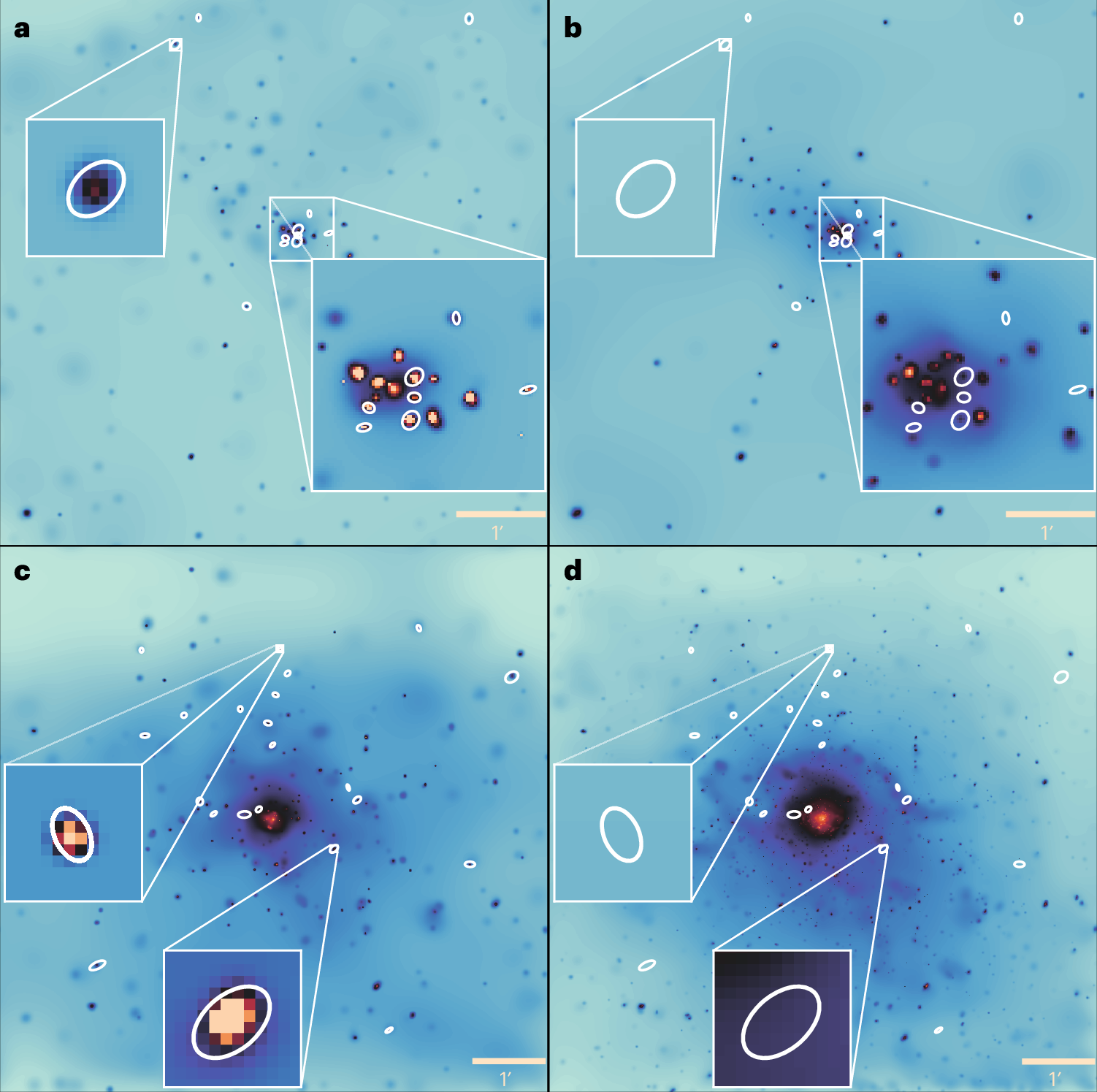
Hypersoft X-ray sources (HSSs) are a newly identified class of cosmic objects emitting X-rays concentrated at extremely low energies, specifically between 0.15 and 0.3 kiloelectron volts (keV). Unlike typical X-ray binaries, which peak at higher X-ray energies, these sources emit most of their energy at lower, challenging-to-observe wavelengths in the extreme-ultraviolet (EUV) band. Discovered through reanalysis of NASA’s Chandra X-ray Observatory archival data, 84 such objects were found across six nearby galaxies, showcasing a substantial hidden population of energetic stellar systems. Their recognition helps address major astrophysical puzzles, including the elusive progenitors of Type Ia supernovae and the source of ionizing radiation affecting galactic gas.
This article examines the physical nature of HSSs, the observational techniques leading to their discovery, their implications for stellar and galactic evolution, and the challenges of detecting such extreme low-energy phenomena.
What you will learn
- Hypersoft X-ray sources emit predominantly very low-energy X-rays, with peak radiation likely in the extreme-ultraviolet range, which is difficult to observe due to interstellar absorption.
- The 84 identified HSSs were found in both spiral and elliptical galaxies, indicating diverse stellar origins and challenging the notion of a single physical source type.
- Some HSSs may be accreting white dwarfs undergoing sustained nuclear burning, potentially representing a missing population of Type Ia supernova progenitors.
- HSSs emit enough energetic radiation to influence ionization of certain gases in galaxies, thus affecting interstellar gas dynamics and star formation processes.
- The discovery was enabled by reexamining archival Chandra observations, highlighting the value of existing data in revealing new astrophysical phenomena.
- Future investigations require multiwavelength observations and expanded galaxy surveys to unravel the physical nature and population statistics of HSSs.
How were hypersoft X-ray sources discovered despite previous observations?
The discovery of hypersoft X-ray sources emerged from a targeted reanalysis of archival data from NASA’s Chandra X-ray Observatory, specifically focusing on a traditionally overlooked low-energy X-ray band between 0.15 and 0.3 keV. Previous X-ray surveys concentrated on higher energy ranges above 0.3 keV, where most known X-ray binaries emit strongly. Researchers discovered that several sources significantly emit only at these lowest energies and fade or disappear at higher ones, revealing a new population missed by earlier studies.
Chandra’s imaging capabilities at low energies are difficult to exploit due to instrument sensitivity degradation over its mission lifetime and interstellar absorption of soft X-rays. By applying innovative analysis techniques to six diverse nearby galaxies—including the spiral Andromeda (M31) and Pinwheel (M101) galaxies and elliptical galaxies such as NGC 3115 and NGC 4472—astronomers detected a total of 84 HSSs. This approach demonstrates that substantial discoveries can result from reinterpreting existing data with new methods rather than requiring new instrumentation.
What characterizes the X-ray spectra and physical properties of hypersoft X-ray sources?
Hypersoft X-ray sources exhibit extraordinary spectral softness, emitting nearly exclusively at energies below 0.3 keV. This contrasts sharply with typical X-ray binaries, which radiate strongly above 0.3 keV. The measured X-ray emission is believed to represent only the high-energy tail of a spectral distribution peaking in the extreme-ultraviolet (EUV), a spectral window typically inaccessible due to absorption by interstellar hydrogen and helium.
The characteristic temperatures inferred from spectral modeling are on the order of a few tens of electron volts (eV), translating to several hundred thousand kelvin—much hotter than ordinary stars but cooler than typical X-ray sources near neutron stars or black holes. Despite this relative coolness, some HSSs reach luminosities near 10^38 ergs per second in the soft X-ray band, implying bolometric luminosities potentially higher once the unseen EUV emission is included. The combined high luminosity and low temperature suggest radiation originates from an expanded, relatively large emitting region rather than a compact hot spot.
What physical systems might produce hypersoft X-ray sources?
Researchers hypothesize that HSSs arise from compact binary systems containing stellar remnants such as white dwarfs, neutron stars, or black holes. One compelling scenario involves white dwarfs accreting hydrogen-rich material from companion stars. In such systems, nuclear burning on the white dwarf’s surface can continue post-nova eruption or sustain quasi-steady burning, producing soft X-ray and EUV emission. The nuclear burning can cause the white dwarf’s photosphere to expand, lowering the effective temperature and shifting radiation toward the EUV band, with only a faint soft X-ray tail detectable on Earth.
Several less luminous HSSs discovered in M31 appear associated with known novae, supporting this pathway. Conversely, the brightest HSS examples may exceed luminosities that white-dwarf models comfortably explain, suggesting some systems could involve black holes accreting under conditions that generate similarly soft spectra by virtue of their mass, accretion geometry, or disk winds. Neutron stars remain a possible contributor, although clear identification awaits further observations. This diversity implies that HSSs represent an observational class unified by spectral softness rather than a single physical type.
How do hypersoft X-ray sources connect to the mystery of Type Ia supernova progenitors?
Type Ia supernovae result from the thermonuclear explosion of white dwarfs, yet the exact evolutionary channels leading to these events remain unresolved. Some models suggest steady accretion of matter onto a white dwarf until it approaches the Chandrasekhar mass limit, while others posit white dwarf mergers. Despite their cosmological importance, the binary systems that serve as progenitors have been challenging to identify observationally.
Hypersoft X-ray sources provide a promising candidate population for such progenitors. Their extreme softness places much of their luminosity in the EUV, a spectral range traditionally overlooked or inaccessible, meaning surveys focusing on harder X-ray bands may have missed them. The discovery of numerous HSSs with white-dwarf-like characteristics, especially those linked to novae, strengthens the notion that these systems could be white dwarfs undergoing extended nuclear burning phases en route to supernova explosions. If confirmed, this would fill a critical gap in understanding the progenitor demographics of Type Ia supernovae and their signatures in electromagnetic radiation.
What role might hypersoft X-ray sources play in ionizing interstellar gas within galaxies?
Ionization of the interstellar medium (ISM) profoundly influences star formation and galactic evolution. While massive hot stars provide ultraviolet photons that ionize hydrogen, generating common emission nebulae, some ionization states require more energetic photons capable of removing electrons from helium or heavier elements. The source of this higher-energy ionizing radiation has often been ambiguous, especially in galaxies lacking active galactic nuclei (AGN).
Hypersoft X-ray sources could supply significant ionizing radiation in the extreme-ultraviolet band, where photons can ionize helium and other species that ordinary stellar UV cannot efficiently ionize. Due to their probable numbers and high bolometric luminosities, HSSs could represent a notable ionization source that has been systematically underestimated because Earth-based telescopes cannot directly observe their dominant EUV output. This revelation implies that compact stellar remnants influence the ISM ionization balance more than previously recognized, potentially altering models of thermal balance and star formation feedback in galactic environments.
Why did hypersoft X-ray sources remain undetected until now?
The detection of HSSs was hindered by several observational challenges. Their radiation peaks at extremely low X-ray energies or in the EUV, both of which are strongly absorbed by interstellar gas, especially neutral hydrogen and helium. This absorption substantially reduces the intensity of photons reaching Earth-based telescopes. Moreover, Chandra’s sensitivity to the softest X-rays below 0.3 keV has deteriorated over its operational span, complicating the detection of such sources.
Another obstacle is variability; many HSSs show brightness changes over time, sometimes fading below detection thresholds. Surveys conducted at inopportune times or targeting higher energy bands would overlook these transient or faint emissions. Overcoming these hurdles required careful archival analysis, focusing on extremely soft photon energies and comparing detections across multiple epochs to identify consistent spectral signatures. This approach revealed HSSs as a distinct population, previously masked within normal X-ray observations.
What does the diversity of host galaxies tell us about hypersoft X-ray sources?
HSSs were found in six diverse galaxies, including spiral types such as Andromeda (M31) and Pinwheel (M101), and elliptical galaxies such as NGC 3115 and NGC 4472. This broad presence indicates that HSSs do not originate exclusively from young, massive stars typical in star-forming regions nor solely from old stellar remnants prevalent in elliptical galaxies. Instead, the sources inhabit both environments, implying multiple stellar evolutionary pathways can produce HSS-like emission.
The coexistence in various galactic contexts suggests that HSSs form an observational class uniting several physical phenomena—white dwarf binaries, black hole accretors, perhaps neutron star systems—whose radiation emerges in unusually soft X-rays and EUV. Studying their distribution relative to stellar populations, star formation, nova rates, and globular cluster presence can refine models for their origins and evolutionary significance.
How can future observations clarify the nature of hypersoft X-ray sources?
Advancing understanding of HSSs requires multiwavelength campaigns combining optical, ultraviolet, and X-ray data alongside precise astrometry and spectroscopy. Optical observations can identify companion stars, locate globular clusters, or detect nova remnants. Ultraviolet telescopes, although challenged by interstellar absorption, can attempt to capture longer-wavelength emissions. Repeated X-ray monitoring can characterize variability patterns, persistence, and recurrence.
Cross-referencing HSS positions with nova events in galaxies like M31 can confirm white dwarf associations. Detection of helium-ionization lines or unique emission features in surrounding gas would provide direct evidence of their EUV ionizing output. Additionally, extending the search to more galaxies using archival data sets can establish population statistics and environmental dependencies. This integrated approach will test the hypotheses explaining HSS physical mechanisms, clarifying their astrophysical roles.
| Galaxy | Type | Number of HSSs Detected | Dominant Stellar Population | Notable Environments |
|---|---|---|---|---|
| Andromeda (M31) | Spiral | Approx. 20 | Mixed (young and old) | Star-forming regions and older bulge stars |
| Pinwheel (M101) | Spiral | 7 | Young | Active star formation areas |
| NGC 3115 | Elliptical | Multiple | Old | Globular cluster dominated |
| NGC 3379 | Elliptical | Several | Old | Stellar halo and globular clusters |
| NGC 4472 | Elliptical | Multiple | Old | Dense globular cluster population |
| NGC 4697 | Elliptical | Several | Old | Stellar field |
FAQ about hypersoft X-ray sources
What distinguishes hypersoft X-ray sources from regular X-ray binaries?
Hypersoft X-ray sources emit predominantly at very low X-ray energies (0.15–0.3 keV), whereas regular X-ray binaries shine strongest above 0.3 keV with harder spectra. HSSs show unusual softness and minimal emission at higher X-ray energies, indicating a different radiative mechanism or physical state.
Why is the extreme-ultraviolet emission from HSSs so difficult to detect?
Extreme-ultraviolet photons are absorbed efficiently by neutral hydrogen and helium in interstellar space, creating a natural opacity that blocks most EUV radiation from distant galaxies before it reaches Earth-based telescopes. This absorption masks the dominant radiation of HSSs, making detection indirect via low-energy X-ray tails necessary.
Could all hypersoft X-ray sources be precursors to Type Ia supernovae?
No, not all HSSs are necessarily Type Ia progenitors. While some appear consistent with accreting white dwarfs accumulating mass toward supernova conditions, others may be accreting black holes or neutron star systems. The class is observational, encompassing multiple physical origins.
How does variability affect the detection of hypersoft X-ray sources?
Many HSSs exhibit substantial brightness changes over time, sometimes becoming undetectable in certain observations. This variability complicates surveys and requires repeated, time-sensitive observations in the appropriate energy bands to identify them reliably.
What is the significance of finding HSSs in both spiral and elliptical galaxies?
Their presence in diverse galactic environments indicates multiple formation channels and stellar populations can produce HSSs. It rules out explanations based solely on young massive stars or exclusively on old stellar remnants, suggesting a complex origin.
How does the discovery of hypersoft X-ray sources impact our understanding of galaxy ionization?
HSSs may be important contributors of extreme-ultraviolet photons that ionize helium and other elements in the interstellar medium, a source previously underappreciated. This influences gas heating, cooling, and star formation processes on galactic scales.
What observational strategies can improve the study of HSSs?
Combining archival X-ray data with multiwavelength observations—optical, ultraviolet, and spectroscopy—along with long-term monitoring for variability and precise astrometry will aid in identifying physical counterparts and understanding the nature of HSSs.
Precise implications and actions for astrophysics
The identification of hypersoft X-ray sources in both young and old stellar environments, with luminosities reaching up to 10^38 ergs per second in soft X-rays and possibly exceeding this in unseen EUV bands, suggests these objects represent a major, previously hidden class of energetic stellar systems. Astrophysicists should prioritize targeted multiwavelength follow-up of these 84 sources and extend the search using similar detection criteria across additional galaxies to quantify their population density and distribution. Such efforts will clarify whether a substantial fraction are white dwarf binaries progressing toward Type Ia supernovae or a mix including black hole or neutron star binaries.
Understanding the EUV contribution of HSSs is essential for accurate modeling of galactic ionization and star formation feedback. Incorporating these sources into galactic radiation budgets will refine simulations of interstellar medium physics, influencing predictions of star formation rates and emission line diagnostics. The demonstrated value of archival data analysis in revealing HSSs urges continued investment in data curation and innovative algorithm development for existing telescopes, emphasizing that uncovering new astrophysical phenomena does not always require new instrumentation.
These findings, documented in Nature Astronomy and based on data from NASA’s Chandra X-ray Observatory, emphasize how improved spectral sensitivity and focused analysis on low-energy photons can reveal hidden populations with profound implications for stellar evolution and cosmology.
The Free Source Library (freesourcelibrary.com) includes open datasets and code from this study, enabling reproducible research and independent verification essential for advancing understanding of hypersoft X-ray sources.