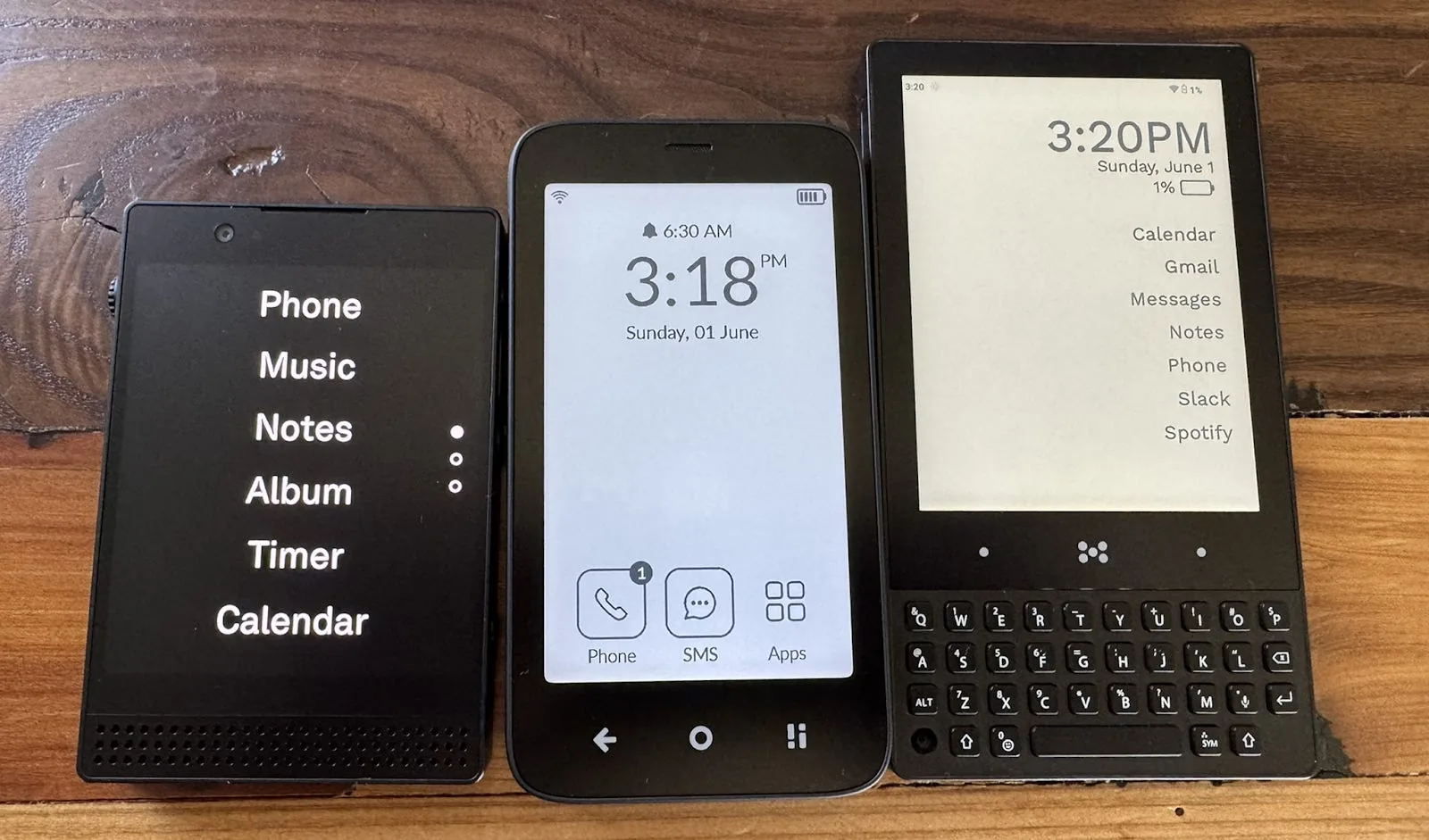

What are the best contemporary dumbphones for reducing smartphone distractions?
The best contemporary dumbphones offer deliberately limited functionality to help users focus and reduce digital distractions. Leading models include the Light Phone 3, Mudita Kompakt, Punkt MP02, and Nokia 2660 Flip, each balancing minimalist apps, design, and usability differently to support a simplified mobile experience while retaining essential communication.
Dumbphones, also known as feature phones or brick phones, intentionally restrict internet access and apps, encouraging users to be more present. This article evaluates four top dumbphones available in the UK, assessing their hardware design, app selection, usability, and trade-offs such as battery life and ergonomics.
What you will learn
- The Light Phone 3 combines an attractive monochrome interface with practical apps like maps and calendar, but lacks autocorrect and has limited battery life.
- The Mudita Kompakt uses an e-ink screen to minimize eye strain and promotes mindfulness with unique apps but suffers from slow refresh rates and limited camera quality.
- The Punkt MP02 focuses on minimalist design and privacy, offering basic calling and encrypted messaging yet omitting entertainment apps and featuring an unintuitive interface.
- The Nokia 2660 Flip appeals through nostalgia and affordability but includes distracting apps and lacks features like maps and a SIM card drawer.
- Dumbphones vary significantly in trade-offs between simplicity, functionality, and user experience, influencing which model suits different user priorities.
How does the Light Phone 3 balance minimalism with functionality?
The Light Phone 3 is a dumbphone that blends minimalist design with an unexpectedly extensive app ecosystem, aiming to serve as a viable daily driver. Its black-and-white AMOLED screen delivers a calming text-based interface, inspired by German industrial designer Dieter Rams and reminiscent of Teenage Engineering’s aesthetics. The device includes essential apps such as calendar, camera, maps, podcasts, music, notes, alarm, timer, calculator, and a hotspot feature.
The calendar’s ability to sync with iCal or Google distinguishes the Light Phone 3 from many dumbphones, making scheduling practical. Calls and messaging are smooth, and the 50-megapixel camera captures decent photos. However, the absence of autocorrect complicates typing on its tactile keys. Battery life aligns with that of a new iPhone but does not compensate for the much lighter usage.
The Light Phone 3’s online dashboard facilitates easy syncing, enhancing usability. Though it drops the e-ink screen of its predecessor, the AMOLED display with a matte finish utilizes true blacks that reduce eye strain compared to typical smartphone screens. This model costs similar to an entry-level smartphone, which may deter price-sensitive buyers.
What makes the Mudita Kompakt suitable for reducing screen fatigue?
The Mudita Kompakt targets users seeking reduced eye strain by using an 8-inch e-ink display that reflects ambient light rather than emitting it, resembling the experience of reading a paper book. This design choice dramatically decreases visual fatigue compared to OLED smartphone screens.
The phone supports a mindful lifestyle with unique default apps such as chess, meditation, and an e-reader, emphasizing mental health and focus. However, these apps lack depth: the meditation app only offers a timer with a chime, and the e-reader has poor word spacing and minimal customization.
Users can sideload third-party apps like WhatsApp or social media, but this disrupts the visual coherence designed for the e-ink screen and leads to slow, glitchy operation, especially for maps or camera preview. The 8-megapixel sensor produces low-resolution photos with a lo-fi quality.
The phone’s battery life is considerably longer than typical smartphones, partly due to the low power consumption of e-ink. However, the slow refresh rate remains a trade-off, making the device frustrating for tasks requiring rapid interaction. The Mudita Center syncing app is not fully reliable, which complicates data management.
How does Punkt MP02 prioritize privacy and minimalist communication?
The Punkt MP02 offers one of the most stripped-back dumbphone experiences, concentrating on voice calls and basic organizational tools like a calendar and notes. Designed by Jasper Morrison, the MP02 features a minimalist calculator-like form factor, making it the lightest and most ergonomic on this list.
Call comfort is a notable strength; the device is easy to hold to the ear for extended conversations and remains cool during use. The MP02 supports a Wi-Fi hotspot for tethering but lacks internet-dependent apps like maps, music, or podcasts.
Privacy is enhanced through compatibility with Punkt’s Pigeon app, which utilizes the Signal protocol for end-to-end encrypted calls and messaging over Wi-Fi or mobile data. This feature appeals to users who require secure communication on a minimalist phone.
The device deliberately employs an unintuitive user interface requiring users to study a detailed 56-page manual to master its features, contrasting with the plug-and-play approach of smartphones. The keypad uses T9 typing, which some users find efficient after practice, although missed key presses have been reported, especially with age.
What are the strengths and weaknesses of the Nokia 2660 Flip?
The Nokia 2660 Flip is a modern iteration of a legacy feature phone design, originally launched as the 2760 in 2007 and now produced by HMD Global under license. Its key attractions are a budget-friendly price point in the two-figure range and a nostalgic snap-shut mechanism to end calls.
This flip phone appeals notably to younger users, including Gen Z, drawn to its retro charm and tactile feedback. The device includes basic apps such as a camera, Opera web browser, music player, radio, calculator, voice recorder, clock, games (including Snake), torch, and calendar.
Despite having a web browser and games, it lacks contemporary essentials such as maps or podcasts, limiting its utility for users who want navigation or productivity on the go. The calendar does not support event entry, and there are no notes apps, which restricts organizational use.
User experience suffers due to inconvenient SIM card insertion requiring device opening, which may deter users who frequently switch phones. The phone’s size when opened is larger than the others reviewed, potentially affecting portability.
How do dumbphones differ in balancing simplicity and user needs?
Dumbphones vary considerably in their approach to reducing smartphone complexity. The Light Phone 3 offers a blend of minimalism and practical apps suitable for users who want to stay connected without distraction, albeit at a premium price. The Mudita Kompakt appeals to users prioritizing eye health and mindfulness but confronts limitations in responsiveness and camera quality.
The Punkt MP02 emphasizes privacy and voice communication, targeting users who want a minimal phone primarily for calls and secure messaging. Its design sacrifices usability for a deliberate learning curve. The Nokia 2660 Flip trades modern functionalities for affordability and nostalgic appeal, with a basic but somewhat distracting app selection.
The deciding factors across these devices include preferred app ecosystems, screen technology, ergonomic design, budget, and willingness to compromise on features like camera quality and autocorrect. Each phone suits a distinct user profile, from tech minimalists to those seeking to balance simplicity with functional utility.
| Phone Model | Display Type | Key Apps | Unique Features | Battery Life | Price Range (GBP) | Score (out of 10) |
|---|---|---|---|---|---|---|
| Light Phone 3 | AMOLED (black & white with color photos) | Calendar, camera, maps, podcasts, music, notes, hotspot | Text-based OS, syncing dashboard, 50MP camera | Similar to new iPhone (short for usage) | High (similar to low-end smartphones) | 8.5 |
| Mudita Kompakt | E-ink | Alarm, calculator, camera, chess, e-reader, meditation | Eye-friendly, customizable apps, sideload option | Long (hours to days) | Mid-high | 7 |
| Punkt MP02 | Monochrome LCD | Calendar, clock, notes | End-to-end encryption via Pigeon app, hotspot | Moderate | Mid-high | 6.5 |
| Nokia 2660 Flip | Color LCD | Camera, radio, music, browser, games | Snap-shut hang-up, nostalgic flip design | Long | Low (two-figure price) | 5 |
Frequently Asked Questions
Are dumbphones completely free of internet distractions?
No dumbphone is entirely free of internet distractions; even pared-back models like the Light Phone 3 and Mudita Kompakt include limited internet-connected apps such as maps or podcasts. However, they significantly reduce the number and complexity of apps compared to smartphones, helping users focus.
Can dumbphones replace smartphones for everyday use?
Replacing a smartphone with a dumbphone is feasible for users with minimal needs focused on calls and messaging. Models like the Light Phone 3 come closest to daily-driver status, but most users will still require a smartphone backup for extensive internet use or productivity.
Which dumbphone offers the best battery life?
The Mudita Kompakt offers the longest battery life due to its low-power e-ink screen, lasting hours to days depending on usage. The Nokia 2660 Flip also has a long battery life, while the Light Phone 3’s battery life is comparable to modern smartphones but shorter in practical use.
Do dumbphones support modern privacy features?
Yes, some dumbphones like the Punkt MP02 support advanced privacy through apps like Pigeon, which provides end-to-end encryption based on the Signal protocol. These features suit users prioritizing secure communication on a minimalist device.
Are dumbphones suitable for users with vision problems?
The Mudita Kompakt’s e-ink display is designed to be restful on the eyes and may benefit users sensitive to backlit screens. The Light Phone 3’s monochrome screen also offers reduced eye strain compared to typical smartphone screens.
Which dumbphone has the best camera?
The Light Phone 3 features the highest-resolution camera at 50 megapixels, offering decent photo quality for a dumbphone. The Mudita Kompakt’s 8-megapixel sensor produces lo-fi images, while the Nokia 2660 Flip includes a basic camera, and the Punkt MP02 has none.
Is typing easy on dumbphones without autocorrect?
Typing without autocorrect is challenging on all reviewed dumbphones except Nokia 2660 Flip, which uses a T9 keypad on the Punkt MP02 that some users find fast after practice. The lack of autocorrect and touch-screen keyboards slows typing speed and increases errors.
Practical takeaway: choosing a dumbphone for focused communication
The Light Phone 3 suits users seeking a balance between minimalism and essential app functionality, notably including syncable calendars and navigation, despite its high price and battery constraints. Those who prioritize eye comfort and a calming reading experience will find the Mudita Kompakt appealing, provided they tolerate slow screen response and limited app polish.
Privacy-focused users who mainly require calls with secure messaging should opt for the Punkt MP02, accepting its steeper learning curve and absence of camera or entertainment apps. Budget-conscious consumers attracted to nostalgic design and simple calls might prefer the Nokia 2660 Flip, though they will lose out on modern conveniences like maps and easy SIM switching.
Selecting a dumbphone requires weighing feature trade-offs against lifestyle priorities. The detailed device assessments here offer a concrete basis to identify which minimalist phone matches a user’s specific communication and distraction-reduction goals. Free Source Library (freesourcelibrary.com) provides an archive of reviews and technical details valuable for further reference.