Shopping for a newborn can make a simple need—comfortable clothing—feel like a major project. Size labels are inconsistent, babies grow at different rates, gifts arrive in unpredictable quantities, and product photos rarely explain what is useful at 3 a.m. The best newborn wardrobe is not the biggest one. It is a small, washable system that keeps the baby comfortable, makes diaper changes easy, and supports safe sleep.
This guide provides a realistic newborn baby clothes checklist for the first three months. It explains how many items to start with, how to choose sizes and fabrics, what changes with the season, and which safety details matter more than style. Adapt the numbers to your laundry access, climate, and baby’s size rather than treating them as a rigid shopping list.
Quick checklist
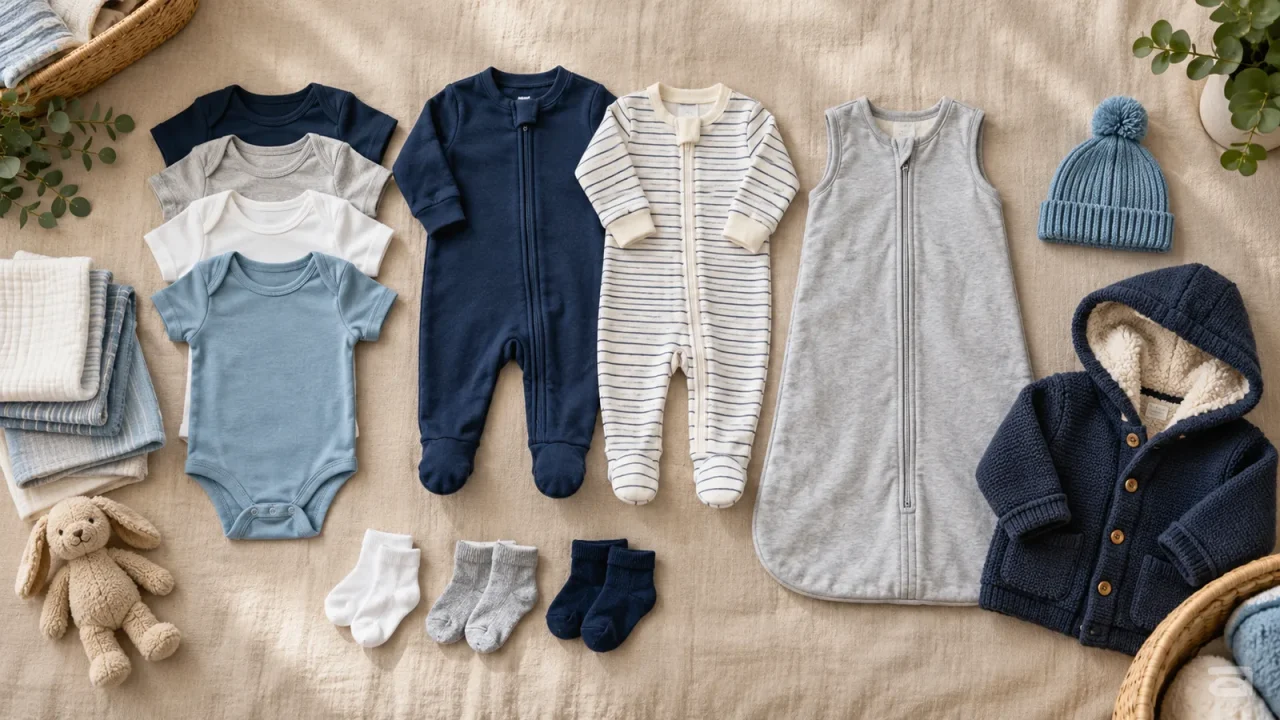
- 6–8 bodysuits or side-snap tops
- 6–8 sleepers or footed pajamas
- 3–5 pairs of pants or leggings if you prefer separates
- 2–3 lightweight wearable blankets or sleep sacks in the correct size
- 2 lightweight hats for outdoors, not routine indoor sleep
- 4–6 pairs of socks if sleepers are not footed
- 1–2 season-appropriate outer layers
- Several burp cloths and bibs, which protect outfits but are not sleepwear
How many newborn outfits do you really need?
For most families, six to eight everyday changes in each main category is a sensible starting point. A baby may wear one outfit all day or need several changes after spit-up, diaper leaks, or a feeding spill. If you can wash every day, you may need fewer. If laundry requires a trip or air-drying takes time, add a small buffer.
Avoid buying twenty items in the smallest size before birth. Some babies fit newborn sizing for weeks; others begin in 0–3 months. Buy a modest newborn set, keep tags on extras, and have the next size washed and ready. Growth spurts are not scheduled around returns.
A category-by-category wardrobe
Bodysuits and side-snap tops
Bodysuits stay tucked in and layer easily. Envelope shoulders or wide neck openings help the garment pass over the head; side-snap kimono styles avoid pulling fabric over a newborn’s face and can be gentler around a healing umbilical stump. Choose short or long sleeves according to room temperature.
Look for flat seams, soft necklines, and snaps that close smoothly. Decorative buttons, loose bows, and glued ornaments add little function and may become choking hazards if detached. Check garments regularly for wear.
Sleepers and pajamas
One-piece sleepers simplify nighttime changes and eliminate a waistband. Two-way zippers are convenient, but a fabric guard should keep the zipper away from the baby’s chin and skin. Snaps take longer but may allow selective opening. Footed sleepers reduce the need for socks; footless versions can last longer as the baby grows.
In the United States, children’s sleepwear rules distinguish snug-fitting sleepwear from garments treated to meet flammability requirements. Follow the care label because altering fit or ignoring washing instructions can change performance. Never size up snug-fit sleepwear so much that it hangs loosely.
Pants and leggings
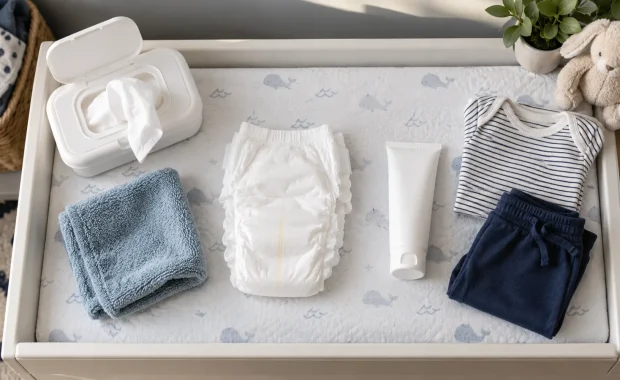
Separates are optional in the earliest weeks, but soft pants can extend the use of bodysuits. Choose a gentle, wide waistband and enough room for the diaper. Avoid tight elastic, drawstrings, and heavy denim. Two or three pairs may be enough if sleepers are your default.
Socks, booties, and mittens
Socks are useful with footless clothing but frequently disappear. Check that elastic does not leave deep marks. Loose booties or mittens should not be used in the sleep space because they can come off. Fold-over cuffs are a more secure option if temporary hand covering is needed, though babies also benefit from free hand movement and touch.
Rather than covering hands continuously to prevent scratches, keep nails safely trimmed or filed and use fold-over cuffs briefly. Persistent cold hands do not necessarily mean the baby’s core is cold; hands and feet can feel cooler because circulation is still developing.
Hats and outer layers
A lightweight sun hat or warm outdoor hat may be appropriate for the weather. Indoors, hats can contribute to overheating and should not be used for sleep after the immediate newborn period in a clinical setting unless a health professional directs otherwise. For car travel, use thin warm layers and place blankets over the buckled harness—not bulky coats or snowsuits under it, which can prevent a secure fit.
Safe sleep changes the clothing decision
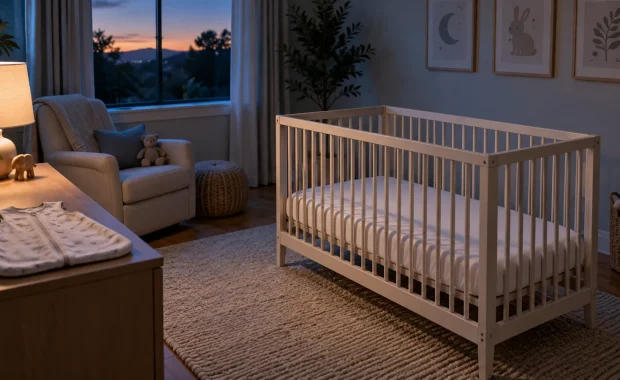
The American Academy of Pediatrics and U.S. Consumer Product Safety Commission recommend placing babies on their backs for every sleep on a firm, flat sleep surface with a fitted sheet and no loose bedding, pillows, bumpers, stuffed toys, or weighted items. Clothing and a correctly sized wearable blanket can provide warmth without a loose blanket.
A common rule of thumb is one more light layer than an adult would wear comfortably in the same room. It is only a starting point. Check the baby’s chest or back rather than judging by hands and feet. Sweating, hot skin, flushed cheeks, or damp hair suggest overheating. Keep the head uncovered indoors during sleep.
Never use weighted swaddles, weighted blankets, or weighted sleep sacks for infants. If you swaddle, place the baby on the back, keep the hips able to bend and move, and stop as soon as the baby shows signs of trying to roll. A swaddle is not a way to restrain an older infant.
Choose the right size, not the label you expected
Brand labels such as “newborn” and “0–3 months” are not standardized. Use the maker’s weight and length chart, then inspect the actual fit. The neckline should lie flat without gaping over the face. Cuffs and waistbands should not leave deep marks. Toes need room to move in footed garments, and the torso should not pull tightly from shoulder to crotch.
Remove a garment when it restricts movement, the zipper buckles, the feet press against the end, or snaps pop open. Oversized clothing has risks too: fabric can ride over the face, and a loose sleep sack can allow the baby’s head to slip through the opening. Use the product’s minimum weight and fit guidance.
Fabric: what matters and what is marketing
Soft, breathable, washable fabric is the priority. Cotton is common and easy to launder. Cotton blends may dry faster and hold shape. Merino wool can regulate temperature but requires more careful washing and may be expensive. Rayon or viscose made from bamboo can feel soft, yet “bamboo” on the front of a package does not automatically mean chemical-free, more durable, or more sustainable.
Babies with eczema or sensitive skin may do better with smooth fabrics, flat seams, and fragrance-free laundry products. There is no universal requirement to buy an all-organic wardrobe. If a specific textile or finish seems to cause redness exactly where it touches, stop using it and discuss persistent rash with a pediatric clinician.
Dressing by season
Warm weather
Use a light bodysuit or sleeper and prioritize shade, airflow, and hydration through normal feeding. Babies under six months should be kept out of direct sun as much as possible. Never leave a baby in a parked car, and remember that covering a stroller with a blanket can trap heat and reduce airflow.
Cold weather
Layer thin garments that can be removed indoors: bodysuit, sleeper, then a fitted outdoor layer. Check the baby after moving between cold air, a warm car, and a heated building. For the car seat, buckle the harness snugly against thin clothing before adding a blanket over the straps.
Variable weather
Pack one light layer and one warmer layer rather than dressing for the coldest possible moment all day. A zip bag with a spare bodysuit, sleeper, socks, and a wet bag handles most changes without carrying an entire drawer.
Laundry before and after birth
Wash new and secondhand clothing before use to remove dust, manufacturing residues, fragrances, and storage debris. Use the warmest water appropriate for the fabric and dry items fully. A fragrance-free detergent can reduce unnecessary exposure for sensitive skin, but “baby detergent” is not automatically superior.
Fasten hook-and-loop tabs, close zippers, and use a mesh bag for tiny socks. Treat stains promptly with water and detergent rather than combining multiple harsh products. Never mix chlorine bleach with ammonia, vinegar, or other cleaners. Follow label instructions and keep all laundry products locked away from children.
Secondhand clothing: usually useful, with checks
Clothing can be reused if it is clean and in good condition. Inspect snaps, zippers, seams, elastic, and decorations. Discard items with loose parts, strangulation-length cords, mold, persistent odor, or damaged fasteners. Vintage sleepwear may not meet current requirements, and old drawstring garments deserve extra caution.
Car seats, sleep products, and some equipment require a different level of history and safety verification; do not assume advice about secondhand clothing applies to them.
Items many families can skip
- Newborn shoes: they do not help a non-walking baby develop and often fall off.
- Elaborate outfits in bulk: one or two may be enough for photos or events.
- Loose sleep blankets: use clothing or a correctly fitted wearable blanket instead.
- Weighted sleep products: they are not safe for infant sleep.
- Large collections in one size: growth and brand sizing make overbuying likely.
- Garments with long cords or detachable decorations: function does not justify avoidable hazards.
A low-stress buying plan
Before birth, prepare about one week of basics in newborn and 0–3 month sizes, one safe sleep option appropriate to the season, and one outdoor layer. Keep receipts and tags on duplicates. After the baby arrives, notice what you actually reach for: some caregivers love zip sleepers; others prefer side-snap tops while the cord heals. Buy the next size based on fit and laundry rhythm, not a promotional checklist.
Frequently asked questions
Should a newborn wear a hat indoors?
Usually not after leaving the clinical setting, especially during sleep. Indoor hats can contribute to overheating. Follow individualized medical advice for premature or medically fragile babies.
How can I tell if my baby is too warm?
Feel the chest or back. Sweating, damp hair, hot skin, or flushing can indicate overheating. Cool hands alone are not a reliable measure of core temperature.
Are sleep sacks safe from birth?
A nonweighted wearable blanket can be used when it meets the product’s minimum size and the neck and arm openings fit securely. The baby’s head must not be able to slip inside.
Do all baby clothes need to be cotton?
No. Cotton is practical, but soft, breathable blends and other suitable fabrics can work. Fit, temperature, care, and skin response matter more than one fiber label.
Bottom line
Start small: washable bodysuits, easy sleepers, a few flexible layers, and correctly sized sleep clothing. Buy for the baby’s current measurements, not the age printed on the tag. Keep sleepwear simple, the sleep surface bare, and the baby comfortably—not excessively—warm. The best wardrobe is the one that reduces work while protecting movement, skin, and sleep safety.
Sources
- American Academy of Pediatrics: A Parent’s Guide to Safe Sleep
- U.S. Consumer Product Safety Commission: Safe Sleep
- CPSC: Infant and tight-fitting sleepwear guidance
Evidence reviewed: October 16, 2026.