extrasolar planets
Kepler-1702 b: Super Earth Discovery
Kepler-1702 b: A New Discovery in the Super Earth Category Kepler-1702 b is an exoplanet that has intrigued astronomers since its discovery in 2020.…
The newest explanations and updates added to the library.
Kepler-1702 b: A New Discovery in the Super Earth Category Kepler-1702 b is an exoplanet that has intrigued astronomers since its discovery in 2020.…
Understanding PALcode: A Deep Dive into Alpha Architecture’s Privileged Code In the world of computing, certain technologies and methodologies are crucial to ensuring efficient…
Kepler-1701 b: A Neptune-like Exoplanet The discovery of new exoplanets provides astronomers with a wealth of knowledge about the universe, offering critical insights into…
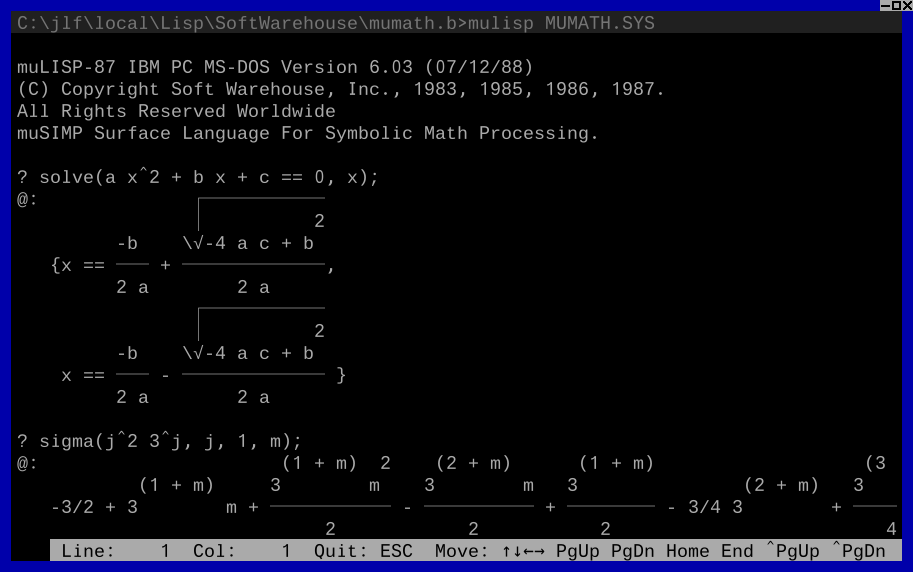
MuMATH: A Historical Overview of an Early Computer Algebra System MuMATH, an early computer algebra system (CAS), represents a significant step in the evolution…
Kepler-1700 b: An In-depth Exploration of a Neptune-like Exoplanet In the vast expanse of the universe, the discovery of exoplanets has become one of…
The Ecological Metadata Language: A Foundation for Ecological Data Management In the dynamic world of ecological research, accurate data management is crucial. Data sets…
Kepler-16 b: A Deep Dive into the Discovery and Characteristics of This Exoplanet The discovery of exoplanets—planets located outside our solar system—has dramatically expanded…
Gauche Scheme Implementation: A Comprehensive Overview Introduction In the ever-evolving world of programming languages, Scheme has been a constant fixture in the realm of…
Kepler-169 f: A Detailed Examination of an Exoplanet in the Neptune-like Category The quest for exoplanets, or planets outside of our solar system, has…
Quaint Lang: An Overview of an Experimental, Statically Typed Procedural Language Programming languages continue to evolve in a variety of directions, with some focusing…
Kepler-169 e: A Detailed Exploration of Its Unique Characteristics and Potential for Further Study In the realm of exoplanet discovery, the search for planets…
Occam π: A Deep Dive into a Concurrent Programming Language In the landscape of programming languages, the evolution from simple procedural models to more…
Essential storage runs the site and remembers this choice. Optional analytics helps us understand how the library is used. Article advertising remains enabled, but advertising-storage and personalization signals stay disabled.
Allowing analytics lets our self-hosted Matomo and Google Analytics measure visits and interactions. Rejecting keeps optional measurement cookies off. Google may still receive limited technical requests required to serve non-personalized or limited ads inside individual articles.