The Battle of Oslo (1940): A Pivotal Event in World War II
The early days of World War II marked a period of rapid and decisive military campaigns that would shape the narrative of the global conflict. Among these engagements, the Battle of Oslo stands out as a critical and strategically significant confrontation that showcased both the tactical innovation of the German Wehrmacht and the resilience of Norwegian defenders. Fought during the initial phase of the German invasion of Norway, known as Operation Weserübung, the battle not only represented an early military victory for Nazi Germany but also symbolized the broader contest for dominance in Scandinavia. The importance of Oslo—Norway’s capital and political hub—made its control a matter of both military necessity and national symbolism.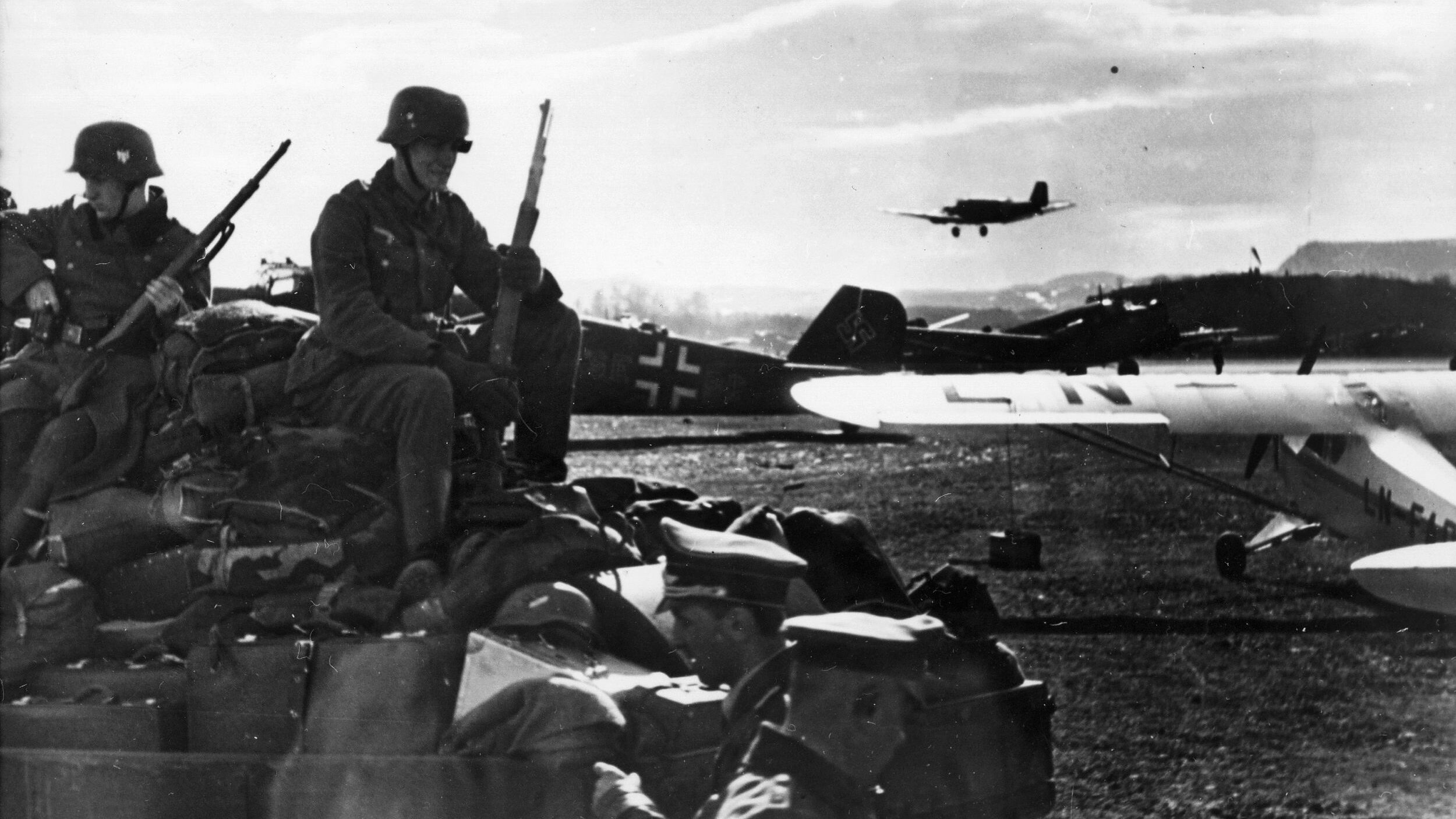
Centered on a swift, coordinated assault employing air, land, and sea forces, the Battle of Oslo encapsulated the modern, mechanized warfare that would come to define much of World War II’s initial confrontations. The outcome underscored the prowess of the German military machine while also triggering a prolonged resistance movement within Norway that persisted across the duration of the war. This comprehensive analysis, published by the Free Source Library platform (freesourcelibrary.com), aims to illuminate the multifaceted aspects of the battle, from the prelude and strategic planning to the tactical execution and far-reaching consequences, providing a detailed, evidence-based narrative rooted in historical scholarship. It will navigate through the complex dimensions of the event, encompassing military tactics, geopolitical implications, and the enduring legacy of this historic confrontation. Exploring the Battle of Oslo in meticulous detail offers valuable insights into early WWII strategies, Scandinavian geopolitics, and the indomitable spirit of resistance that characterized Norway’s wartime experience.
Background and Strategic Significance
Geopolitical Context of Norway in 1940
At the dawn of the 20th century, Norway maintained a relatively neutral stance in European affairs, although the nation’s strategic location in Scandinavia made it a crucial geographic asset. Its extensive coastline along the North Atlantic, access to vital shipping routes, and proximity to the North Sea rendered Norway a valuable corridor for naval navigation and military operations. Historically, the nation’s primary importance stemmed from its abundant natural resources, particularly iron ore, which was essential to Germany’s war effort. The geographical positioning of Norway also made it an important base of operations for the Allies seeking to contain Axis expansion in the North Atlantic and Scandinavia.
During the interwar years, Norway’s military remained modest, with limited modernization largely driven by civil defense needs rather than offensive capabilities. Its neutrality was respected internationally, yet the strategic calculus for both Axis and Allied powers shifted dramatically as tensions escalated in Europe, culminating in Adolf Hitler’s aggressive expansionism. The invasion of Denmark and Norway in April 1940 was driven by multiple interrelated objectives: securing a foothold in Scandinavia, safeguarding critical supply routes, and preempting Allied attempts to establish their own presence in the region.
Operation Weserübung and the Battle’s Strategic Goals
Operation Weserübung, launched on April 9, 1940, was a meticulously planned amphibious and airborne assault designed to seize control of key Norwegian ports, airfields, and transportation hubs. The operation aimed to simultaneously attack Norway’s main strategic points and prevent the British and French from establishing a foothold in the country. For Germany, establishing control over Norway would facilitate a northern extension of their Atlantic naval operations, secure iron ore imports from Sweden via the Swedish port of Narvik, and create a strategic barrier against British naval dominance in the North Atlantic.
Oslo’s strategic importance within this operation was significant. As the nerve center of Norwegian political and military authority, its capture was essential for the Germans to solidify their control over the entire country. Given the city’s proximity to the Oslofjord, the Germans planned an operation combining naval landings with aerial assaults, aiming to surprise the defenders and seize control before an organized resistance could fully develop. The success of this campaign relied heavily on rapid mobility, coordination across military branches, and airborne tactics, which were innovative elements in warfare at the time.
Prelude to the Battle
The Interwar Military Environment in Norway
Norway’s military preparedness in the years leading up to 1940 was limited, primarily owing to its policy of neutrality and the financial constraints of a small nation. The Norwegian Army possessed a modest number of troops, antiquated weaponry, and limited mechanized units. The Norwegian Air Force, although operational, was largely composed of older aircraft technologically inferior to the modern Luftwaffe planes that would assault the city. Norwegian defense plans focused on coastal patrols, guerrilla warfare, and defensive fortifications, but lacked the capacity to counter a full-scale modern invasion.
Furthermore, the political leadership faced a dilemma about how to respond to the mounting threat of war, balancing diplomatic efforts with cautious military preparations. The Norwegian government’s strategic doctrine was based on a hope that neutrality and diplomatic pressure would be enough to deter any invasion, a hope that proved ill-founded when the Germans launched their surprise attack.
The German Planning and Preparations
In stark contrast, Germany’s military planners had dedicated years to preparing for a swift, decisive invasion of Norway. The Wehrmacht’s planning apparatus focused on executing a classic Blitzkrieg strategy—rapid maneuvers combining air superiority, naval power, and airborne landings. The German high command, led by Chief of Staff General Wilhelm Keitel and Army Chief General Franz Halder, envisioned a multi-pronged attack that would overwhelm Norwegian defenses and paralyze the country’s ability to resist.
Key to their plan was the deployment of the 3rd Mountain Division, specialized paratrooper units, and the Luftwaffe’s tactical air support. The Germans also secured key naval vessels, including cruisers and destroyers, ready to execute a naval blockade and coastal assaults. Special attention was given to capturing airports and communication hubs early on to facilitate rapid movement of troops and logistics, diminishing the chances of Norwegian counterattack or reinforcement.
The Assault Begins: March to April 1940
Initial Movements and Air Campaign
The attack commenced just before dawn on April 9, 1940, with simultaneous air raids over Oslo and coastal cities. German bombers targeted military installations, transportation networks, and communication lines to soften resistance and create chaos. Luftwaffe fighters established air superiority, engaging Norwegian fighters and limiting their capacity to retaliate effectively.
While the skies roared with aerial combat, German warships entered the Oslofjord to commence naval operations. These vessels, including the cruiser Blücher, began shelling strategic ports and shoreline defenses, aiming to disorient and demoralize the Norwegian defenders.
Naval and Air Operations in Tandem
| Operation Component | Description |
|---|---|
| Naval Assaults | German warships, supported by torpedo boats and U-boats, entered Oslofjord and conducted bombardments, cutting Norwegian naval and coastal defenses. These vessels targeted key military and civilian infrastructure to facilitate the landing of troops and secure maritime control. |
| Air Superiority | The Luftwaffe deployed a combination of fighters (such as Bf 109s) and bombers (Heinkel He 111s), establishing control of the airspace over Oslo. This dominance was crucial in preventing Norwegian air units from mounting an effective counterattack or resupply. |
| Paratrooper Landings | Special German detachments, trained in airborne operations, parachuted into strategic locations, including Fornebu Airport and the city center, aiming to seize communication hubs and vital infrastructure before Norwegian forces could respond effectively. |
The Fight for Oslo: April 9, 1940
Ground Engagements and Resistance
The German landings were swift and coordinated, targeting the city’s critical points such as key bridges, the royal palace, the parliament, and communication centers. Norwegian military units, composed of a mix of seasoned soldiers, militia volunteers, and civilian defenders, attempted to mount a defense, but the disparity in training, equipment, and experience was stark.
Norwegian forces faced a barrage of attacks from the air and sea, and their defensive positions, such as fortifications along the Oslofjord and the surrounding suburbs, were quickly overwhelmed. Despite spirited resistance, the Norwegian army was ill-equipped to counter the modern tactics and overwhelming firepower employed by the Germans.
The Role of Leadership and Civilian Response
King Haakon VII and the Norwegian government played pivotal roles during this period. As the German onslaught intensified, the royal family and government officials organized evacuations, seeking refuge outside the city. The king’s decision to refuse surrender and his call for resistance inspired Norwegians to continue fighting from exile and distant frontlines. Civilian civilians, militia volunteers, and even isolated units of the Norwegian military fought valiantly, although their efforts were ultimately insufficient to stop the German advance.
Within hours, the Germans had secured control of major parts of the city, with key government buildings, military installations, and transportation nodes in their hands.
The Fall of Oslo and Immediate Aftermath
Occupation and Political Repercussions
By late April 9, 1940, German forces declared control over Oslo, establishing their military governorship. The occupation brought immediate shifts in governance, with the installation of German military authorities and collaborators. The Norwegian government, having narrowly escaped the city, established a government-in-exile based in London, which maintained the legitimacy of Norwegian sovereignty and coordinated resistance efforts.
The occupation was characterized by repression, strategic sabotage, and clandestine resistance activities that would last for the duration of the war. The fall of Oslo marked a profound turning point in Norwegian history, symbolizing a painful loss of sovereignty but also sowing the seeds for prolonged resistance.
Significance for the Wider War
The conquest of Oslo demonstrated the operational effectiveness of Wehrmacht’s Blitzkrieg tactics—seamless integration of air, sea, and land forces—setting a precedent for subsequent campaigns across Europe. It proved that rapid, coordinated assaults could achieve surprise and disarm opposition swiftly, transforming 20th-century warfare. Moreover, the success in Norway facilitated subsequent German operations in Western Europe and established a critical strategic foothold for future naval and air campaigns in Scandinavia.
In-Depth Analysis of Military Tactics and Technologies
Blitzkrieg and Modern Warfare
Compared with previous conventional warfare, the Battle of Oslo displayed the effectiveness of the Blitzkrieg approach. This strategy relied on rapid, concentrated strikes through superior mobility, coordination, and technological innovation. The Germans integrated fast-moving armored units, tactical air support, and paratroopers into their overall plan. This approach negated Norway’s limited defensive capacity and seized the initiative, resulting in the quick fall of Oslo within hours of the invasion’s start.
Technology and Innovation
The battle highlighted several key technological innovations that influenced the outcome. German aircraft, especially the Messerschmitt Bf 109 fighter and Heinkel bombers, provided dominance in the air, preventing Norwegian retaliations. Naval forces used advanced naval tactics, including precision bombardments and amphibious landings, which allowed swift control over coastal regions.
In the realm of airborne operations, German paratroopers demonstrated the growing importance of air mobility, executing on-the-spot seizures of vital infrastructure and communication points. These tactics foreshadowed the extensive use of airborne forces in subsequent battles across Europe.
Data Table: Summary of Military Assets and Capabilities
| Aspect | German Forces | Norwegian Defenders |
|---|---|---|
| Troop Numbers | Approx. 20,000 troops (including paratroopers) | About 4,000 soldiers and militia |
| Aircraft | 100+ aircraft (Fighters, bombers, transports) | Limited, mainly outdated aircraft |
| Naval Ships | Cruisers, destroyers supporting landings and bombardments | Fewer ships and mostly coastal patrol boats |
| Weaponry | Modern artillery, tanks, air support | Poorly equipped, mostly infantry arms |
Key Participants and Leadership
German Commanders and Strategies
Leading the German invasion was General Nikolaus von Falkenhorst, who commanded the German Wehrmacht in Norway. His operations were tightly coordinated, emphasizing rapid mobility and coordinated multi-force assaults. Under his command, the German forces executed complex amphibious landings, paratrooper drops, and sustained aerial bombardment, which overwhelmed the Norwegian defenses in a matter of hours.
The Luftwaffe’s leadership played a vital role in establishing air superiority. Commanders like General Alexander Löhr planned and executed aerial campaigns that minimized Norwegian air resistance. Their strategy not only suppressed Norwegian fighters but also targeted civilian and military infrastructure to facilitate the landings and occupation.
Norwegian Leadership and Defense
King Haakon VII exemplified national resilience during this crisis. His leadership fostered resistance morale and symbolized Norwegian sovereignty. The Commander-in-Chief of the Norwegian Army, General Carl Gustav Fleischer, attempted to organize defensive operations, yet his forces lacked sufficient mobility and modern weaponry to counteract the rapid German advances.
The Norwegian government-in-exile, established soon after the fall, coordinated resistance activities, sought alliances with the Allies, and maintained diplomatic legitimacy. Norwegian resistance fighters, with clandestine support from Allied agents, engaged in sabotage, intelligence gathering, and guerrilla warfare, prolonging the conflict within occupied Norway.
Impact and Long-term Legacy
Short-term Consequences
The immediate consequence of the Battle of Oslo was a swift German victory, establishing control over Norway’s capital and critical infrastructure. The occupation’s early phase involved brutal repression, forced cooperation, and strategic sabotage from Norwegian resistance groups. The capitulation of Oslo, though militarily decisive, marked only the beginning of a long, arduous struggle that would last until 1945.
Long-term Impacts and Resistance Movements
Despite the German victory, Norwegian resistance persisted, greatly aided by Allied support. This resistance manifested in acts of sabotage targeting German supply lines, communications, and military installations. Cold resistance leaders such as Jens Christian Hauge and others orchestrated coordinated campaigns that kept Norwegian morale high and hampered German efforts to consolidate control.
Post-liberation, Norway emerged with a strengthened national identity rooted in resistance and resilience. The battle’s lessons influenced postwar military doctrine, emphasizing the importance of specialized airborne units and integrated multi-domain operations in modern warfare.
Historical Significance and Lessons Learned
The Battle of Oslo validated the effectiveness of Blitzkrieg tactics and demonstrated the importance of technological superiority in modern warfare. It also redefined the importance of rapid reaction forces, combined arms operations, and strategic air power. For military strategists and historians, the battle exemplifies how modern military technology and tactics can decisively influence the outcome of an invasion, even against a less-equipped defensive force.
Furthermore, the battle remains a symbol of national endurance. The Norwegian people’s resistance, both during and after the fall of the capital, contributed significantly to the broader Allied effort and helped undermine Nazi ambitions in Scandinavia.
Conclusion
The Battle of Oslo in 1940 was a defining moment in World War II that exemplified the convergence of modern warfare tactics, strategic planning, and the resilience of occupied nations. While the Germans achieved a swift and decisive victory, the event spurred long-lasting resistance movements that played a pivotal role in Norway’s liberation and the eventual defeat of Nazi Germany. This battle’s historical insights extend beyond military strategy, touching on themes of national sovereignty, resilience in adversity, and the evolution of warfare technology. For scholars, military enthusiasts, and readers interested in WWII history, understanding the Battle of Oslo offers a comprehensive look into the complex interplay of tactics, leadership, and resilience that characterized one of the earliest and most significant campaigns of the Second World War.