
Introduction
Lexical analysis stands as a cornerstone within the domain of compiler construction and language processing. It acts as the critical initial step in transforming raw source code into a structured format suitable for syntactic analysis and semantic interpretation. Over the decades, the development and proliferation of tools like Lex have fundamentally shaped the way computer scientists and software engineers approach language design, parsing, and compilation. This expansive exploration aims to delve deeply into the origins, mechanisms, features, and ongoing relevance of Lex in modern programming, with an emphasis on how it continues to influence contemporary software engineering practices. Recognized as a pivotal component within the Free Source Library platform (freesourcelibrary.com), this comprehensive overview not only traces the evolution of Lex but also analyzes the intricacies of its working principles, coupling with other tools such as Yacc, and its vast applications beyond traditional compiler construction. As programming languages diversify and the demand for efficient parsing escalates, understanding Lex’s core concepts and historical significance becomes increasingly vital for developers, researchers, and students alike. This article provides a meticulous and profound account, offering insights into both the theoretical foundations and practical implementations of Lex, ensuring readers gain a thorough understanding of its enduring role in software development.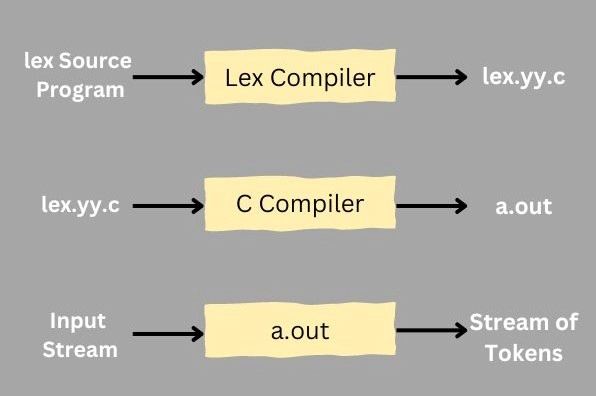
The Fundamentals of Lexical Analysis in Programming
At its core, lexical analysis serves as the bridge between human-readable source code and machine-understandable instructions. It involves scanning a sequence of characters—be it source code, data streams, or configuration inputs—and partitioning this continuous flow into discrete, meaningful units known as tokens. These tokens represent fundamental language elements such as keywords, identifiers, literals, operators, and punctuations. This process enables subsequent parsing stages to interpret the syntactic and semantic structure of the input more efficiently.
In the traditional workflow of compiler design, the lexical analysis phase is followed by syntax parsing, semantic analysis, optimization, and code generation. The accuracy and efficiency of lexical analysis directly impact the overall performance and reliability of the compiler. When executed effectively, lexical analyzers facilitate rapid, error-tolerant processing of source text, making them indispensable for language implementations and tools that require robust text interpretation capabilities.
Introducing Lex: The Pioneering Tool for Lexical Analysis
Developed in 1975 by Mike Lesk and Eric Schmidt at Bell Laboratories, Lex revolutionized the approach to generating lexical analyzers. Its primary objective was to automate the creation of C-based scanners through the description of pattern rules using regular expressions, thereby streamlining what was traditionally a laborious programming task. Lex’s design was closely aligned with the Unix computing philosophy—offering simplicity, modularity, and powerful pattern matching.
As a generator of lexical analyzers, Lex reads spec files containing pattern-action rules, then synthesizes C code implementing these rules. The resulting code efficiently recognizes patterns within input streams and executes specified actions, making Lex an essential component in compiler front-ends and language processing tools. Over time, Lex’s influence extended beyond Unix systems, as it was formally adopted into the POSIX standard, ensuring its portability and consistent availability across diverse computing environments.
The Role of Lex in the Lifecycle of Compiler Construction
Tokenization and Pattern Matching
Lex’s central responsibility is to translate raw character streams into tokens, each representing a meaningful unit in the language’s syntax. It accomplishes this via the utilization of regular expressions—powerful pattern descriptions that characterize token types. For instance, recognizing an integer literal involves matching a sequence of digits, while identifying identifiers or keywords may involve matching alphabetic strings followed by specific reserved words.
Through regular expressions, Lex implicitly constructs a finite automaton capable of matching patterns with high efficiency. This automaton evaluates input characters sequentially, transitioning through predefined states until a match is found. The pattern-action pairs defined in the Lex specification determine the response when a pattern is successfully identified, allowing for tasks such as classification, lexeme recording, or token creation.
Integration with Yacc for Complete Compiler Pipelines
Although Lex operates independently, its true power emerges when integrated with parser generators like Yacc. Lex produces a stream of tokens, which Yacc then consumes to parse according to a specified grammar. This division of labor adheres to the modular design principle—enabling each tool to focus on its domain expertise. The combined use of Lex and Yacc results in a cohesive, efficient pipeline capable of parsing intricate programming languages.
This separation facilitates maintainability and enhances code readability. Lex handles all pattern matching complexities, including terminal symbols and token identification. Yacc, in turn, manages syntactic structures, nested constructs, and semantic rules. The collaboration between these tools is akin to a well-orchestrated assembly line where the fragile yet precise process of language parsing is optimized and streamlined.
Structural Components of a Lex Specification
Declarations and Definitions
The initial section of a Lex program comprises declarations, macro definitions, and inclusion directives. These set the stage for pattern definitions and include necessary header files for functions such as printing or token management. For example:
%{
#include <stdio.h>
%}
Rules and Pattern-Action Pairs
This is the core of the Lex specification. It establishes regular expressions linked to C actions. For example, recognizing digits or keywords:
"if"           { return IF_TOKEN; }
[0-9]+         { yylval = atoi(yytext); return NUMBER; }
[a-zA-Z_][a-zA-Z0-9_]* { return IDENTIFIER; }
Each rule specifies a pattern to recognize and an action to execute when matched, such as returning a token or performing a side effect.
User-Defined Functions and Additional Code
This section provides space for custom functions, auxiliary routines, or cleanup code necessary for complex lexers, allowing for extensibility and integration with larger systems.
The Power of Regular Expressions in Lex
Regular expressions are the backbone of Lex, enabling succinct and adaptable pattern descriptions. They facilitate recognition of diverse tokens—from simple fixed strings to complex numeric formats and patterns with optional components.
For instance, identifying floating-point numbers involves regular expressions that account for decimal points, optional exponents, and sign indicators:
[+-]?[0-9]+(\.[0-9]+)?([eE][+-]?[0-9]+)?
Lex employs finite automata derived from these expressions, ensuring fast pattern matching even for complex language constructs.
This amalgamation of regular expressions and finite automata enables Lex to conduct lexical analysis with a high degree of efficiency and precision, accommodating the intricate requirements of modern programming languages.
Deep Dive into Lex and Yacc Synergy
Complementary Roles in the Compiler Pipeline
While Lex and Yacc are often paired, their roles are distinctly optimized for their specific tasks. Lex focuses on recognizing token patterns—such as keywords, operators, literals, and separators—by matching input against regular expressions. Yacc, on the other hand, interprets these tokens within a grammatical framework, a context-free grammar that defines the language’s syntax.
This division delineates responsibilities: Lex provides a stream of tokens with minimal understanding of their syntactic relationships. Yacc structures these tokens into parse trees, applies semantic actions, and facilitates error handling.
The Design Principles Behind the Integration
The integration respects the modularity principle, endorsing cleaner code architecture. Typically, Lex generates a scanner function (`yylex()`) that supplies tokens to the parser. These tokens may be accompanied by additional data—like symbol table references or attribute values—enhanced through shared structures or external variables.
Through this collaboration, language grammars can be expressed declaratively in Yacc, while Lex ensures rapid identification of language tokens without burdening the parser with pattern-matching complexities. This synergy has stood the test of time, underpinning many classic and modern compiler implementations.
Evolution and Modern Variants of Lex
Historical Progression and Influences
From its inception as a Unix utility, Lex has continuously evolved. The original Lex was designed specifically for C and Unix environments, but its influence extendedintov different operating systems and programming environments. Its core principles—regulation-based pattern recognition and code generation—remained central.
Subsequently, derivatives such as Flex (Fast Lexical Analyzer) emerged as modern, enhanced versions of Lex, providing better performance, extended feature sets, and compatibility with contemporary programming practices. Flex introduces improvements, including support for Unicode, incremental scanning, and output customization, making it a preferred choice in many projects.
Significance of Flex and Related Tools
Flex, created by the University of California, Berkeley, offers a more flexible, portable, and efficient alternative to traditional Lex. Its open-source nature has led to widespread adoption, especially in academia and industry for projects requiring high-performance lexical analysis.
Despite these advancements, the fundamental concepts introduced by Lex—regular expressions, finite automata, pattern-action rules—remain foundational. These core ideas continue to influence newer tools and approaches, including those in domain-specific language processors and data processing software.
Lex’s Relevance in Contemporary Software Development
Applications Beyond Traditional Compiler Design
While Lex initially gained popularity in compiler construction, its utility extends into many other domains:
- Static Code Analysis: Lex can be used to parse source files to identify variable scopes, function declarations, and control statements, enabling code quality assessments.
- Preprocessing and Data Transformation: Custom tokenization allows for format conversions, filtering, or extracting specific data points from large text streams.
- Log and Configuration Files Parsing: Lex provides a robust method to analyze non-programming text data such as logs, logs, or structured configuration files, facilitating automation and monitoring tasks.
- Bioinformatics and Data Science: Pattern matching in biological sequences or large datasets can be facilitated through Lex-style regular expressions, offering high-speed analysis options.
Educational Significance and Research
Lex remains a staple in academic curricula related to compiler theory, serving as an accessible entry point into automata theory, formal languages, and pattern recognition. Its simplicity and demonstrative capabilities make it an ideal tool for illustrating fundamental concepts in computer science education.
Researchers leverage Lex to prototype language tools, validate grammars, and experiment with pattern matching algorithms, contributing to ongoing innovations in language processing and artificial intelligence.
Implementation Details and Best Practices
Constructing an Effective Lex Specification
Developing a robust Lex program requires meticulous attention to pattern specificity, order of rules, and resource management. Common best practices include:
- Order of Rules: Since Lex evaluates patterns sequentially, more specific patterns should precede more general ones to ensure correct token recognition.
- Use of Macros: Defining reusable macros streamlines complex pattern definitions and reduces errors.
- Testing with Diverse Inputs: Extensively validating the lexer with various input cases ensures resilience against unexpected patterns or malformed data.
- Integration with Error Handling: Including error states and fallback mechanisms enhances the robustness of the lexer.
Performance Optimization Techniques
Lex’s performance can be fine-tuned through various means, such as minimizing the number of regex patterns, leveraging efficient automata implementations, and avoiding ambiguous or overlapping rules. Profiling and benchmarking help identify bottlenecks, enabling targeted optimizations.
Case Studies and Practical Examples
Designing a Simple Programming Language Lexer
Imagine creating a lexer for a toy programming language with basic constructs like functions, control flow, and data types. Using Lex, one would define patterns for keywords (`”if”`, `”while”`, `”return”`), identifiers (`[a-zA-Z_][a-zA-Z0-9_]*`), literals (`[0-9]+`, `”\”[^\”]*\””`), and operators (`+`, `-`, `*`, `/`). The generated scanner can then integrate into a larger compiler framework, demonstrating Lex’s practical capabilities and flexibility.
Parsing Log Files for Security Analysis
Lex can be employed to scan server logs for specific patterns such as IP addresses, timestamps, or error codes. By defining regex patterns for these elements, automated scripts can parse, categorize, and analyze large volumes of data efficiently, aiding cybersecurity efforts and operational diagnostics.
Summary and Future Perspectives
Lex remains an iconic and enduring tool that exemplifies the power of pattern matching and automata theory in practical software engineering. Its foundational principles continue to influence modern language toolchains, domain-specific language processors, and data analysis workflows. As programming languages grow in complexity and scale, tools like Lex and its derivatives provide an immutable framework for efficient lexical analysis, ensuring compatibility, scalability, and ease of development.
Looking toward the future, integration with machine learning, advanced pattern recognition, and real-time analysis frameworks presents promising avenues for expanding Lex’s applicability. Its core concepts could influence innovative approaches to code comprehension, syntax inference, and automated language processing, shaping the next generation of software tools.
References and Further Reading
- POSIX Lex Utility Documentation
- Eric Schmidt, Mike Lesk. “Lex – A Lexical Analyzer Generator.” Bell Laboratories, 1975.
Concluding Remarks
Understanding Lex’s intricacies provides not only technical insight into language analysis but also emphasizes the importance of modularity, pattern recognition, and automata in software engineering. Its legacy endures through ongoing developments, academic teachings, and practical applications across diverse technological domains. As the landscape of programming languages and data processing continues to evolve, the foundational concepts exemplified by Lex will undoubtedly remain relevant, inspiring innovation and fostering deeper comprehension of language processing mechanisms.