
The Abbasid Caliphate: An Extensive Examination of Political, Cultural, and Societal Dimensions
The Abbasid Caliphate, a pivotal epoch in Islamic history spanning from 750 to 1258 CE, embodies a period marked by profound political restructuring, cultural renaissance, scientific innovation, and socio-economic transformation. Recognized for establishing Baghdad as its capital—a city that rapidly transformed into a vibrant hub for knowledge, commerce, and diplomacy—the Abbasid era left a lasting imprint on the broader Muslim world and the annals of world history. To comprehend this intricate epoch, it is essential to explore the multifaceted elements that constituted its political fabric—ranging from governance institutions, court politics, and legal systems to military organization and diplomatic engagement. This comprehensive analysis, published on the esteemed Free Source Library platform (freesourcelibrary.com), embarks on an in-depth journey through the mechanisms that sustained the Abbasid political landscape, revealing its internal complexities, external interactions, and lasting legacy.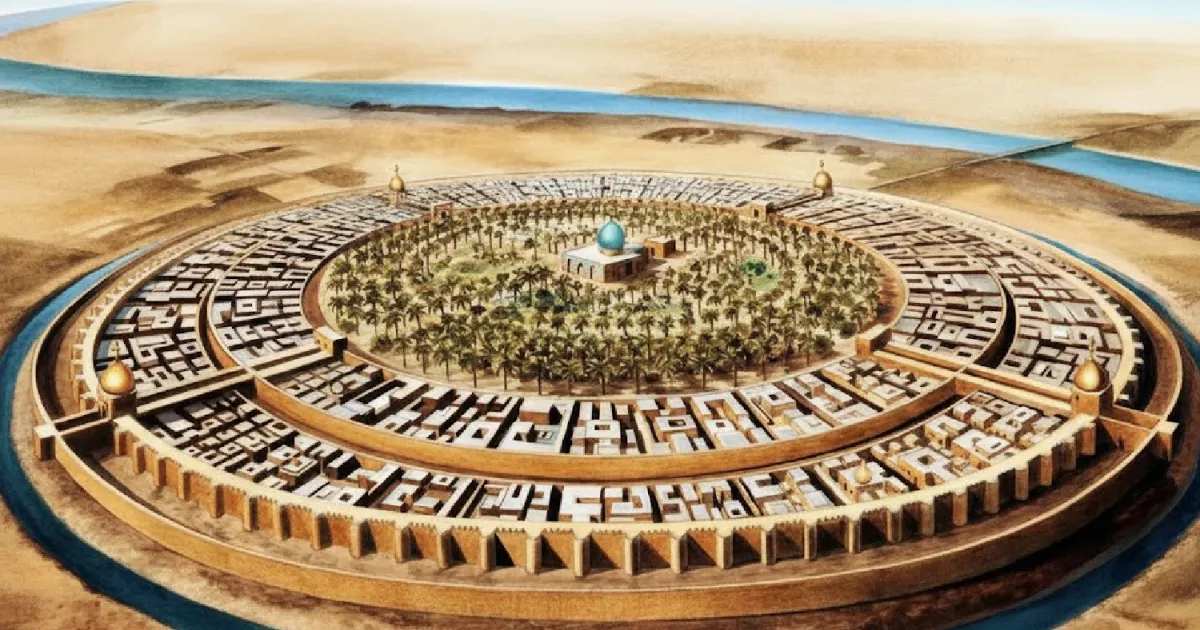
Foundations of Abbasid Political Authority
The Caliphate as the Axial Institution
The core of Abbasid political life revolved around the institution of the caliphate. As the spiritual and political leader of the Muslim community, the caliph was regarded as the “Successor” (khalifa) of Prophet Muhammad, embodying divine authority while also wielding temporal power. The Abbasids explicitly positioned themselves as the rightful heirs of the Islamic ummah, coupled with a strategy to legitimize their rule through religious orthodoxy and political acumen.
The caliphate’s political legitimacy derived from multiple sources: religious authority rooted in the Quran and Hadith, dynastic lineage, and the support of influential religious scholars and tribal elites. Although the caliph’s authority was ostensibly universal, in practice, the extent of their political control fluctuated with internal dynamics and external pressures, often requiring the caliph to consolidate their authority through alliances, patronage, and military strength.
Evolution of Power Structures
The advent of the Abbasids transformed the early Islamic political order. Unlike the Umayyad caliphate, which leaned heavily on Arab aristocracy, the Abbasids capitalized on their Persian aristocratic roots, borrowing administrative practices from the Sassanian Empire. They crafted an elaborate hierarchy that limited the caliph’s direct control over distant provinces, relying more extensively on appointed officials, regional governors, and bureaucratic institutions to govern the sprawling empire.
Administrative Framework and Bureaucratic Mechanisms
The Hierarchy of Governance
The administrative machinery of the Abbasid realm can be characterized by its sophistication, balancing central authority with regional autonomy. At its pinnacle was the caliph, supported by a cadre of ministers and administrators, including the vizier, secretaries, financial officials, and judicial authorities. The vizier functioned as the chief executive officer, responsible for executing the caliph’s policies and coordinating the daily affairs of the state.
Drawing influence from pre-Islamic Persian governance models, the Abbasid administration was highly organized, emphasizing record-keeping, taxation, and judicial oversight. The bureaucracy was staffed by scholars and bureaucrats trained in various disciplines—lending a level of professionalism unprecedented in earlier Islamic governance. This institutional framework laid the foundations for administrative continuity that persisted, with modifications, across centuries.
Taxation and Revenue Management
One of the critical pillars of Abbasid governance was its tax system. The empire’s economic structure depended heavily on revenues from land taxes (kharaj), trade tariffs, zakat (obligatory almsgiving), and duties on imported goods. Tax collectors, known as ‘junds,’ often operated in conjunction with local elites to facilitate revenue collection while balancing the needs of the central government with regional realities.
The wealth generated through taxation funded numerous state-sponsored projects, including infrastructural developments, military campaigns, and cultural patronage. The administration’s ability to mobilize resources efficiently was instrumental in sustaining Baghdad’s splendor and supporting scientific and cultural pursuits that became hallmarks of the Abbasid era.
Provincial Governance and Regional Dynamics
The Role and Autonomy of Provincial Governors
The vast territorial extent of the Abbasid caliphate necessitated delegated authority to regional governors known as wulat. These governors exercised considerable influence over local affairs—collecting taxes, maintaining order, and overseeing military operations within their jurisdictions. Selected by the caliph or his representatives, governors often held their position through a mix of allegiance, familial ties, and military strength.
While the central government aspired to maintain control, provincial governors frequently operated with a degree of independence, especially in frontier regions where local customs, tribal loyalties, and military realities necessitated autonomous action. Over time, this decentralization fostered regional identities and power bases, sometimes leading to conflicts with the caliphal authority, setting the stage for political fragmentation in later centuries.
Case Study: The Provincial Governance in Persia and Egypt
In Persia, the Abbasids inherited an administrative tradition that allowed local elites to retain influence, often acting as intermediaries between central authority and local populations. Their role was crucial in maintaining stability, managing land revenues, and suppressing rebellions.
In Egypt, the caliphate faced different challenges. The region’s strategic importance, coupled with the legacy of Byzantine rule, meant that local powers like the Tulunids and later the Fatimid dynasty played significant roles. Abbasid authority in Egypt was often mediated through a mixture of direct control and alliance-building, demonstrating the flexibility and regional variation in governance strategies.
Court Politics and Intrigue
The Composition of the Abbasid Court
The court of the Abbasid caliphate was a microcosm of political factions, with influences emanating from aristocratic families, military leaders, religious scholars, and bureaucrats. Court intrigue was commonplace, with factions vying for access to the caliph and influence over policy decisions.
Prominent court positions, such as the chamberlain (hajib), chief vizier, and military commanders, often held sway over the caliph’s decisions. Power struggles among these factions could lead to palace intrigue, assassinations, and shifts in political alliances, demonstrating the turbulent nature of Abbasid court politics.
The Role of the Caliph in Court Politics
The caliph, while revered, was often a figure of political maneuvering. Influenced by powerful courtiers, viziers, and family members, caliphal authority depended heavily on personal relationships and political acumen. Some caliphs actively engaged in court politics, while others remained distant from day-to-day affairs, relying on trusted advisors.
Example: The Political Influence of the Barmakids
The Barmakid family, a Persian imperial family integrated into the Abbasid court, exemplifies the influence courtiers could wield. Their rise to power reflected both their administrative capabilities and their ability to shape caliphal policy before their dramatic fall in the mid-9th century.
Legal Institutions and the Judicial System
Islamic Law (Sharia) as the Core Legal Framework
The Abbasid state rooted its legal system in Islamic law, or Sharia, which governed personal conduct, family law, commercial transactions, and criminal justice. The Quran, Hadith, consensus (ijma), and analogy (qiyas) formed the pillars of jurisprudence, guiding court decisions and legal interpretations.
The Role of Qadis and Courts
Judges, or qadis, held significant authority as arbiters in disputes and enforcers of justice. Appointed by the caliph or local authorities, they presided over courts that operated in major cities and towns. Legal proceedings centered on Islamic texts, with qadis interpreting and applying law to individual cases.
Incorporation of Non-Islamic Legal Traditions
In regions with diverse populations, such as Persia and Central Asia, local customary laws and pre-Islamic legal customs persisted alongside Islamic jurisprudence. This legal pluralism often created a complex layered system adapting to regional cultural realities.
Military Arsenal and Defense Strategies
The Composition of Abbasid Military Forces
The military was vital in defending the empire’s borders, asserting dominance, and quelling internal unrest. The Abbasid army comprised Persians, Arabs, Turks, and other ethnic groups, reflecting the empire’s multicultural composition.
The core units included cavalry (most notably the *muruwwa*) and infantry trained in archery, swordsmanship, and siege warfare. The army was organized hierarchically, with commanders leading contingents that reported to the caliph or regional military officials.
Militarization and Frontier Defense
The caliphate’s eastern frontiers faced threats from nomadic tribes, notably the Turgesh and Khazars, while the west confronted Byzantine armies. Fortified cities, border garrisons, and advanced military technology such as catapults and fire-arrows enhanced Abbasid defenses.
Military Campaigns and Expansion
Although outward expansion slowed after initial conquests, the Abbasids conducted campaigns to assert dominance in regions like North Africa, Central Asia, and the Levant. Internal rebellions, such as the Zanj revolt, required large-scale military responses, shaping military restructuring over time.
Diplomatic and External Relations
Engagement with Neighboring Powers
Diplomacy was a strategic tool for the Abbasids, fostering alliances and managing conflicts with neighboring states such as the Byzantine Empire, the Chinese Tang dynasty, and the emerging Turkish polities. Diplomatic missions often involved exchanging envoys, treaties, and gifts to reinforce mutual interests.
Relations with Non-Muslim Entities
The empire’s cosmopolitan makeup necessitated diplomatic handling of Christian, Jewish, Zoroastrian, and other communities. The dhimma system provided protected status for non-Muslims, who paid protection taxes (*jizya*) in exchange for religious and communal autonomy.
Trade and Cultural Diplomacy
Trade routes across Asia, Africa, and Europe facilitated cultural and technological exchanges. Diplomatic correspondence also extended to scholarly exchanges, especially in scientific and geographic knowledge, which was instrumental in integrating diverse cultural influences.
Economic Infrastructure and Commercial Networks
The Heart of Commerce: Baghdad and Major Urban Centers
At the empire’s economic core was Baghdad, a city defined by its bustling markets, grand caravanserais, and advanced infrastructure. Other key cities such as Cairo, Basra, and Samarkand blossomed as trade hubs, helping disseminate goods, ideas, and technologies across continents.
Trade Goods and Routes
The Abbasid period is renowned for diverse trade commodities, including silk, spices, precious stones, ceramics, and manuscripts. The Silk Road, Indian Ocean routes, and trans-Saharan paths intertwined, creating an intricate web of commerce that brought prosperity across the empire and beyond.
State Role in Commerce
The caliphate actively promoted economic growth through infrastructure investment—roads, bridges, markets—and protected merchant caravans. Tax policies, tariffs, and regulation of market activities facilitated stable economic conditions conducive to continuous prosperity.
Intellectual and Cultural Innovations
Centres of Knowledge: The House of Wisdom
The House of Wisdom (Bayt al-Hikmah) in Baghdad epitomized the Abbasid dedication to knowledge and learning. It was a hub for translating classical works from Greek, Persian, Indian, and Syriac into Arabic, nurturing a vibrant intellectual community that bridged diverse civilizations.
Scientific Breakthroughs and Innovations
The Abbasids produced revolutionary contributions to mathematics (Al-Khwarizmi’s algebra), medicine (Ibn Sina’s Canon), astronomy (Al-Battani’s calculations), and chemistry. These advances propelled global scientific development, influencing medieval Europe and later eras.
Literature and Artistic Expression
Poetry, philosophy, and fine arts flourished under Abbasid patronage. Iconic poets like Rumi and Al-Mutanabbi emerged, expressing themes of love, spirituality, and morality. Architectural masterpieces such as the Great Mosque of Samarra exemplified the era’s artistic and engineering grandeur.
Religion and Political Legitimacy
The Role of Religious Authority in Governance
The Abbasids intertwined religious authority with political power, patronizing scholars and religious institutions. They aimed to portray themselves as the guardians of true Islamic orthodoxy, often sponsoring debates and theological discourse to uphold their legitimacy.
Religious Diversity and State Policy
Although Islamic principles underpinned the state, the Abbasids adopted pragmatic policies toward non-Muslim communities, allowing religious minorities to practice freely within predefined boundaries. This inclusivity preserved social stability and enriched cultural life.
Occasional Religious Conflicts
Tensions between political authorities and religious scholars occasionally surfaced, especially over doctrinal disputes and the role of the caliph in religious affairs. These tensions sometimes manifested in debates, fatwas, or even political upheavals.
Factors Leading to the Decline of the Abbasid Caliphate
Internal Strife and Dynastic Fragmentation
The weakening of central authority emerged from internal factions, court intrigues, and regional revolts. Power struggles among viziers, military commanders, and provincial governors eroded the unified control essential for coherence.
External Invasions and Conquests
The Seljuk Turks, initially allies, gradually asserted their dominance, while the Mongol invasions culminated in the sack of Baghdad in 1258 CE, marking the formal end of the Abbasid Caliphate’s political power. These external shocks destabilized the internal political fabric.
Economic and Societal Challenges
Economic decline, demographic shifts, and socio-economic disparities further undermined stability. The decline of trade, along with political corruption and military overstretch, contributed to the erosion of core state functions.
Legacy of the Abbasid Era
The Abbasid period remains an epoch of extraordinary achievements—an age that cultivated a rich cultural, scientific, and intellectual tradition. Though political unity faltered, the influence of its innovations persists across centuries, underscoring its place as a defining epoch in human history. The epoch’s legacy continues to inspire scholarly research, cultural discourse, and technological progress.
Sources and Further Reading
In-Depth Data Summary of Abbasid Political and Societal Structures
| Aspect | Details |
|---|---|
| Caliph’s Role | Religious and political leader, divine authority; embodied justice and legitimacy |
| Administrative Hierarchy | Caliph at top, supported by viziers, secretaries, provincial governors, judiciary |
| Provincial Governance | Autonomous yet subordinate; regional elites maintained influence; decentralization increased over time |
| Legal System | Islamic law (Sharia), qadis, courts; incorporation of pre-Islamic customs in diverse regions |
| Military Composition | Multiethnic armies; cavalry, infantry, mercenaries; frontier defense focus |
| Trade | Major routes: Silk Road, Indian Ocean; cities: Baghdad, Cairo; commodities: silk, spices, metals |
| Scientific Contributions | Algebra, medicine, astronomy, philosophy; House of Wisdom as a center of knowledge |
| Diplomacy | Relations with Byzantines, China, European powers; managed religious minorities via dhimma |
| Challenges and Decline | Internal strife, external invasions, economic decline, regional autonomy |
Conclusion
The political landscape of the Abbasid Caliphate embodies a tapestry of innovation, resilience, and complexity. Its governance structures, rich cultural legacy, and diplomatic engagements created an empire that, despite internal and external upheavals, profoundly shaped the intellectual and cultural trajectory of the Islamic world and the broader human civilization. As we explore the Abbasid era through scholarly lenses, the enduring inspiration for contemporary governance, cultural preservation, and scientific inquiry becomes evident, reaffirming the era’s crucial role in human history.