
Introduction to the Rich Tapestry of Algeria’s Ancient History
Algeria, a nation strategically situated at the crossroads of Africa, the Mediterranean, and Europe, boasts an exceedingly intricate and diversified historical tapestry stretching back thousands of years. This rich history is underpinned by a succession of civilizations, each one contributing to its cultural, political, and societal evolution. From the earliest tribes of prehistoric times to the sprawling empires of antiquity, Algeria’s past reflects resilience, cultural dynamism, and a continuous evolution of identity shaped by diverse influences.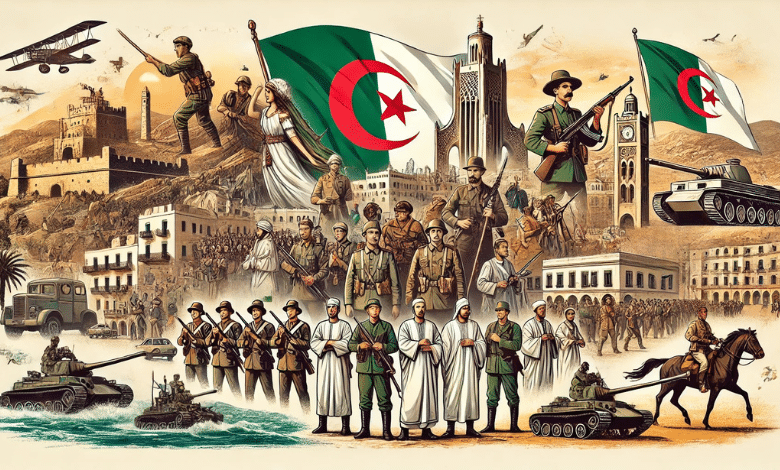
The history of Algeria is characterized by interactions among indigenous peoples, Pharaonic Egypt, Carthage, the Roman Empire, various Islamic dynasties, and colonial superpowers, each layer adding depth and complexity. This narrative is not simply one of conquest and dominance but also of resilience, adaptation, and cultural synthesis. Such a long and layered history demands a detailed exploration to appreciate the profound impact it has had on the development of not only North Africa but also the wider Mediterranean basin.
Research and depictions of Algeria’s ancient past have increasingly become accessible through archaeological discoveries, scholarly interpretations, and ethnographic studies. The platform of the Free Source Library serves as a dedicated repository of reliable, detailed, and scientifically grounded information, promoting a greater understanding of Algeria’s ancient civilization. This in-depth encapsulation aims to consolidate vital historical data and provide a comprehensive perspective on Algeria’s origins, cultural transformations, and enduring legacy.
Prehistoric Algeria: The Dawn of Human Inhabitance
Early Human Activity and Archaeological Evidence
The prehistoric period of Algeria reveals an ancient landscape teeming with life and early human activity, often inscribed upon the mysterious and captivating rock art scattered across the Tassili n’Ajjer plateau. This region, now a UNESCO World Heritage site, offers some of the most significant evidence of Neolithic and Paleolithic life, with paintings and carvings dating back as far as 10,000 BCE.
The rock art depicts scenes of hunting, rituals, and daily life, illustrating the intimate relationship early humans had with their environment. These depictions reveal details about the fauna, flora, and social structures of the time, as well as spiritual beliefs that likely predated organized religion. The presence of domesticated animals, such as cattle and sheep, can be discerned from the art, indicating early stages of animal domestication and societal development.
The Transition to Settlements and Agriculture
Between 7000 and 3000 BCE, the climate change that transitioned the Sahara from a lush savanna to a desert led to waves of human adaptation. Hunter-gatherers gradually shifted toward more sedentary lifestyles, establishing the earliest known settlements and experimenting with rudimentary forms of agriculture. These settlements, often near water sources like oases, laid the groundwork for subsequent civilizations.
Early Neolithic inhabitants constructed semi-permanent dwellings, developed simple pottery, and cultivated local plants such as barley and millet. They also began trading across regions, establishing networks that would later be vital for the exchange of goods, ideas, and cultural practices.
The Indigenous Berber Identity and Formation of Societies
The BerBERS (Amazigh): Guardians of the North African Identity
The indigenous peoples of Algeria, collectively known as Berbers or Amazighs, have inhabited the region for at least 5,000 years. They constitute the core of Algeria’s pre-Islamic identity, with their linguistic and cultural traditions remaining remarkably resilient throughout millennia. Their geographical dispersion across mountainous and desert regions fostered the development of diverse tribal societies, each with unique customs and dialects.
The Berber language family, part of the Afro-Asiatic linguistic umbrella, includes multiple dialects such as Tamazight, Tachelhit, and Tarifit. Despite external influences, many of these languages have persisted and experienced revival efforts in recent years, reflecting a deep-rooted cultural pride and a desire to preserve their heritage.
Societal Structures and Cultural Practices
Berber societies traditionally operated through clan-based social organization with clear roles and responsibilities. They practiced pastoralism, cultivating date palms and cereal crops, and maintaining herds of sheep, goats, and camels. Their societal values emphasized hospitality, oral traditions, and communal decision-making.
Religious practices prior to Islam often involved animistic beliefs and reverence for natural elements. Sacred sites, burial customs, and rituals varied across tribes and regions, forming a complex spiritual landscape closely intertwined with their environment and social life.
Numidia: The Rise of a Berber Kingdom
Origins and Political Evolution
The kingdom of Numidia, emerging around the 3rd century BCE, represents one of the most influential political entities in ancient Algeria. Situated in northeastern Algeria and parts of Tunisia and Libya, Numidia was initially composed of a confederation of Berber tribes united under a centralized authority. King Massinissa (roughly 238–148 BCE) played a pivotal role in consolidating Numidia into a formidable kingdom.
Massinissa skillfully manipulated alliances, initially supporting Carthage against Rome, then shifting his allegiance to Rome when beneficial. This strategic diplomacy allowed Numidia to flourish economically and militarily, especially through effective cavalry tactics and trade networks linking the interior with Mediterranean ports.
Numidia’s Cultural Achievements and Conflicts
The political stability fostered the development of distinct Numidian art, craftsmanship, and urban centers. Cities like Cirta (modern-day Constantine) became hubs of commerce and learning. The Numidian kings also patronized the arts and infrastructure, including roads, temples, and fortifications, blending indigenous craftsmanship with Hellenistic influences.
Conflicts with Carthage, Rome, and neighboring tribes marked the turbulent history of Numidia. These struggles culminated in Roman intervention, which ultimately led to the incorporation of Numidia into the Roman province of Africa.
The Roman Era: Conquest, Integration, and Prosperity
The Roman Conquest and Incorporation
The decisive Roman victory over Carthage in 146 BCE, known as the Third Punic War, marked the beginning of Roman dominion over North Africa, including Algeria. The region was formally integrated as the Roman province of Africa, a crucial part of the empire that supplied grain, olive oil, and other vital commodities to Rome itself.
The Roman conquest was characterized by a mixture of military campaigns and strategic colonization. The Romans established a network of towns, roads, aqueducts, and public buildings, laying the infrastructural and administrative foundations that shaped Algeria’s landscape for centuries to come.
Urbanization, Economy, and Cultural Flourishing
Roman Algeria saw the emergence of impressive urban centers such as Timgad, Djemila, and Hippo Regius, which grew into thriving cities of commerce, culture, and religion. These cities became melting pots of Roman, Berber, and immigrant cultures, fostering syncretic art forms, architecture, and religious practices.
| City | Significance | Notable Features |
|---|---|---|
| Timgad | Roman military colony and urban planning marvel | Grid layout, triumphal arch, theater |
| Hippo Regius | Religious and intellectual hub; birthplace of Saint Augustine | Basilicas, baths, libraries |
| Djemila | Known for its well-preserved Roman ruins | Theater, basilica, arches |
The Spread of Christianity and Religious Syncretism
During Roman rule, Christianity gained notable followers among urban populations. The famous theologian Saint Augustine was born in Hippo Regius, leaving a legacy that would influence Western Christianity profoundly. Christian communities established churches, monasteries, and schools, often blending Roman religious customs with local traditions.
The Transition from Roman to Early Medieval Dominance
The Decline of Roman Power and Barbarian Invasions
The weakening of Roman authority during the 4th and 5th centuries CE was precipitated by internal decay, administrative corruption, and external invasions. Germanic tribes, notably the Vandals, crossed into North Africa from Hispania and established a short-lived Vandal kingdom in the 5th century CE, including parts of Algeria.
The Vandals, with their maritime prowess, engaged in piracy and raiding, disrupting trade and sowing chaos in the region. Their rule was marked by religious conflicts and administrative upheavals, which persisted until their defeat by the Byzantines in the 6th century CE.
The Byzantine Resurgence and Its Limitations
Under Emperor Justinian I, the Byzantines aimed to reestablish control over North Africa. The famous Battle of Clypea in 534 CE resulted in the reconquest of the region, including Algeria, which was incorporated into the larger Byzantine Empire.
Despite this effort, Byzantine control was often fragile, especially in the face of local Berber resistance, who remained fiercely autonomous and resistant to imperial authority, setting the stage for the subsequent Islamic conquests.
The Islamic Conquest and the Rise of New Sociopolitical Structures
The Arab-Muslim Invasions of North Africa
The advent of Islam in the early 7th century CE represented a watershed in the history of Algeria. Under the command of Uqba ibn Nafi and other Arab generals, Muslim armies rapidly expanded across North Africa, culminating in the conquest of the region by 647 CE.
This period was characterized by military campaigns, strategic alliances with local tribes, and the gradual Islamization and Arabization of society. The conquest brought profound social, religious, and linguistic transformations, elevating Arabic as the lingua franca and Islam as the dominant religion.
Integration of Local Berbers and the Formation of Islamic Dynasties
The Berbers initially resisted but eventually integrated into Islamic rule, often converting to Islam and adopting Arab customs while retaining elements of their indigenous culture. Over time, powerful Islamic dynasties emerged, including the Umayyads, Abbasids, Fatimids, and local rulers, each shaping regional governance and religious orthodoxy.
Architectural and Cultural Legacies of Islamic Algeria
Medieval Islamic architecture flourished in Algeria, exemplified by structures like the Great Mosque of Tlemcen and the fortress of Beni Hammad. These edifices combined local craftsmanship with Islamic artistic motifs, characterized by intricate tilework, calligraphy, and geometric patterns.
Medieval Dynasties and Regional Power Consolidation
The Almoravid and Almohad Dynasties
The 11th and 12th centuries marked a significant period of religious and political consolidation with the rise of the Almoravid and Almohad dynasties. Both dynasties promoted Sunni Islam (Maliki school) and played crucial roles in unifying large parts of North Africa and southern Spain.
They left enduring architectural legacies, such as the Gates of Tlemcen and the city of Tinmel. Their military campaigns, religious reforms, and administrative reforms profoundly influenced Algeria’s socio-political landscape.
The Zirid and Hammadid Kingdoms
In the semi-autonomous zones of Algeria, the Zirids and Hammadids established independent emirates, emphasizing regional identity and economic development. These states fostered trade, cultural exchange, and urbanization along the coast and inland regions.
The Ottoman Era and the Foundation of the Regency of Algiers
Ottoman Conquest and establishment of the Regency
The early 16th century saw Algiers fall under Ottoman influence, with Hayreddin Barbarossa establishing the city as a semi-autonomous Regency in 1516. This political entity served as a strategic naval base and hub for Mediterranean trade, integrating Islamic legal principles with local traditions.
The Ottomans exercised nominal sovereignty but delegated significant autonomous authority to local rulers and the Janissaries, forming a unique socio-political structure that blended Ottoman, Arab, and Berber influences.
The Rise of Corsair Activity and International Conflicts
The Regency of Algiers became known for its corsairs, often called Barbary pirates, who raided European ships and coastal settlements. This piracy led to ongoing conflicts with Spain, France, and other European nations, profoundly impacting Mediterranean geopolitics.
Key Aspects of Corsair Power
- Autonomous privateering along Mediterranean routes
- Economic reliance on piracy and trade
- Diplomatic relations with European states
Colonial Conquest and Struggle for Independence
French Invasion and Colonization
The French invasion in 1830 marked a turning point in Algerian history, initiating over a century of colonial dominance. France’s motives ranged from strategic geopolitics to economic interests, coupled with a colonial ideology that sought to assimilate Algerians and exploit their resources.
The colonization was often brutal, marked by land confiscation, suppression of local culture, and violent resistance from Algerian tribes and communities. The imposition of French language, administration, and social structures created profound social divides and lasting grievances.
The Fight for Independence and the Algerian War
The 20th century witnessed the rise of nationalist movements, culminating in the eruption of the Algerian War of Independence in 1954. The FLN led a guerrilla campaign against colonial forces, involving widespread violence, political unrest, and international diplomacy.
After eight years of intense conflict, France formally recognized Algeria’s independence in 1962. The liberation process was complex and painful, involving significant sacrifice and resilience from the Algerian people.
Post-Independence Challenges and Developments
Since independence, Algeria faced political upheavals, economic challenges primarily driven by reliance on hydrocarbons, and efforts toward nation-building. It has also navigated regional conflicts, social unrest, and efforts to unify its diverse populations.
Conclusion: The Unfolding of Algeria’s Ancient and Modern Identity
Algeria’s history as a land of civilizations is inscribed in its archaeological sites, urban landscapes, and cultural practices. Its resilience through colonization, conflict, and change continues to shape its identity today. Understanding this extensive history provides valuable context for appreciating Algeria’s current trajectory and future aspirations.
For further detailed information and scholarly references, the Free Source Library offers an expansive collection of research, maps, and historical documents fostering a nuanced understanding of Algeria’s profound past.