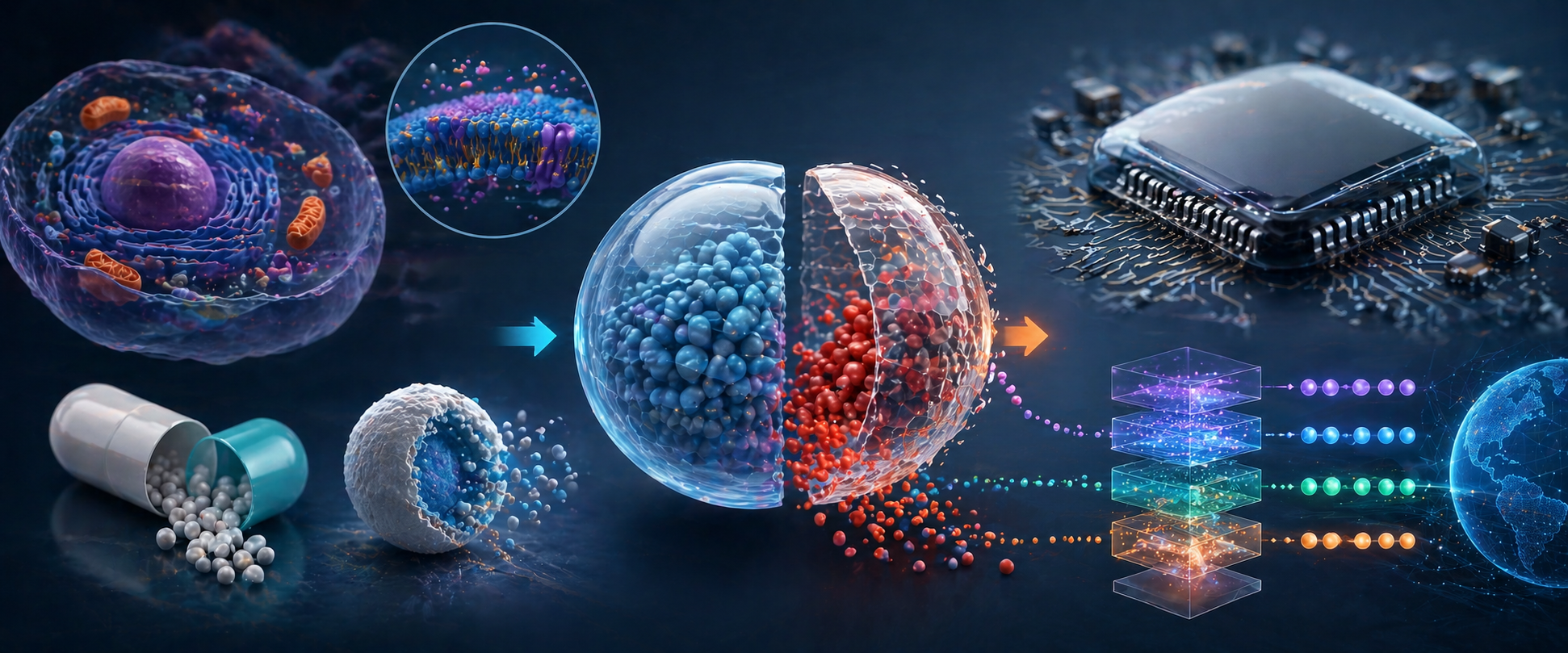
 Free Source Library — Understanding encapsulation and de-encapsulation is crucial across a broad spectrum of disciplines, from technology and biology to materials science. These concepts form foundational principles that enable us to organize, protect, and transfer information and materials efficiently and securely. To fully appreciate their role and significance, we must explore their detailed applications, underlying mechanisms, and broader implications in various fields.

Fundamentals of Encapsulation and De-encapsulation
Defining Encapsulation
Encapsulation refers to the process of enclosing an object, substance, or data within a defined boundary that serves to protect, organize, or conceal its internal details. The boundary acts as a barrier—physical, digital, or conceptual—that isolates the enclosed entity from external influence or interference. The purpose might range from safeguarding integrity to simplifying management or ensuring secure interaction.
Understanding De-encapsulation
De-encapsulation is the reverse process, involving the removal or extraction of the encapsulating boundary or layer. This process reveals or access the internal content while maintaining system stability and security. Just as careful packaging is necessary to preserve a fragile object during transport, de-encapsulation requires measured approaches to access the inner contents without damaging or compromising the system.
Encapsulation and De-encapsulation in Technology and Software Development
The Role of Encapsulation in Object-Oriented Programming
Within the realm of computer science, especially object-oriented programming (OOP), encapsulation is a core principle. It entails bundling data (attributes) and the methods (functions) that operate on this data into a single unit—called a class. This structure enforces a clear boundary that controls how data is accessed or modified, thus strengthening security and reducing bugs.
For example, data members of a class are often declared as private or protected, preventing direct external access. Instead, controlled access is provided via public methods—getters and setters—that enforce validation or constraints. This pattern is a practical implementation of information hiding, improving code maintainability and reusability.
Practical Benefits of Encapsulation in Software Engineering
- Modularity: Encapsulation allows developers to design self-contained modules with clear interfaces. Changes within one module do not ripple outward, simplifying updates and debugging.
- Security and Integrity: By restricting direct access, encapsulation prevents unauthorized or unintended manipulation of data, preserving the integrity of objects.
- Abstraction: Encapsulation abstracts the internal complexity, exposing only necessary features, which simplifies usage and promotes a higher level of abstraction.
- Reusability: Encapsulated classes or modules can be reused across different parts of a system or even in different projects, accelerating development processes.
What is De-encapsulation in Programming?
De-encapsulation involves deliberately breaking into the hidden layers of a class or object—typically during debugging, reverse engineering, or extending functionality. This controlled retrieval of data or methods must adhere to the encapsulation rules, often via designated accessors or through reflection in some programming languages.
Understanding the delicate balance between encapsulation and de-encapsulation is important: while encapsulation protects internal data, sometimes de-encapsulation enables necessary modifications or insights when facing bugs or interoperability challenges.
Biological Encapsulation: From Cells to Microorganisms
Cellular Encapsulation and Its Functions
In biology, encapsulation underpins the fundamental life processes at cellular and molecular levels. Cells are encapsulated by membranes—phospholipid bilayers with embedded proteins—that act as barriers regulating exchange between the internal cellular environment and the outside world. This biological boundary maintains homeostasis and protects against harmful substances.
Organelles within eukaryotic cells, such as nuclei, mitochondria, and lysosomes, are also encapsulated within secondary membranes, enabling compartmentalization of specific functions. For example, the nuclear envelope shields genetic material while regulating the flow of molecules like RNA and proteins, thus orchestrating complex cellular activities seamlessly.
Microencapsulation in Medicine and Food Science
Microencapsulation advances the traditional concept of cellular encapsulation by enclosing tiny particles—often on micron scales—within protective coatings. This technology bridges biology and engineering, allowing for innovative applications such as controlled drug release, flavor preservation, or targeted delivery.
- Pharmaceuticals: Encapsulating active ingredients within biocompatible coatings ensures sustained release and protects sensitive compounds from gastric acidity. For example, microcapsules can release a drug gradually over hours or days, improving therapeutic outcomes and patient compliance.
- Food Industry: Encapsulation preserves flavors, vitamins, or probiotics against heat, light, and oxidation. Encapsulated nutrients can be incorporated into foods without altering taste or texture, and targeted release can occur in the gastrointestinal tract.
Ongoing research aims to refine microencapsulation techniques using nanomaterials, liposomes, and polymer matrices to enhance efficacy and specificity.
Materials Science and Encapsulation Technologies
In materials science, encapsulation is pivotal particularly in developing advanced composite materials. For instance, nanoparticles, catalysts, or phase-change materials are encapsulated to improve stability, reactivity, or handling. Encapsulating catalysts prevents their premature deactivation and enables precise control within industrial reactors.
Similarly, in environmental remediation, encapsulating reactive agents such as nanostructured catalysts protects them from degradation, prolongs shelf-life, and simplifies deployment in polluted environments.
Industrial and Manufacturing Applications
Electronics and Semiconductor Devices
In manufacturing microelectronics, delicate devices such as integrated circuits require encapsulation to shield them from mechanical stress, moisture, dust, and contamination. Epoxy resins, silicone gels, or polymer coatings are used to encapsulate chips, ensuring durability and longevity in consumer gadgets, automobiles, and aerospace applications.
Challenges include managing thermal expansion, maintaining electrical insulation, and enabling heat dissipation—all crucial to device performance.
De-encapsulation and Reverse Engineering
De-encapsulation techniques are employed in reverse engineering and quality control to analyze the internal structure of packaged electronics or products. Methods such as chemical stripping, laser ablation, or mechanical decapsulation reveal hidden components, helping to identify defects or verify manufacturing provenance.
This process provides insights into design strategies and detects counterfeit or substandard items, ensuring supply chain integrity.
Network Communication: Encapsulation as a Data Transfer Mechanism
Data Encapsulation in Protocol Stacks
In networking, data encapsulation refers to wrapping data with protocol-specific information—headers, trailers, and control bits—at each layer of the OSI or TCP/IP stack. This layered approach facilitates modular, reliable, and secure data transmission across complex networks such as the internet.
For example, when a web browser sends an HTTP request, the data is wrapped into TCP segments, then IP packets, and finally framed with Ethernet frames—each layer adding its own headers or trailers. On the receiving end, de-encapsulation occurs as each layer strips its protocol-specific information, exposing the data for processing.
Layered Encapsulation and Its Benefits
| Layer | Encapsulation Process | Function | Example Protocol |
|---|---|---|---|
| Application | Data creation (e.g., HTTP, SMTP) | Provides services for user-facing applications | HTTP |
| Transport | Wraps data in segments (e.g., TCP, UDP) | Ensures reliable delivery, flow control | TCP |
| Network | Wraps segments into packets (e.g., IP) | Routing across networks | IP |
| Data Link | Frames packets with MAC addresses (e.g., Ethernet) | Physical addressing, error detection | Ethernet |
At each layer, de-encapsulation occurs as headers or trailers are removed, allowing the data to move upward toward the application layer or downward to the physical layer.
Specialized Encapsulation in the Pharmaceutical Sector
Controlled Release and Targeted Delivery
Pharmaceutical encapsulation entails enclosing active pharmaceutical ingredients (APIs) within protective shells, coatings, or matrices. This process enables controlled and sustained drug release, targeted delivery to specific tissues, and masking of undesirable tastes or odors. Encapsulation materials include liposomes, polymeric microspheres, and biodegradable coatings.
For example, encapsulated insulin formulations release glucose-regulating hormones gradually, reducing the frequency of injections and improving patient quality of life.
De-encapsulation within the Body
Once ingested, the gastrointestinal environment triggers the breakdown of encapsulation materials, releasing the therapeutic agents. Acid or enzyme-triggered de-encapsulation ensures the API is released precisely at the target site or in a controlled manner, maximizing efficacy.
Tailoring material properties—such as pH sensitivity, biocompatibility, and degradation rate—is key to designing effective drug delivery systems.
Broader Impacts and Interdisciplinary Significance
Cross-Disciplinary Benefits of Encapsulation
The universality of encapsulation makes it a versatile strategy for addressing complex challenges. By understanding its mechanisms, practitioners can innovate solutions for security, stability, and precise control in various systems:
- Enhanced Security: Encryption layers in cybersecurity rely on data encapsulation to provide confidentiality and integrity during transmission.
- Environmental Safeguards: Encapsulation technology can contain hazardous materials, preventing spillages or uncontrolled release into ecosystems.
- Innovation in Nanotechnology: Encapsulating nanomaterials for targeted drug delivery or environmental remediation pushes frontiers of medicine and ecological management.
Challenges and Future Directions
Despite its widespread utility, encapsulation and de-encapsulation face ongoing challenges:
- Material Compatibility: Developing encapsulation materials that are biocompatible, durable, and responsive.
- Controlled Release Precision: Achieving exact timing and site-specific release mechanisms.
- Manufacturing Scalability: Scaling micro- and nano-encapsulation processes cost-effectively.
Future research aims to integrate smart materials, responsive polymers, and nanotechnology to enhance the sophistication of encapsulation systems across industries.
Practical Strategies and Frameworks for Implementing Encapsulation
Step-by-Step Guide to Effective Encapsulation
- Define Objectives: Clarify the purpose — protection, controlled release, modular design, etc.
- Select Encapsulation Material: Choose based on chemical compatibility, environmental stability, and release characteristics.
- Design Encapsulation Method: Techniques include spray drying, coacervation, liposomal formation, or nanofluidic encapsulation.
- Test and Optimize: Assess integrity, release profile, and stability under relevant conditions.
- Scale-up and Quality Control: Develop manufacturing processes ensuring consistency, safety, and cost-effectiveness.
Checklist for Successful Encapsulation Projects
- Clear understanding of the application requirements
- Selection of appropriate materials and methods
- Rigorous testing protocols for stability and release kinetics
- Compliance with safety and regulatory standards
- Integration of feedback for iterative improvements
Comparative Analysis: Encapsulation Methods Across Fields
| Application Area | Encapsulation Technique | Advantages | Limitations |
|---|---|---|---|
| Software Engineering | Class-based encapsulation | Enhanced security, modularity | Potential over-restriction, complexity |
| Biology | Cell membrane, microencapsulation | Protection, selectivity | Energy-intensive, complex manufacturing |
| Pharmaceuticals | Polymer coatings, liposomes | Controlled release, targeting | Cost, regulatory hurdles |
| Networking | Header addition at each layer | Interoperability, scalability | Overhead, latency |
FAQs on Encapsulation and De-encapsulation
What are the main benefits of encapsulation in software design?
Encapsulation provides enhanced security, modularity, ease of maintenance, and abstraction. It helps prevent data corruption and simplifies code reuse.
How does biological encapsulation protect cells?
The cell membrane acts as a selectively permeable barrier, controlling what enters and exits, thus maintaining cellular homeostasis and protecting against toxins or pathogens.
Can de-encapsulation compromise system security?
Yes, if improperly managed, de-encapsulation can expose internal details, potentially leading to vulnerabilities. It must be done carefully, respecting security protocols.
What materials are commonly used in pharmaceutical encapsulation?
Materials include biodegradable polymers, lipids, and natural substances such as gelatin, alginate, and chitosan, chosen based on required release profiles and compatibility.
Future Outlook: Will encapsulation become more automated and smart?
Advancements point toward intelligent encapsulation systems—materials that respond to stimuli (pH, temperature, enzymes) for precise delivery, greatly expanding possibilities across fields.
References
- National Institute of Standards and Technology (NIST). Encapsulation technologies overview.
- World Health Organization (WHO). Innovations in drug delivery systems.