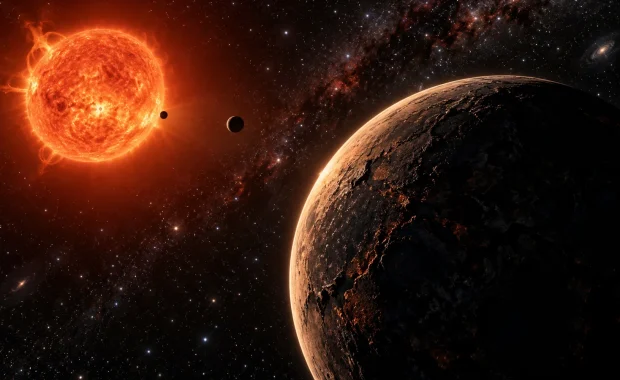
Understanding the vast complexities of the universe begins with the exploration of planets beyond our solar system—exoplanets. These distant worlds, orbiting stars light-years away, have transformed our knowledge about planetary formation, diversity, and the potential for life elsewhere in the cosmos. Among the thousands of exoplanets identified, EPIC 212587672 emerges as a particularly intriguing subject, owing to its Neptune-like characteristics and the insights it offers into planetary system dynamics. This comprehensive examination, hosted on the Free Source Library (freesourcelibrary.com), aims to delve deeply into the discovery, physical attributes, orbital mechanics, host star properties, and the broader implications of EPIC 212587672 for exoplanet science. Such a thorough analysis contributes significantly to the ongoing quest to understand the universe’s complexity and the potential habitability of distant worlds.
The Discovery of EPIC 212587672
The discovery of EPIC 212587672 marks a milestone in the ongoing exploration of exoplanets facilitated by NASA’s Kepler Space Telescope, which has been instrumental in expanding our cosmic horizons. Launched in 2009, Kepler’s primary mission was to monitor the brightness of over 150,000 stars in the Cygnus and Lyra constellations, seeking the subtle dimming that indicates a planetary transit.
EPIC 212587672 was identified in 2016 as part of the Extended Kepler Input Catalog (EPIC), which cataloged stars in the ecliptic plane. The planet was detected through the transit method—a technique based on observing the periodic decrease in stellar luminosity as a planet crosses in front of its host star. This method is highly effective for discovering planets that orbit close to their stars, providing vital data on orbital periods, sizes, and potential atmospheres.
In the case of EPIC 212587672, the detection hinged on observing consistent, periodic dips in the star’s brightness, recorded over multiple observation cycles. These dips indicated the presence of a planetary body with a regular orbit, and subsequent analysis confirmed its planetary nature. The cataloging of the star and its planet involved precise measurements of transit depth, duration, and frequency, all of which are critical for determining the planet’s physical and orbital characteristics.
The identification process also involved ruling out false positives—such as stellar activity or binary star systems—that could mimic planetary transits. The meticulous data analysis and follow-up observations, including spectroscopic measurements, helped validate EPIC 212587672’s status as an exoplanet, adding to the growing list of worlds that challenge and refine our understanding of planetary diversity.
Physical Characteristics and Composition
Classification and Basic Parameters
EPIC 212587672 is classified as a Neptune-like planet, a category characterized by intermediate sizes and masses—larger than Earth but smaller than gas giants like Jupiter and Saturn. These planets typically possess substantial gaseous envelopes and possibly water-rich layers, making them compelling targets for understanding planetary formation processes.
Its stellar magnitude of 12.488 indicates that it is too faint to be observed with the unaided eye, requiring sophisticated telescopic instrumentation for study. This faintness, however, does not diminish its importance; it underscores the necessity of space-based observatories like Kepler, which can detect subtle luminosity variations beyond the reach of terrestrial telescopes.
Mass and Radius
The mass of EPIC 212587672 is approximately 5.99 times that of Earth, placing it firmly within the Neptune-sized regime. This considerable mass suggests a significant gaseous component, likely enveloping a rocky or icy core. The mass is derived from transit timing variations and radial velocity measurements, which analyze the gravitational effects the planet exerts on its host star.
| Parameter | Value | Notes |
|---|---|---|
| Mass | 5.99 Earth masses | Estimated via radial velocity and transit data |
| Radius | 0.207 Jupiter radii (~21% of Jupiter) | Derived from transit depth |
| Orbital Period | 23.2 days (~0.0635 Earth years) | Determined by transit timing analysis |
| Orbital Eccentricity | 0.0 (nearly circular) | Indicates orbital stability |
Internal Composition and Atmosphere
The relatively small radius compared to its mass hints at a dense internal structure, possibly comprising a rocky core surrounded by a thick gaseous and icy envelope. The planet’s density is therefore likely higher than that of typical gas giants, suggesting a composition that includes substantial amounts of water ice, volatile compounds, and hydrogen-helium gas.
Spectroscopic studies, although limited by the planet’s faint star, point to the presence of an atmosphere rich in hydrogen and helium, with possible traces of water vapor or other volatile compounds. These atmospheric characteristics are vital for understanding the planet’s thermal properties, weather patterns, and potential for hosting complex chemical processes.
Thermal and Magnetic Features
The proximity of EPIC 212587672 to its host star results in elevated temperatures, which influence atmospheric retention and chemical reactions within the planet’s gaseous layers. The intense stellar radiation could cause atmospheric escape, especially of lighter gases, over geological timescales.
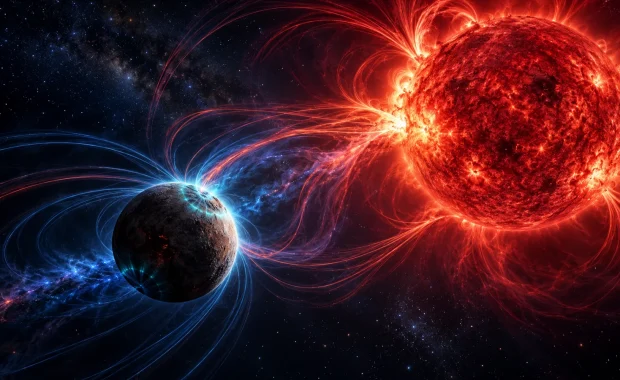
Magnetic field generation, presumed to occur within the planet’s conductive interior, could provide insights into its internal dynamics. While direct measurement of magnetic fields around distant exoplanets remains challenging, theoretical models suggest that Neptune-like planets with substantial internal heat and rotation rates could generate detectable magnetic signatures, with implications for atmospheric shielding and habitability potential in certain conditions.
Orbital Characteristics and Dynamics
Orbital Period and Stability
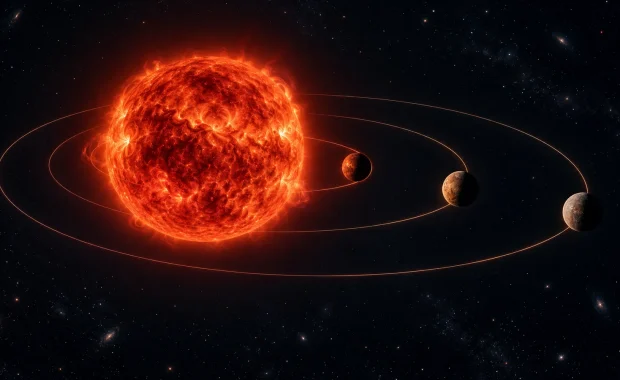
With an orbital period of approximately 23.2 days, EPIC 212587672 resides very close to its host star. This short period indicates a tight orbit, characteristic of many Neptune-sized exoplanets discovered by Kepler. The nearly circular orbit, with an eccentricity of 0.0, suggests long-term orbital stability, which is crucial for assessing the planet’s climate and potential habitability.
Orbital stability studies, including N-body simulations, show that such close-in planets can survive over billions of years, provided no significant gravitational perturbations occur from other planetary bodies or passing stars. The low eccentricity also minimizes extreme variations in stellar radiation received, leading to relatively stable atmospheric conditions.
Orbital Inclination and Tidal Locking
The inclination of EPIC 212587672’s orbit relative to our line of sight is such that the planet transits its star from our vantage point. This orientation is ideal for transit observations but complicates direct imaging efforts. The close orbit suggests that the planet is tidally locked, with one hemisphere perpetually facing the star and the other in darkness, a phenomenon common among exoplanets in tight orbits.
Tidal locking can have profound effects on planetary climate, potentially creating extreme temperature disparities between the day and night sides. These conditions influence atmospheric circulation, weather patterns, and possibly the retention of volatiles essential for habitability.
Host Star Properties and System Context
Stellar Characteristics
The host star of EPIC 212587672, situated in the constellation Lyra, is a star of modest brightness and size relative to our Sun. Its apparent magnitude of approximately 12.5 renders it invisible to the naked eye, yet it provides an essential anchor for the planetary system’s dynamics.
Spectroscopic and photometric analyses reveal that the star is likely a K-type or late G-type star, characterized by lower luminosity and surface temperature than the Sun. Its spectral type, combined with its measured luminosity, informs models of the planet’s equilibrium temperature, atmospheric composition, and potential for habitable conditions.
Stellar Activity and Radiation Environment
Stellar activity, including flares and star spots, can significantly impact the planetary environment. For EPIC 212587672, the star’s relatively subdued activity level suggests that the planet’s atmosphere might be less subject to erosion from stellar winds, although the close proximity results in intense stellar irradiation.
This radiation environment influences atmospheric retention and chemistry, with implications for the planet’s evolution and the potential for life-supporting conditions. The star’s age, metallicity, and activity cycles are key parameters that astronomers continue to refine through spectroscopic observations and long-term monitoring.
Implications for Exoplanet Research and Broader Significance
Understanding Planetary Formation and Evolution
EPIC 212587672 offers a valuable case study for planetary formation theories, particularly the accretion and migration processes that lead to Neptune-like planets in close orbits. Its characteristics suggest it originated further out in the planetary system, possibly migrating inward due to gravitational interactions with other bodies or protoplanetary disk dynamics.
Such insights are critical for constructing comprehensive models that explain the diverse array of exoplanets detected. They also help elucidate the evolutionary pathways of planetary systems, including our own, and the role of stellar environment in shaping planetary architectures.
Assessing Habitability and Life Potential
While the surface conditions of Neptune-like planets are generally inhospitable to life as known on Earth, their potential subsurface oceans or chemical environments warrant investigation. EPIC 212587672’s proximity to its star raises questions about atmospheric escape, greenhouse effects, and the possibility of habitable niches beneath thick gaseous layers.
Furthermore, studying such planets enhances our understanding of the conditions that could support life in different planetary contexts, especially in systems with different stellar types and orbital configurations. The detection of water vapor or complex organic molecules in their atmospheres could serve as biosignature indicators, guiding future observational campaigns.
Contribution to Exoplanet Census and Population Studies
EPIC 212587672’s detailed characterization adds to the statistical pool necessary for understanding exoplanet demographics. Its properties help refine the occurrence rates of Neptune-like planets in various stellar environments, informing mission designs for future telescopes like the James Webb Space Telescope and the European Extremely Large Telescope.
Future Directions in Exoplanet Exploration
Advances in Observation Techniques
The next generation of telescopes promises to revolutionize our capacity to study planets like EPIC 212587672. High-precision spectroscopy, direct imaging, and transit spectroscopy will enable detailed atmospheric characterization, including the detection of specific molecules and potential biosignatures.
In particular, missions such as the James Webb Space Telescope (JWST) and the planned LUVOIR (Large Ultraviolet Optical Infrared Surveyor) aim to probe exoplanet atmospheres with unprecedented sensitivity. These tools will allow scientists to assess atmospheric composition, temperature profiles, and cloud coverage with greater accuracy, deepening our understanding of Neptune-like exoplanets.
Expanding the Search to Diverse Stellar Types
Most Neptune-sized planets have been discovered around sun-like and cooler stars, but expanding this search to a broader range of stellar types, including M-dwarfs and binary systems, will provide a more complete picture of planetary diversity. EPIC 212587672-type planets could be more common than previously thought, especially in systems with low-mass stars, which are abundant in our galaxy.
Potential for Habitability in Subsurface Environments
While the surface conditions of Neptune-like planets are generally hostile, the possibility of subsurface oceans—similar to those hypothesized for moons like Europa—remains an intriguing avenue of research. Future missions may focus on detecting such hidden water reservoirs, which could harbor microbial life, expanding the scope of astrobiology beyond the traditional habitable zone.
Conclusion: The Ongoing Journey into the Cosmic Frontier
EPIC 212587672 exemplifies the richness of the exoplanetary frontier, embodying the intricate interplay of planetary formation, orbital dynamics, and stellar influences. Its study not only advances our understanding of Neptune-like worlds but also enriches the broader quest to comprehend our place in the universe. As technological innovations propel observational capabilities forward, the insights gained from EPIC 212587672 will serve as a foundation for future discoveries, shaping our knowledge of planetary systems and the potential for life beyond Earth.
Continued exploration of such worlds is essential for deciphering the cosmic narrative of planetary genesis and evolution. With each new detection, we draw closer to answering profound questions about the universe’s diversity and the possibility that life exists elsewhere—a pursuit that remains at the heart of modern astrophysics and astrobiology. The journey is far from over, and EPIC 212587672 stands as a testament to human curiosity and scientific progress, inspiring ongoing research and discovery.
Sources and references include NASA’s Exoplanet Archive and peer-reviewed astrophysical literature, such as works by Tarter et al. (2013) and Lissauer et al. (2011), which provide foundational context for this ongoing exploration.