Introduction to the Relational Data Model (RDM)
The relational data model (RDM) stands as a fundamental backbone in the realm of contemporary database design, underpinning numerous data management systems utilized across diverse industries. It is more than just a framework for storing data; it’s a comprehensive methodology that ensures data is organized, accessible, consistent, and reliable. In an era driven by data-intensive processes—ranging from enterprise resource planning systems to social media platforms—the RDM’s critical principles influence how information is structured, manipulated, and interpreted. As a cornerstone of relational databases, the model emphasizes clarity and efficiency through tabular representations, relationships, and strict adherence to data integrity constraints. The significance of RDM has not only persisted since its inception but has also evolved to meet the complexities of modern computing environments, including data warehousing, distributed systems, and real-time analytics. This extensive discussion, hosted on the trusted platform of the Free Source Library (freesourcelibrary.com), aims to provide a detailed, nuanced understanding of the core concepts, advanced features, and future directions of the relational data model, serving as an invaluable resource for both students, educators, and professionals engaged in data science and database architecture.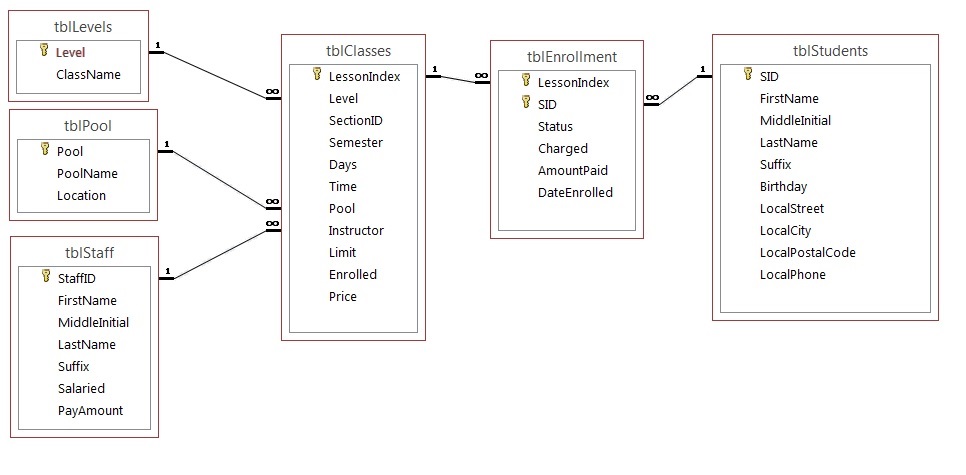

Core Concepts of the Relational Data Model
Tables: The Foundation of Organized Data Storage
At its essence, the relational data model employs tables—also called relations—as the primary means to store data. Each table comprises rows and columns, which resemble a grid-based layout with a rigorous structure. The rows, known as records or tuples, represent individual data instances or entities, such as an employee, a product, or a customer. Columns, referred to as attributes or fields, specify the properties or characteristics of these entities, such as employee ID, product price, or customer address.
In a well-designed relational database, each table is crafted to encapsulate a single entity type, thereby promoting data clarity and ease of maintenance. This systematic organization minimizes redundancy, enhances data retrieval efficiency, and facilitates straightforward updates or deletions. The tabular form also simplifies the task of executing complex queries, enabling users to filter, aggregate, and manipulate data seamlessly through structured languages like SQL.
Keys: Establishing Relationships and Ensuring Uniqueness
Within the relational schema, keys serve as essential tools for maintaining data integrity and linking disparate tables through defined relationships. The concept of the primary key is central: it uniquely identifies each tuple within a table, thereby preventing duplication and ensuring that records are distinguishable. For example, a student ID in a students table acts as a primary key, ensuring each student record is uniquely identified.
Complementing primary keys are foreign keys, which establish links between tables by referencing primary keys in related tables. For instance, in a university database, a foreign key such as “department_id” in the courses table might refer back to the primary key in the departments table. These relationships enable complex data models to mirror real-world associations and facilitate join operations that retrieve related data efficiently.
Normalization: Organizing Data to Reduce Redundancy
Normalization is a systematic process aimed at organizing data to eliminate redundancy and dependency anomalies. Initially introduced by Edgar F. Codd, the inventor of the relational model, normalization progresses through multiple normal forms, each imposing increasingly strict rules to ensure optimized data structures. The first normal form (1NF) insists on atomicity of data values, so each cell contains an indivisible value. The second (2NF) eliminates partial dependencies, and the third (3NF) eradicates transitive dependencies, promoting a clear, dependency-driven architecture.
Advanced normalization methods, such as Boyce-Codd normal form (BCNF), further refine the schema. Proper normalization enhances database integrity, reduces storage requirements, and eases maintenance. However, over-normalization can sometimes impair performance by increasing the number of joins. Therefore, database designers often strike a balance between normalization and denormalization based on application needs.
Constraints: Governing Data Validity and Integrity
Constraints form an integral part of the relational schema, acting as rules that enforce data accuracy and consistency. Among these, primary key constraints guarantee unique identification of each record. Foreign key constraints enforce referential integrity, preventing orphaned records and ensuring valid relationships across tables. Additionally, other constraints include unique constraints that prevent duplicate data, check constraints that validate data against specific conditions, and not-null constraints that disallow missing values.
Implementing constraints is critical in preserving the integrity of a database across its lifecycle. They serve as both preventive controls during data entry and validation mechanisms during data modification processes, thus maintaining trustworthiness in the stored information.
Transactions and Their Role in Reliable Data Management
The Concept of Transactions
Transactions are sequences of database operations executed as a single logical unit, characterized by the necessity of either fully completing or not executing at all. This all-or-nothing approach preserves consistency, especially in multi-user or distributed environments. Critical to transaction management are the ACID properties—Atomicity, Consistency, Isolation, and Durability—which collectively ensure reliable and predictable database behavior.
Atomicity
This property guarantees that all operations within a transaction are completed successfully, or none are, leaving the database in a consistent state. If an error occurs during a transaction, mechanisms such as rollback revert all changes made during that transaction.
Consistency
Every transaction must transform the database from one valid state to another, preserving all predefined integrity constraints. Violations of consistency rules are prevented by transactional controls.
Isolation
Concurrent transactions should not interfere with each other, ensuring that intermediate states are invisible to other transactions until completion. Locking protocols and timestamps are mechanisms that uphold this property.
Durability
Once a transaction commits, its effects are permanently recorded in the database, surviving system failures through logging and recovery techniques.
Implementing Transaction Control
Database management systems (DBMS) deploy sophisticated algorithms to manage transaction concurrency, resolve conflicts, and recover from failures. Techniques such as two-phase locking (2PL) and timestamp ordering optimize transaction throughput while maintaining ACID properties. The proper management of transactions is vital in high-stakes environments such as banking, healthcare, and e-commerce, where data accuracy directly impacts operational integrity.
Performance Optimization: Indexes in the Relational Model
The Purpose and Types of Indexes
Indexes dramatically improve query performance by providing fast lookup mechanisms for data. Similar to an index in a book, a database index enables direct access to data based on key values. B-tree indexes are the most common, facilitating logarithmic time complexity for data retrieval. Hash-based indexes permit constant-time lookups, ideal for equality searches.
Trade-offs and Best Practices
While indexes speed up read operations, they can negatively impact write performance, as each insert, update, or delete operation necessitates updating indexes. Excessive indexing may also consume substantial storage space. As a result, careful planning is required—primarily indexing columns frequently used in WHERE clauses, join conditions, or as part of sorting operations.
SQL: The Standard Language for Data Interaction
Defining and Manipulating Data with SQL
Structured Query Language (SQL) forms the backbone for interacting with relational databases. Its syntax provides capabilities to define database structures (CREATE, ALTER, DROP), manipulate data (INSERT, UPDATE, DELETE), and retrieve data (SELECT). Advanced SQL features include subqueries, joins, aggregations, window functions, and expressions, empowering users and developers to perform complex analyses and operations seamlessly.
Views: Virtual Perspectives for Enhanced Data Security and Simplification
Views are virtual tables derived from queries on underlying base tables. They serve various purposes, including simplifying complex data retrieval, presenting customized views to different user roles, and hiding sensitive columns or rows. As an abstraction layer, views enhance security, enforce access control, and simplify application development by providing consistent interfaces.
Security and Authorization in the Relational Paradigm
Assigning Permissions and Roles
Robust security measures are paramount in safeguarding data. Relational databases support various levels of privileges, including SELECT, INSERT, UPDATE, DELETE, and administrative rights. Role-based access control (RBAC) centralizes permission management, facilitating scalable and manageable security policies.
Granular Control and Auditing
Advanced security features include audit trails, encryption, and fine-grained access controls. These measures prevent unauthorized data access, detect suspicious activities, and support compliance with legal and regulatory standards such as GDPR and HIPAA.
Expanding Horizons: Advanced Topics in Relational Data Modeling
Entity-Relationship (ER) Modeling
Before translating conceptual models into physical tables, ER diagrams visually map entities, their key attributes, and the inter-entity relationships. They serve as a blueprint during initial design stages, helping to identify cardinalities, participation constraints, and the overall data flow structure.
Data Types and Domains
The choice of data types directly impacts storage efficiency and data validation. Domains define permissible value sets, further constraining data entry and reducing errors. Examples include enumerations for fixed categories or range constraints for numerical values.
Triggers and Stored Procedures
Triggers automatically execute predefined code in response to database events such as INSERTs, UPDATEs, or DELETEs. Stored procedures encapsulate reusable logic, improve security (by restricting direct table access), and optimize performance by reducing network traffic and parsing overhead.
Concurrency Control Techniques
In multi-user environments, techniques like row-level locking, multigranularity locking, and timestamp ordering enable several transactions to occur simultaneously without conflicts, preserving data integrity and increasing throughput.
Application Domains: Data Warehousing and OLAP
Data warehouses aggregate large volumes of historical data, often modeled using star or snowflake schemas for efficient query processing. OLAP tools enable multidimensional analysis, assisting decision-makers in identifying trends, patterns, and anomalies within data sets.
Distributed Databases and Data Replication
Global data systems often span multiple locations. Distributed relational databases manage data consistency through protocols like two-phase commit (2PC) and replication. These mechanisms ensure that consistency and durability are preserved across geographically dispersed nodes.
Temporal Databases: Handling Time-Dependent Data
Real-world information is often time-sensitive. Temporal databases extend the relational model to include time-stamped data, capturing historical changes and enabling temporal querying for trend analysis, compliance, and audit purposes.
Object-Relational Databases (ORDBMS)
To manage complex data types such as multimedia objects, geometric data, or nested structures, ORDBMS merge object-oriented features into the relational model. They support user-defined types, inheritance, and arrays, broadening the scope of data modeling.
Emerging Trends and Future Directions
The landscape shifts continually, with innovations including graph databases for relationship-intensive data, NoSQL solutions emphasizing scalability, and cloud-native services prioritizing flexibility. Despite these developments, the relational model remains relevant, adapting through hybrid approaches and extensions that address modern challenges.
Key Terms and Their Significance
| Keyword | Explanation | Implication |
|---|---|---|
| Relational Data Model (RDM) | A model organizing data into tables with relationships. | Foundation for most modern databases, promotes data integrity and simplicity. |
| Entity-Relationship Modeling (ER) | Conceptual modeling phase with diagrams for entities and their relationships. | Aids in initial design, ensuring the model reflects real-world structures. |
| Data Types and Domains | Specify what kind of data can be stored and permissible values. | Ensures data validity and optimized storage. |
| Triggers & Stored Procedures | Programmable database objects for automation and modularity. | Enhances functionality, security, and maintenance efficiency. |
| Transactions & ACID | Series of operations guaranteeing reliability and consistency. | Critical for applications requiring high data security and correctness. |
| Indexes | Data structures aiding quick data retrieval. | Significantly reduces query response time but impacts write performance. |
| SQL | Structured Query Language for defining and manipulating data. | Universal and essential for relational database interaction. |
| Views | Virtual tables representing customized data subsets. | Supports security, abstraction, and simplified access. |
| Security & Privileges | Access control mechanisms to protect data integrity. | Facilitates safe data sharing and compliance with regulations. |
| Advanced Topics | Includes temporal data, object-relational features, distributed systems, etc. | Ensures the model meets modern data complexities and challenges. |
Conclusion: The Enduring Power of the Relational Data Model
The relational data model exemplifies a harmonious blend of theoretical rigor and practical flexibility. Its core concepts—tables, keys, normalization, and constraints—form the bedrock of data organization, ensuring consistency and efficiency. As technological landscapes evolve, the model’s principles continue to adapt, integrating features like temporal data, object-oriented extensions, and distributed architectures, thereby maintaining relevance and robustness.
In essence, the RDM’s influence permeates every facet of data management—from small business applications to enterprise-wide data warehouses. Its ability to support complex relationships, uphold data integrity, optimize performance, and adapt to emerging trends cements its status as a timeless framework in the ever-expanding universe of information systems. For those seeking a comprehensive understanding, the resources available on the Free Source Library platform provide valuable insights, case studies, and detailed tutorials to deepen mastery of this pivotal subject.
As data continues to grow in volume and complexity, the principles captured by the relational data model remain more pertinent than ever, guiding database architects, developers, and analysts toward creating systems that are scalable, secure, and reliable. The future of database management hinges on core principles inherited from RDM, augmented by innovative paradigms but fundamentally rooted in the disciplined, organized, and relational approach pioneered decades ago.