Kepler-335 b: A Comprehensive Overview of Its Discovery, Characteristics, and Significance in Exoplanetary Research
The discovery of exoplanets has significantly advanced our understanding of the universe. Among the many planets uncovered, Kepler-335 b stands out due to its unique characteristics and its contributions to the study of Neptune-like exoplanets. Discovered in 2014 through the transit method, this exoplanet orbits its star in a highly eccentric and rapid manner. This article delves into the key features of Kepler-335 b, including its discovery, physical properties, orbital dynamics, and its significance in exoplanet research.
Discovery of Kepler-335 b
Kepler-335 b was first identified by the Kepler Space Telescope, a NASA mission designed to detect Earth-sized exoplanets orbiting stars in the habitable zone. The telescope’s primary detection method, the transit method, involves measuring the dimming of a star’s light as a planet passes in front of it. This technique proved to be instrumental in confirming the existence of Kepler-335 b. The discovery was announced in 2014, making it one of the notable finds from the Kepler mission.
The Kepler-335 system is located approximately 4,172 light-years away from Earth, which is relatively far but still within the observable range of current space telescopes. While this distance presents challenges in studying the planet in detail, it does not diminish its importance to astronomers and researchers. As a Neptune-like planet, Kepler-335 b shares certain characteristics with Neptune, including its composition, mass, and size, but it also offers an opportunity to study the range of planetary types in distant star systems.
Physical Characteristics of Kepler-335 b
Kepler-335 b is classified as a Neptune-like planet, meaning it is a gas giant primarily composed of hydrogen and helium, with potentially significant amounts of water, ammonia, and methane. This classification places it among a category of exoplanets that do not have a solid surface, unlike Earth-like planets. The planet’s mass is 11.4 times greater than Earth’s, while its radius is about 0.302 times the radius of Jupiter, making it relatively compact compared to other gas giants. Despite its mass, the planet’s size suggests that it is made up primarily of gaseous and icy materials rather than solid rock.
The planet’s stellar magnitude is 14.111, which indicates its faintness when observed from Earth. This value is not bright enough for the planet to be visible to the naked eye but can still be detected using sensitive telescopes and instruments, particularly in the infrared spectrum. The faintness of the planet in visible light does not impact its importance in exoplanetary studies, as astronomers rely on a variety of observational techniques to gather data about distant planets.
Orbital Characteristics and Dynamics
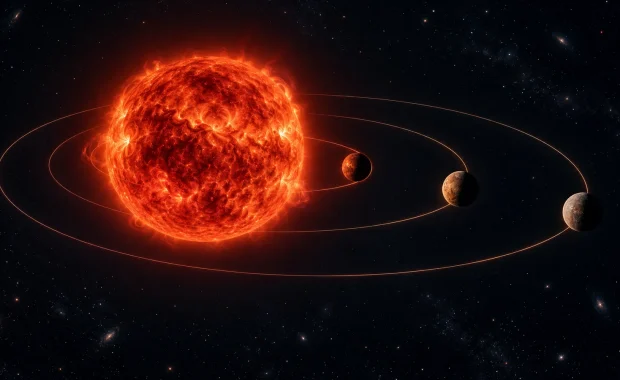
Kepler-335 b has an extremely short orbital period of only 0.01807 days (approximately 26 minutes), which is much shorter than Earth’s year. This rapid orbit indicates that the planet is located very close to its host star. Specifically, the orbital radius of Kepler-335 b is only 0.075 AU (astronomical units), which is much closer than Mercury’s distance from the Sun. Due to this proximity, the planet experiences extreme temperatures and likely undergoes intense radiation exposure from its parent star.
The orbital eccentricity of Kepler-335 b is 0.0, indicating that the planet follows a perfectly circular orbit around its star. This lack of eccentricity simplifies the planet’s orbital dynamics, as there are no significant variations in its distance from the star during its orbit. The circular orbit is in contrast to some other exoplanets that exhibit highly elliptical orbits, leading to fluctuations in temperature and radiation exposure.
Detection Method: Transit
The primary method used to detect and study Kepler-335 b was the transit method. This approach relies on the planet passing in front of its host star from our perspective on Earth. During a transit, the planet causes a small, temporary dimming in the star’s light, which can be detected by instruments on the Kepler Space Telescope. By measuring the amount and duration of the dimming, astronomers can estimate the size of the planet and its orbital parameters. The transit method has been instrumental in detecting thousands of exoplanets, including Kepler-335 b.
The transit method allows for precise measurements of a planet’s size, orbital period, and distance from its star, but it does not directly provide information about the planet’s atmosphere or surface conditions. For more detailed studies, astronomers often rely on follow-up observations using other techniques, such as spectroscopy, to analyze the composition of the planet’s atmosphere.
The Significance of Kepler-335 b in Exoplanetary Research
The discovery of Kepler-335 b contributes to the broader understanding of exoplanets, particularly those that resemble Neptune. Neptune-like planets are of great interest to scientists because they offer a unique opportunity to study the formation and evolution of gas giants, as well as the conditions that might support life in distant star systems. While Kepler-335 b is located far outside the habitable zone of its star, its study helps researchers refine their models of planetary formation and migration.
One of the key areas of focus in exoplanetary research is understanding the diversity of planetary systems and the range of conditions under which planets can form. Kepler-335 b’s close orbit and rapid rotation provide insight into how planets behave when subjected to intense stellar radiation and gravitational forces. Studying such planets also allows scientists to refine their understanding of planetary atmospheres, particularly those of gas giants, and how these planets interact with their host stars.
Additionally, the discovery of planets like Kepler-335 b challenges scientists to reconsider the factors that influence planetary system architecture. The planet’s rapid orbit and eccentricity, coupled with its relatively small size compared to other gas giants, highlight the variety of possible planetary configurations in the universe. By examining a range of planets with different characteristics, astronomers can gain a more comprehensive understanding of planetary formation processes and the potential for life-supporting environments in the universe.
Conclusion
Kepler-335 b is a Neptune-like exoplanet that provides valuable insights into the diversity of planetary systems and the complexities of planetary formation. Discovered in 2014, this planet’s close orbit, rapid orbital period, and lack of eccentricity make it an intriguing subject of study. Although it resides far outside the habitable zone of its star, the planet’s physical properties and orbital dynamics contribute to the broader understanding of gas giants and their role in the universe. As research into exoplanets continues to evolve, planets like Kepler-335 b will undoubtedly remain key targets for astronomers seeking to unravel the mysteries of distant worlds and their potential for supporting life.