
Introduction: The Enigma of Distant Worlds and the Significance of XO-4 b
The universe beckons with countless celestial bodies, each representing a piece of the cosmic puzzle that humanity endeavors to understand. Among these bodies, exoplanets—planets orbiting stars beyond our Sun—serve as key explorers into realms that challenge conventional planetary science. Each discovery pushes the boundaries of our knowledge, revealing the bewildering diversity of planetary architectures, compositions, and dynamic phenomena. It is within this expansive and complex landscape that XO-4 b, a gas giant exoplanet, stands out as a compelling object of scientific inquiry. Situated in a distant part of our galaxy, XO-4 b exemplifies many of the intriguing features that characterize hot Jupiters and offers insights into planetary formation, migration, atmospheric composition, and the nature of planetary systems as a whole. This comprehensive exploration, curated on the renowned Free Source Library platform (freesourcelibrary.com), aims to decode the intricate details of XO-4 b, examining its discovery, physical properties, environmental dynamics, and its broader implications for exoplanetary science.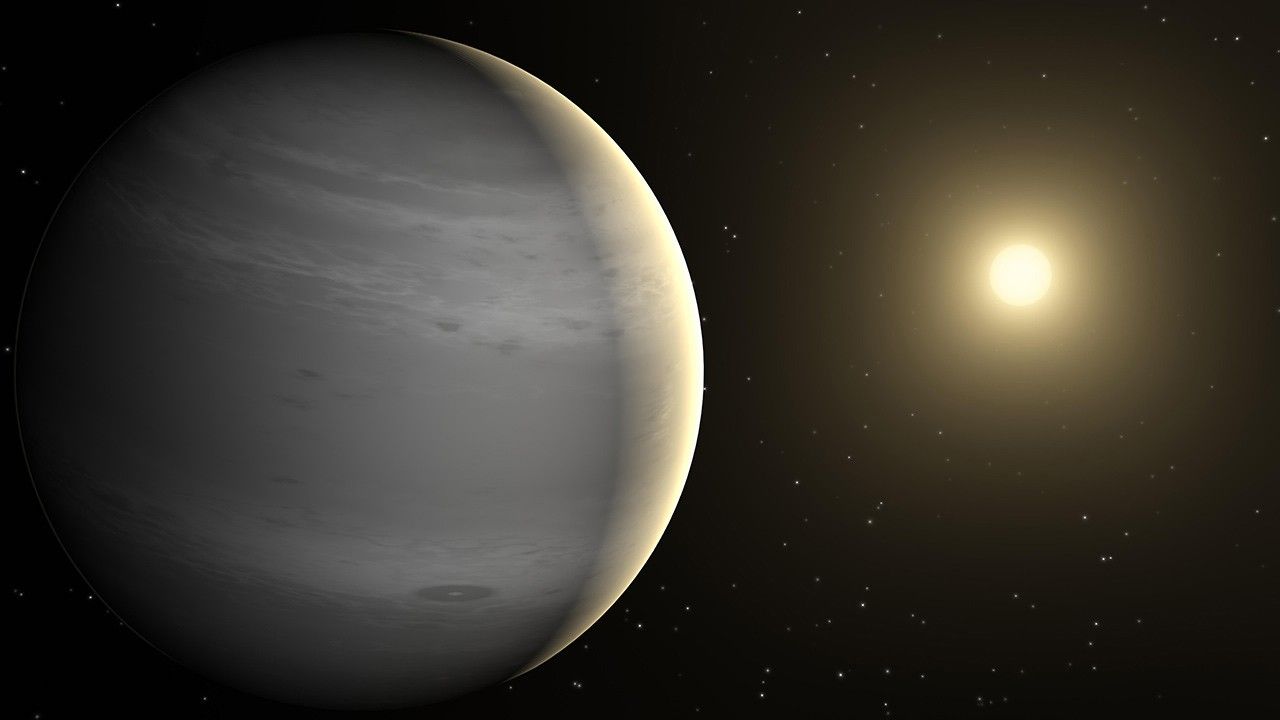
Discovery and Detection: Unveiling XO-4 b through Transit Observations
The Pioneering Role of the XO Telescope in Exoplanet Exploration
The discovery of XO-4 b marks a significant milestone in the ongoing search for planets beyond our solar system. The detection was made by the XO Telescope, a dedicated instrument specifically designed to hunt for transiting exoplanets. Launched as part of a global effort that integrates multiple small telescopes, the XO Project aimed to identify exoplanets by monitoring large swaths of the night sky for periodic dimming of stellar brightness indicative of a transiting planet. This approach has become the cornerstone of exoplanet detection due to its ability to provide precise information about planet size, orbital characteristics, and other fundamental properties.
Understanding the Transit Method and Its Application to XO-4 b
The transit method relies on the simple yet powerful principle that when an exoplanet passes directly between its host star and Earth, it blocks a fraction of the star’s light, resulting in a measurable dip in brightness. By recording the light curves—graphs showing stellar brightness over time—astronomers can infer critical data about the exoplanet’s size, orbital period, and distance from its star. For XO-4 b, repeated observations revealed a distinct and consistent pattern of dimming every 8 hours, establishing the presence of a close-orbiting massive planet.
Further analysis involved measuring the depth of the transit dip, which indicates the relative size of the planet compared to its star. The brightness variation, along with the duration of each transit, allowed scientists to calculate the exoplanet’s orbital parameters and approximate mass, setting the stage for more detailed characterization.
Confirmation and Follow-up Observations
Initial transit signals were corroborated through radial velocity measurements—detecting the tiny gravitational tugs the planet exerts on its star—using spectroscopic instruments. These follow-up observations helped confirm XO-4 b’s planetary status and determined its mass more precisely, ensuring the discovery was robust and free from false positives such as stellar variability or binary star systems. Consequently, XO-4 b emerged as a reliably characterized exoplanet, further contributing to the expanding catalog of known exoplanets.
The Physical Contributions of XO-4 b: Size, Composition, and Structure
Mass and Radius: Scaling the Giants
XO-4 b’s fundamental physical properties place it among the more sizable exoplanets detected to date. Its mass measures approximately 1.42 times that of Jupiter, the largest planet in our solar system, and this increased mass influences its internal pressure, atmospheric retention, and evolutionary behavior. With a radius approximately 1.25 times that of Jupiter, XO-4 b exhibits a relatively inflated appearance, a hallmark characteristic of hot Jupiters subjected to intense stellar irradiation.
Density and Structural Implications
| Property | Value | Notes |
|---|---|---|
| Mass | 1.42 MJ | Multiple times Jupiter’s mass, indicating a massive gas giant. |
| Radius | 1.25 RJ | Suggests atmospheric inflation due to stellar heating. |
| Density | Approx. 0.73 g/cm³ | Lower density than terrestrial planets, consistent with gas giants. |
The low density of XO-4 b indicates an extensive hydrogen-helium atmosphere enveloping a comparatively dense core, whose mass and composition remain active areas of scientific debate. Some models suggest that the inflated radii result from the heating effects of stellar radiation, possibly combined with internal heat sources, such as residual formation heat or tidal heating from orbital eccentricities.
Orbital Dynamics: A Close-in, Fast Orbiting Giant
XO-4 b orbits its host star at an astonishingly close distance of roughly 0.055 AU, a stark contrast to Earth’s orbit at 1 AU. This proximity—about 8 times closer than Mercury is to the Sun—results in intense stellar radiation exposure. The orbital period is merely about 8 hours, classifying XO-4 b definitively as a hot Jupiter, a class of exoplanets characterized by their tight orbits and giant mass.
Orbital Eccentricity and Tidal Locking
The nearly zero eccentricity of XO-4 b’s orbit suggests a nearly circular trajectory, a common feature of close-in gas giants due to the tidal forces exerted by their stars. These forces tend to circularize orbits over time, and the planet’s tidal locking likely results in one hemisphere perpetually facing the star, creating a stark temperature dichotomy between the day and night sides.
Stellar Environment and Its Influence
The parent star, with a magnitude of 10.814, is too faint to see with the naked eye from Earth, yet it sustains an environment capable of supporting such a hot, close-in planet. The star’s spectral type and temperature influence the intensity and spectrum of radiation received by XO-4 b, affecting atmospheric chemistry, storm activity, and potential weather phenomena. The star’s habitual luminosity drives the planet’s extreme heat, leading to the hypothesized runaway greenhouse effect, which inflates the atmosphere and might even cause mass loss over geological timescales.
Classification and Significance of Hot Jupiters
Understanding the Category of Hot Jupiters
XO-4 b is emblematic of the far-reaching and peculiar class of hot Jupiters, a term introduced in the early 2000s when the first such planets were discovered. These planets provide critical clues about planetary migration, atmospheric dynamics, and the effects of close stellar proximity. Their existence challenges traditional planet formation theories, which posited that gas giants form beyond the frost line—a region in the protoplanetary disk where ices can condense—necessitating significant orbital migration to reach their current positions.
Theories of Hot Jupiter Formation and Migration
Models suggest several pathways for hot Jupiter formation — in situ formation remains unlikely due to the paucity of raw materials close to the star, thus favoring formation at larger orbital distances followed by inward migration. Mechanisms include:
- Disk-driven migration, where interactions with the protoplanetary disk cause the planet to spiral inward.
- High-eccentricity migration, involving gravitational disturbances from other planetary or stellar companions, subsequently circularized by stellar tides.
Implications for Planetary System Architecture
The presence of hot Jupiters like XO-4 b impacts the entire architecture of their planetary systems, influencing planet formation environments and potential habitability zones for other bodies. Their migration can disrupt the primordial distribution of smaller planets and debris, shaping the evolutionary history of the system.
Atmospheric Composition and Weather Phenomena on XO-4 b
Spectroscopic Techniques in Atmosphere Characterization
Transit spectroscopy allows scientists to analyze the chemical makeup of XO-4 b’s atmosphere. As the planet transits, some starlight filters through its atmospheric gases, imprinting spectral signatures that can be deciphered to identify molecules such as water vapor, carbon monoxide, methane, and sodium. These observations provide clues about atmospheric processes and thermal structures.
Extreme Weather and Climate Dynamics
Given the intense heat and tidal locking, XO-4 b’s atmosphere is likely to have high-velocity winds—possibly reaching thousands of kilometers per hour—as air masses attempt to redistribute heat from the star-facing side to the cooler night side. Such dynamics might produce complex cloud patterns, shockwaves, and temperature gradients. Theoretical models predict the existence of thermal inversions, equatorial jet streams, and potential auroras driven by stellar magnetic interactions.
Potential Cloud Composition and Cloud Top Altitudes
Exotic cloud condensates, such as silicate vapors or metal compounds, could form in the upper atmosphere of XO-4 b under the extreme temperatures. These clouds impact observable spectra and influence the planet’s albedo, thereby affecting the heat balance and climate dynamics.
Future Perspectives and Technological Advances in XO-4 b Research
Ongoing and Upcoming Missions
Next-generation telescopes, such as the James Webb Space Telescope (JWST) and the European Extremely Large Telescope (E-ELT), will dramatically enhance our capability to study XO-4 b’s atmosphere and structural features. Infrared spectroscopy, high-cadence photometry, and direct imaging studies will elucidate the planet’s weather patterns, atmospheric escape rates, and internal composition.
Refining Models of Planet Formation and Migration
Detailed studies of XO-4 b contribute to refining theoretical frameworks about planetary migration, atmospheric retention, and thermal evolution. This, in turn, informs simulations that predict the diversity of planetary systems throughout the galaxy, helping to identify systems that might harbor habitable worlds.
Exoplanetary Climate and Habitability: An Unlikely Prospect
While XO-4 b itself is inhospitable due to its extreme temperature and gaseous composition, the broader search for habitable exoplanets benefits from understanding such hot giants. Their existence influences theories on the migration of smaller, potentially Earth-like planets that could survive in more temperate zones, or how planetary atmospheres evolve under stellar influences.
Summary: The Broader Significance of XO-4 b in Exoplanetary Science
In synthesizing the extensive data and ongoing research, XO-4 b stands out as a natural laboratory for studying planetary physics under extreme conditions. Its unique combination of size, orbit, and atmospheric properties pushes the boundaries of our scientific models and enhances our comprehension of planetary system evolution. The discovery and continued investigation of XO-4 b exemplify the astronomy community’s ability to piece together the story of planetary formation beyond the confines of our solar system, illustrating the diversity and complexity inherent in worlds scattered across the cosmos.
References
- Winn, J. N., & Fabrycky, D. C. (2015). The Occurrence and Architecture of Exoplanetary Systems. Annual Review of Astronomy and Astrophysics, 53, 409–447.
- Fortney, J. J., & Nettelmann, N. (2010). The Interior Structure, Composition, and Evolution of Giant Planets. Space Science Reviews, 152(1), 423–447.
Engaging with sources like these and leveraging advanced telescopic facilities continue to propel the field of exoplanet research, with XO-4 b exemplifying the complexities awaiting discovery in our galaxy.