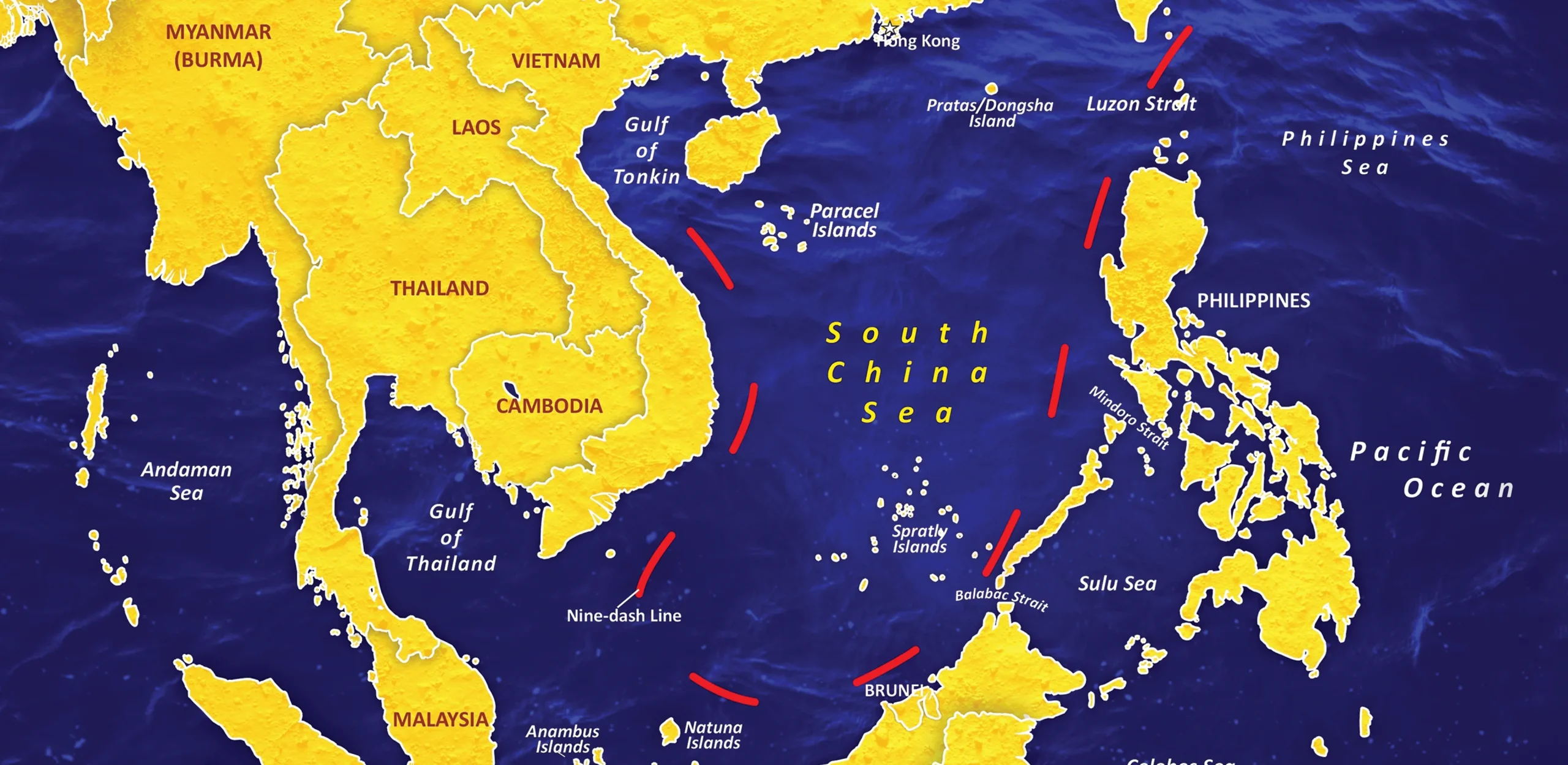
 Free Source Library — The South China Sea is one of the most strategically vital and geopolitically complex maritime areas in the world, with a history rooted in ancient trade routes and a present marked by modern territorial disputes and power struggles.

Understanding the Geopolitical Significance of the South China Sea
The South China Sea is not merely a vast body of water; it is a critical nexus for international commerce, regional security, and resource exploitation. Spanning approximately 3.5 million square kilometers, this semi-enclosed sea connects to the Pacific Ocean via crucial straits such as the Luzon Strait and the Sunda Shelf. Its significance stems from multiple factors:
- Major Global Shipping Lane: Approximately one-third of the world’s maritime trade passes through the South China Sea, including critical routes for energy supplies, manufactured goods, and commodities. Major economies depend on these shipping lanes for their economic stability.
- Natural Resources: The area is believed to host significant reserves of oil and natural gas, alongside rich fisheries that sustain millions of livelihoods in the region.
- Strategic Military Importance: Control over the South China Sea offers regional dominance and influence, serving as a buffer zone for major powers and a staging ground for military operations.
- Regional and Global Power Dynamics: The area embodies the geopolitical rivalry among China, the United States, and Southeast Asian nations, positioning itself as a flashpoint for emerging conflicts and diplomatic negotiations.
Countries with Borders and Interests in the South China Sea
The regional complexity is rooted in the diverse list of nations bordering or engaging in the South China Sea, each with distinct historical claims, strategic interests, sovereignty concerns, and geopolitical goals. These nations include Brunei, Cambodia, China, Indonesia, Malaysia, the Philippines, Singapore, Taiwan, Thailand, and Vietnam. To appreciate the nuances that define this region, it is essential to analyze each country’s stance and interests systematically.
China: The Assertive Regional Power
China’s expansive claims are central to the South China Sea disputes. Through its “Nine-Dash Line,” it asserts a sweeping historic right over most of the sea—covering approximately 90% of the area. The origins of this claim trace back to early 20th-century maps, but it was formally articulated in the 1940s and 1950s, gaining prominence with China’s rapid military and infrastructural developments in recent decades.
China’s claim has been bolstered by a series of large-scale land reclamation projects—creating artificial islands with military bases, airstrips, and surveillance facilities. This technology-driven assertion of sovereignty has provoked widespread concern among neighboring states and the international community, especially regarding freedom of maritime navigation and resource access.
In response, China emphasizes historical narratives, citing ancient maps and trade routes to justify its claims, positioning itself as a regional leader with a “right to recover lost territory.” Its actions have sparked controversy over violations of international law, particularly the United Nations Convention on the Law of the Sea (UNCLOS). China’s construction activities also challenge the principle of peaceful dispute resolution and may threaten the regional balance.
Vietnam: The Long-Standing Disputant
Vietnam’s coastline along the South China Sea is about 3,400 kilometers, making it one of the most directly affected nations. Vietnam disputes China’s claims, especially over the Paracel and Spratly Islands, asserting sovereignty based on historical presence, effective control, and legal rights recognized under international law.
Historically, Vietnam has a long maritime tradition and has engaged in fishing and trade activities in the region for centuries. Its modern disputes began in the 20th century, escalating with China’s assertiveness post-1970s. Notably, Vietnam has experienced military confrontations and skirmishes over territorial control, including the 1974 Battle of the Paracel Islands.
Vietnam actively participates in diplomatic efforts to counterbalance Chinese expansion, seeking support from ASEAN and international bodies, including arbitration mechanisms. The nation seeks sustainable development of fisheries and energy resources while safeguarding its sovereignty through military modernization and strategic alliances.
Philippines: Legal Battles and Strategic Responses
The Philippines’ involvement in South China Sea disputes gained international prominence after filing a case with the Permanent Court of Arbitration (PCA) in The Hague in 2013. The case centered on sovereignty claims over Scarborough Shoal and parts of the Spratly Islands, challenging China’s expansive claims.
The landmark 2016 ruling by the PCA invalidated China’s “Nine-Dash Line” assertion and clarified that many features claimed by China are submerged rocks, not entitled to exclusive economic zones (EEZ). While this decision was a significant legal victory, its enforcement remains limited, as China rejected the ruling and continued asserting its claims through island-building and military presence.
The Philippines has responded with a mix of diplomatic engagement, military strengthening, and alliance-building, primarily with the United States. The Visiting Forces Agreement (VFA) and Mutual Defense Treaty (MDT) with the U.S. are critical components of its strategic posture.
Malaysia and Brunei: Pragmatic Dispute Management
Malaysia’s claims focus primarily on features within the Spratly Islands, pursuing a pragmatic approach that combines diplomatic negotiations with efforts to develop resources efficiently and uphold its sovereignty. Malaysia maintains a cautious stance, balancing its foreign relations with China, the Philippines, and regional partners, emphasizing peaceful conflict resolution.
Brunei, with a relatively smaller stake and less contentious claims, prioritizes regional stability and adherence to international law. It has been active in ASEAN-led negotiations and advocates for a rules-based order in the South China Sea, emphasizing the importance of securing maritime rights without escalating tensions.
Indonesia and Taiwan: Beyond the Main Disputes
Indonesia and the Natuna Islands
Although not a claimant in the traditional sense, Indonesia faces tensions with China over fishing rights near the Natuna Islands. Chinese vessels have been accused of illegal fishing and asserting maritime claims beyond Indonesia’s EEZ, prompting diplomatic protests and patrol intensification.
Indonesia’s strategic priority is safeguarding its sovereignty and protecting economic interests, especially its abundant fisheries and potential hydrocarbon reserves. The government emphasizes dialogue and law enforcement over military escalation, aligning regional cooperation with ASEAN principles.
Taiwan: The Complex Self-Governing Entity
Claiming sovereignty based on historical and legal claims similar to China, Taiwan’s position in the South China Sea is complicated by its international recognition status. It maintains its own territorial claims, overlapping with those of China, but operates independently with its military and administration.
In recent years, Taiwan has increased its maritime patrols, totems of sovereignty, and diplomatic efforts to garner international support. Its strategic actions, however, are often overshadowed by the broader U.S.-China rivalry.
Singapore and Thailand: Regional Stability Advocates
While neither Singapore nor Thailand claims territorial sovereignty over contested features, both are vital regional players invested in stability and open maritime trade. Singapore’s strategic position at the crossroads of major shipping lanes motivates its active participation in regional dialogues and initiatives promoting cooperation.
Thailand maintains a neutral stance, advocating for peaceful negotiations. Both nations actively support ASEAN’s efforts to develop a binding code of conduct, recognizing that stability in the South China Sea is essential for their own economic and security interests.
Broader Regional and Global Dynamics
Role of Major Powers
The United States has historically maintained freedom of navigation operations (FONOPs) and military presence to challenge excessive claims and affirm the openness of global sea lanes. The U.S. aims to balance China’s assertiveness while strengthening alliances with regional states.
China’s rapid militarization and island-building reflect its strategic desire to establish a near-complete control of the region, reinforcing its “core interests.” This often triggers U.S. and allied responses, increasing the risk of maritime incidents.
Regional Diplomacy and ASEAN’s Central Role
ASEAN’s diplomatic efforts focus on creating a binding Code of Conduct (CoC), fostering confidence-building measures, and mediating disputes. However, the organization faces limitations due to divergent interests among member states, especially given ASEAN’s principle of non-interference.
Negotiations over the CoC, ongoing since 2002, aim to establish mechanisms for incident prevention, dispute resolution, and resource management, encouraging transparency and peaceful coexistence. The success of such initiatives is crucial for regional stability.
Challenges to Peace and Stability in the Region
- Environmental Degradation: Unsustainable fishing practices, coral reef destruction, and oil spills threaten regional ecosystems. Climate change intensifies these risks by raising sea levels and destabilizing island environments.
- Military Escalation: The ongoing militarization increases the risk of miscalculation, accidental clashes, or open conflict, particularly around contested features.
- Legal Enforcement Gaps: Despite international rulings like the PCA decision, enforcement mechanisms are weak, relying heavily on diplomatic and diplomatic pressure rather than binding sanctions.
- Diplomatic Divisions: Differing national interests and alliances complicate unified regional responses, prolonging disputes and delaying agreed solutions.
Future Outlook and Pathways to Stability
Diplomatic Proposals
Progress hinges on sustained multilateral negotiations, an effective CoC, and adherence to international law. Confidence-building measures, crisis management protocols, and transparent resource-sharing agreements can help reduce tensions.
Illustrative Framework for Resolution
| Step | Action | Expected Outcome |
|---|---|---|
| 1 | Initiate inclusive dialogues involving all claimants and regional stakeholders | Enhanced mutual understanding and trust |
| 2 | Negotiate a legally binding Code of Conduct (CoC) under ASEAN auspices | Clear dispute management mechanisms established |
| 3 | Establish joint resource development zones with transparent benefit-sharing | Reduced resource-related tensions |
| 4 | Enhance environmental protections and sustainable resource management | Ecological preservation and regional stability |
Conclusion
The South China Sea epitomizes the complex interplay between sovereignty, strategic interests, international law, and regional diplomacy. Its future depends on effective multilateral cooperation, respectful dispute resolution, and sustainable development. The challenge lies in balancing national interests with the collective need for peace, stability, and environmental conservation, ensuring that this vital maritime corridor remains a conduit for prosperity rather than a flashpoint for conflict.
References
- United Nations Convention on the Law of the Sea (UNCLOS) – https://example.com/unclos
- International Crisis Group – https://example.com/crisis-group