
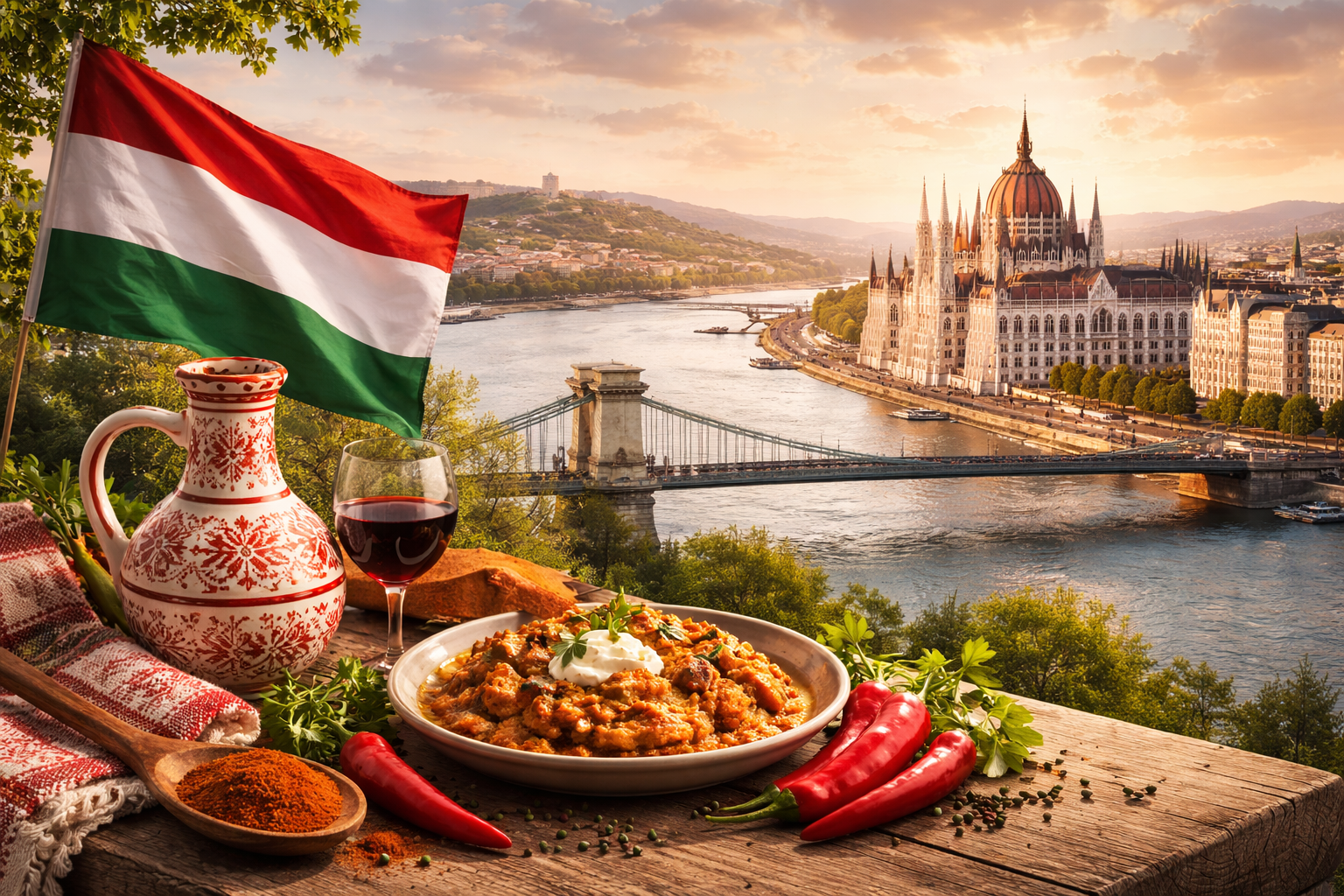
 Free Source Library — Hungary’s story is woven from a rich tapestry of history, geography, culture, and political transformation, shaping it into a uniquely resilient nation on the European stage.
Geography and Physical Landscape
Geographical Diversity and Key Features
Hungary’s geographical makeup presents a fascinating blend of plains, hills, rivers, and lakes, which together define its natural landscape and influence its development, culture, and economy. The country covers approximately 93,000 square kilometers, positioning it among the smaller nations of Europe, yet its terrains offer significant diversity that has historically supported agricultural, industrial, and tourism sectors. The Great Hungarian Plain (Alföld) dominates the eastern region, stretching across more than half of Hungary’s territory. Its flat expanse, characterized by fertile soil, makes it a prime agricultural hub, particularly for crops like wheat, sunflower, maize, and barley. This plains area has been pivotal since ancient times, shaping the agrarian lifestyle of many generations. In contrast, the western and northern parts of Hungary are less flat. The western region is edged by the foothills of the Alps, encompassing mountainous zones like the Bakony and Vértes Hills. The northern regions include the Bükk Mountains, Mátra Hills, and the Zemplén Mountains, where the terrain rises dramatically with peaks like Kékes, Hungary’s highest point at exactly 1,014 meters. These mountains are rich in forests, offering ecological diversity, recreational opportunities, and scenic beauty.
Major Rivers and Water Bodies
The Danube River is undoubtedly Hungary’s most iconic waterway, traversing the country from north to south and transforming the landscape along its banks. The Danube forms a natural border between Hungary and neighboring countries like Slovakia and Serbia, serving as crucial transportation arteries and a source of hydroelectric power, irrigation, and tourism. Other significant rivers include the Tisza, which flows through northeastern Hungary before merging with the Danube. The Tisza delta and its surrounding wetlands are UNESCO-listed areas that host rich biodiversity, supporting a range of birdlife, fish, and flora. Lake Balaton, often called the “Hungarian Sea,” is Central Europe’s largest freshwater lake. Its shallow waters and moderate climate create perfect conditions for relaxation, water sports, and viticulture, as the region around the lake hosts some of Hungary’s most renowned wine-producing villages like Badacsony and Szeged.
Climate and Environmental Considerations
Hungary enjoys a continental climate, with warm summers and cold winters. Average summer temperatures range from 25°C to 30°C (77°F-86°F), while winter temperatures often dip below freezing, especially in the northern mountainous regions. Precipitation varies across the country, with the Western Carpathians and mountainous zones experiencing more rainfall, supporting lush forests and biodiversity. Environmental issues such as water management, pollution, and climate change remain topics of importance for Hungary’s sustainable development. The country actively participates in EU initiatives targeting conservation, renewable energy expansion, and climate resilience.
Protected Areas and National Parks
Hungary boasts a network of national parks, nature reserves, and UNESCO World Heritage sites. For instance, Hortobágy National Park exemplifies the traditional Hungarian steppe landscape and is a designated cultural landscape. The Bükk Mountains and Aggtelek Karst are renowned for their unique limestone formations and extensive cave systems. Understanding Hungary’s physical geography provides insight into its agricultural practices, urban development, and even cultural traditions rooted in its landscape.
Historical Evolution and Key Phases
Ancient Origins and Early Settlement
The earliest inhabitants of Hungary trace back thousands of years, with archaeological finds indicating settlements from the Neolithic period. The region hosted diverse tribes and civilizations, notably the Celts and Romans. The Romans established the province of Pannonia, fostering infrastructure like roads and towns, some of which, such as Sopianae (modern-day Pécs), remain historically significant. Post-Roman decline, the area was inhabited by various barbarian groups, including the Huns, Goths, and Gepids, which laid the foundation for its diverse ethnic makeup.
The Arrival of the Magyars & Formation of the Kingdom
The late 9th century marks a crucial turning point with the arrival of the Magyars, a Finno-Ugric people migrating into the Carpathian Basin from the east. Their conquest and settlement led to the establishment of the Principality of Hungary by the late 9th or early 10th century. In 1000 AD, the coronation of King Stephen I established the Christian Kingdom of Hungary, creating the medieval state that would become a central European power. This period saw efforts to consolidate the kingdom, spread Christianity, and develop legal codes, including the establishment of the Archbishopric of Esztergom.
Medieval Expansion and Cultural Flourishing
The 14th and 15th centuries, under kings like Charles I and Matthias Corvinus, represented Hungary’s golden age. The kingdom expanded its influence, fostering a vibrant cultural and scholarly environment. Matthias Corvinus, in particular, is celebrated for his military campaigns and enlightened rule, which made Hungary a significant player in European politics. Architectural innovations flourished during this era, with the construction of Gothic cathedrals, castles, and universities. The Renaissance also influenced Hungarian art and literature, leaving an indelible mark on the country’s cultural landscape.
Ottoman Period and Habsburg Rule
The Ottoman invasion of the 16th century profoundly reshaped Hungary. The Battle of Mohács (1526) marked a catastrophic defeat for Hungary, leading to division: the central part fell under Ottoman control, while the west and north remained under Habsburg influence. The Ottoman dominion lasted approximately 150 years, especially impacting southern Hungarian regions such as Bácska and the Great Plain. Despite the hardships, some towns and cities thrived culturally and economically, benefitting from Ottoman administration. Post-Ottoman, the Habsburg Monarchy gradually reasserted control, incorporating Hungary into a complex political union that lasted until the early 20th century. The Habsburg era was marked by wars, reforms, and the gradual rise of Hungarian national consciousness.
Hungary within the Austro-Hungarian Empire
In 1867, the Austro-Hungarian Compromise created a dual monarchy, granting Hungary significant autonomy within Austria-Hungary. This period, until 1918, was characterized by rapid economic growth, industrialization, and the proliferation of Hungarian cultural identity. Urbanization intensified, with Budapest transforming into a bustling metropolis. Education, science, and the arts flourished during this time, producing figures like Liszt and Erkel. Nevertheless, national tensions persisted, foreshadowing the empire’s ultimate collapse after World War I.
The 20th Century: Turmoil, War, and Rebirth
Post-World War I and the Treaty of Trianon
The end of World War I plunged Hungary into chaos. The empire’s defeat and subsequent dissolution led to Hungary declaring independence as a republic. However, the Treaty of Trianon (1920) drastically reduced Hungary’s territory by about 70%, ceding regions like Transylvania to Romania and parts of Slovakia and Serbia to neighboring nations. This territorial loss deeply scarred national consciousness, fostering a sense of grievance that permeated Hungarian politics and society for decades. The treaty’s ramifications spurred revisionist policies and fueled tensions in Central Europe.
Interwar Period and Political Extremes
The interwar era was marked by political instability, economic hardship, and rising extremism. The authoritarian Horthy regime sought to restore national pride and economic stability but also faced opposition from communist and fascist factions. A notable event was the rise of the Arrow Cross Party and its alignment with Nazi Germany, fostering a period of collaboration, complicity in atrocities, and, ultimately, the devastation wrought by World War II.
World War II and Occupation
Initially aligned with Nazi Germany, Hungary participated in the war with hopes of regaining lost lands. However, as Germany’s fortunes declined, Hungary attempted to switch allegiances. This led to German occupation in 1944, during which the Holocaust reached its tragic peak in Hungary, with hundreds of thousands of Jews murdered. The war left Hungary devastated, with significant loss of life, infrastructure, and cultural heritage.
Soviet Influence and Communist Rule
In the aftermath of WWII, Hungary fell under Soviet influence, establishing the Hungarian People’s Republic in 1949. Communist policies nationalized industries, collectivized agriculture, and suppressed political dissent. The country endured economic stagnation and political repression. The 1956 Revolution marked a major uprising against Soviet domination, demanding freedom and reform. The uprising was brutally suppressed, but it inspired subsequent resistance and played a key role in the eventual decline of Soviet control.
The Kádár Era and Goulash Communism
János Kádár assumed leadership after 1956, introducing a pragmatic form of communism known as “Goulash Communism.” This policy allowed limited market reforms and increased personal freedoms, resulting in relative stability and growth through the 1960s and 1970s. Nonetheless, political repression persisted, and Hungary remained a socialist state until the wider collapse of the Eastern Bloc in 1989.
The Transition to Democracy
End of Communist Rule
As Cold War tensions waned, Hungary moved toward political reform, culminating in peaceful demonstrations in 1989 that ended communist rule. The country adopted a new democratic constitution granting civil liberties, multiparty elections, and market reforms. First free elections in 1990 ushered in a new parliamentary system, with the Hungarian Democratic Forum (MDF) and other parties shaping the post-communist political landscape.
European Integration and Modern Challenges
Hungary’s accession to the European Union in 2004 marked its deep integration into European political, economic, and security structures. Membership opened new markets, enabled regional cooperation, and enhanced infrastructure development. However, Hungary faced persistent challenges, including economic disparities, political polarization, and debates over judicial independence, media freedom, and the rule of law—especially under the leadership of Viktor Orbán’s government since 2010.
Political Landscape and Contemporary Issues
Governance and Political Dynamics
Hungary operates as a parliamentary democracy with a multi-party system. The prime minister wields significant executive power, while the president has a largely ceremonial role. The National Assembly, comprising 199 members, is responsible for legislation. Since 2010, Fidesz—led by Viktor Orbán—has maintained a dominant position, often dominating the parliament through constitutional and legal reforms, promoted as efforts to strengthen sovereignty.
Controversies and Democratic Norms
Critics argue that recent policies have undermined Hungary’s democratic institutions, citing actions like judicial restructuring, media consolidation, and restrictions on civil society. The European Union has issued multiple condemnations and initiated infringement procedures, questioning the robustness of Hungarian democracy.
Economic Overview in the 21st Century
Hungary’s economy has been resilient, with steady growth driven by export-oriented sectors like automotive manufacturing—home to companies like Audi, Mercedes-Benz, and Suzuki. The country boasts a skilled workforce, competitive wages, and a strategic location bridging Eastern and Western Europe. Comparison of key economic indicators over the past decade reveals strengths and vulnerabilities, highlighted through a tabular overview below:
| Indicator | 2015 | 2020 | 2023 (est.) | Remarks |
|---|---|---|---|---|
| GDP (USD billion) | 135 | 155 | 170 | Growth fueled by manufacturing and EU funds |
| GDP per capita (USD) | 14,000 | 15,800 | 16,500 | Indicators of rising living standards |
| Unemployment Rate | 7.0% | 4.2% | 4.5% | Steady decline post-pandemic recovery |
| Inflation Rate | 0.1% | 3.1% | 4.0% | Price fluctuations due to supply chain issues |
Cultural Dimensions and Contributions
Literature and Arts
Hungary’s cultural sphere boasts influential writers, poets, composers, and artists. National literature has been shaped by figures like Sándor Petőfi, who became a symbol of national revival, and Nobel laureate Imre Kertész, whose novels explore themes of trauma and resilience. Classical composers Franz Liszt and Béla Bartók revolutionized musical landscapes, blending European classical traditions with Hungarian folk music elements. Folk art, traditional embroidery, and crafts continue to embody cultural identity, often showcased during festivals like the Budapest Spring Festival.
Music and Dance Traditions
Hungarian folk music features energetic rhythms, lively dances like the csárdás, and distinctive instruments such as the cimbalom and tárogató. The Hungarian State Opera and Budapest’s concert halls host world-class performances, bridging cultural preservation with modern innovation. Contemporary music genres, including jazz and rock, thrive within a vibrant entertainment industry, while film and theater continue to reflect social realities and national narratives.
Cuisine and Dietary Heritage
Beyond goulash, Hungary’s culinary repertoire includes hearty stews, succulent roasts, and desserts like dobos torte. Its cosmopolitan history has infused dishes with Turkish, Ottoman, Slavic, and Austrian influences, shaping a diverse gastronomic tradition. Street food vendors, gourmet restaurants, and wine cellars showcase the depth of Hungary’s culinary craftsmanship. Notably, the Tokaj wine region produces some of the world’s most celebrated sweet wines.
Modern Societal Trends and Future Outlook
Demographics and Social Change
Hungary faces demographic challenges common across Europe: aging populations, youth emigration, and low birth rates. These trends impact the workforce, social services, and economic sustainability, prompting government policies to encourage family growth and attract foreign talent. Migration patterns, both inward and outward, influence societal composition. While Hungary remains largely ethnically homogeneous, small minority communities contribute to multiculturalism.
Technological Advancements and Innovation
Hungary is investing in developing its digital economy, focusing on startups, information technology, and green energy. Budapest has emerging tech hubs fostering innovation in AI, biotech, and software development. Government policies aim to balance economic growth with environmental sustainability, including renewable energy projects and smart city initiatives.
Challenges and Opportunities of the Future
Hungary’s strategic position offers opportunities for regional cooperation, infrastructure development, and technological innovation. The nation’s ability to navigate internal political debates, EU relations, and global economic shifts will shape its trajectory in the decades ahead. Most importantly, Hungary’s cultural resilience and historical identity provide a robust foundation for continued growth amid these challenges.
In-Depth: Step-by-Step Framework for Understanding Hungary’s Development
- Historical Context: Study the key epochs to comprehend ongoing societal shifts.
- Geographical Impact: Analyze how landscape influences economy, settlement, and culture.
- Political Transitions: Track political reforms and their effects on democratic evolution.
- Economic Strategies: Explore diversification, innovation, and EU integration policies.
- Cultural Preservation: Understand the role of tradition in national identity and modernization efforts.
- Future Planning: Engage with strategic visions for sustainable growth and regional stability.
Common Mistakes When Analyzing Hungary
- Overgeneralizing its political landscape without considering regional nuances.
- Neglecting the importance of cultural and historical context in policy analysis.
- Ignoring demographic trends that influence societal development.
Useful Resources and Further Reading
References
- European Commission. “Hungary and the EU: Political and Economic Relations,” 2023.
- Hungarian Central Statistical Office. “Economic Data and Demographics,” 2023.