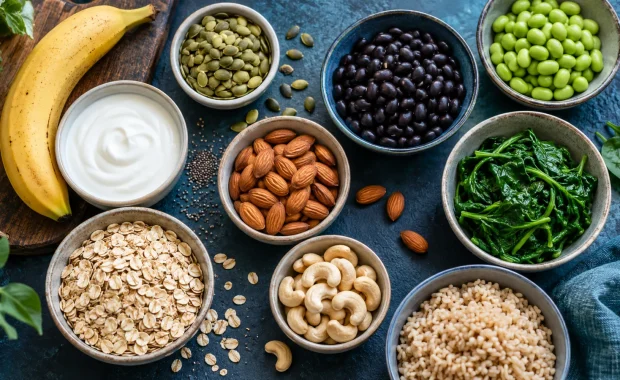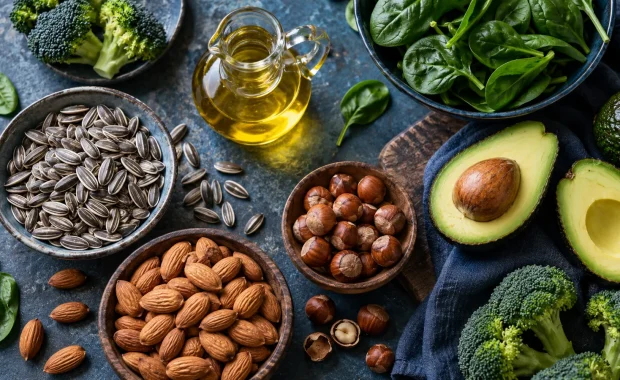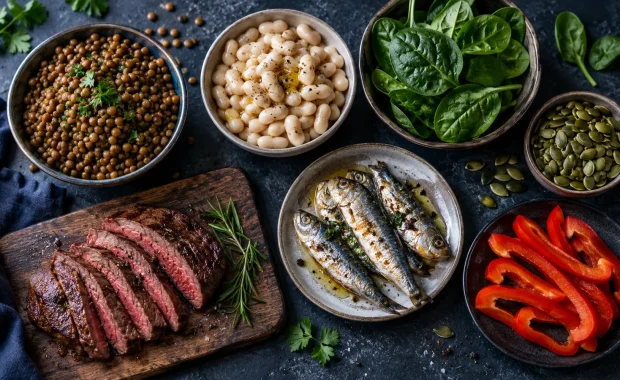
An iron-rich diet is more than a list of foods. A bowl of lentils may contain a useful amount of iron, but the rest of the meal can raise or lower how much your body absorbs. A person who menstruates may need more than twice the daily iron of an adult man. Someone with ongoing blood loss cannot reliably “eat their way out” of the problem without finding and treating the cause. Good planning starts with those differences.
This guide focuses on the practical question: How do you build iron-rich meals that fit real life? It covers daily needs, meal structure, plant-based strategies, timing of common inhibitors, and when food is not enough. For a food-by-food comparison with serving values, see our companion guide to the most useful iron-rich foods.
The short version
- Put a dependable iron source at the center of at least one or two meals each day.
- Pair plant iron with vitamin C in the same meal.
- Move tea and coffee away from iron-focused meals if your iron status is low.
- Use fortified foods strategically, but read the serving size and label.
- Do not start high-dose iron solely because you feel tired; test and investigate first.
Start with the right target
The U.S. recommended dietary allowance is 8 milligrams per day for adult men and adults over 50, 18 milligrams for women aged 19–50, and 27 milligrams during pregnancy. Recommendations for children change with age and growth. People following vegetarian diets may need 1.8 times the standard intake because nonheme iron is absorbed less efficiently.
A target is useful, but it does not tell you whether you personally are iron deficient. Menstrual bleeding, pregnancy, recent birth, gastrointestinal bleeding, frequent blood donation, endurance sports, low food intake, inflammatory bowel disease, celiac disease, bariatric surgery, and some medications can change risk. Conversely, some people accumulate too much iron. Personalized care matters most when symptoms or abnormal labs are present.
Build meals with a three-part formula
A repeatable iron-focused meal has three elements:
- An iron anchor: meat, shellfish, sardines, lentils, beans, chickpeas, tofu, iron-fortified grain, or seeds.
- A vitamin C partner: bell pepper, tomato, citrus, berries, kiwi, broccoli, cabbage, or another vitamin C-rich fruit or vegetable.
- A satisfying base: whole grain, potato, vegetables, healthy fat, and adequate protein so the meal works nutritionally and keeps you full.
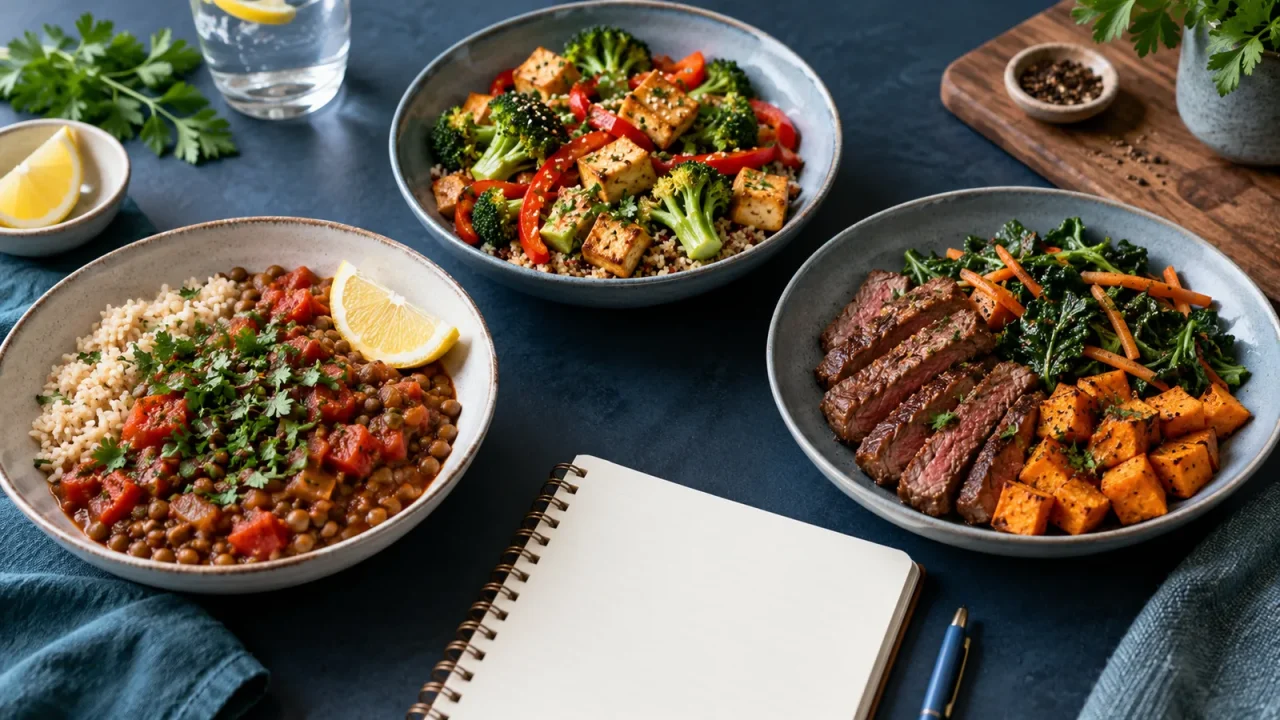
Examples include lentil curry with tomatoes and cauliflower; beef and bell-pepper stir-fry; tofu with broccoli and brown rice; chickpea salad with parsley, tomato, and lemon; sardines on whole-grain toast with a citrus-and-greens salad; or fortified oatmeal with strawberries and pumpkin seeds.
Why meal pairing matters
Heme iron from meat and seafood is generally more bioavailable and less affected by other meal components. Nonheme iron from plants and fortified foods is more responsive to enhancers and inhibitors. Vitamin C improves its absorption by keeping iron in a more soluble form and helping reduce ferric iron to ferrous iron.
You do not need a huge glass of juice. Whole foods such as half a bell pepper, tomatoes in a stew, berries on cereal, or lemon squeezed over beans can do the job while adding fiber and other nutrients. The practical principle is proximity: include the vitamin C food in the same meal rather than hours later.
Plan tea, coffee, and calcium without fear
Tea and coffee contain polyphenols that can substantially reduce nonheme iron absorption when consumed with a meal. If iron stores are low, drink them between meals—often one to two hours away from the iron-focused meal—rather than giving them up entirely. The exact effect varies by drink strength, amount, and meal.
Calcium can inhibit iron absorption in some contexts. This does not mean dairy is unhealthy or must be removed. If you take a large calcium supplement and a clinician has prescribed iron, ask about spacing them. For food, focus on the total pattern unless your care team gives specific instructions.
Phytate in whole grains, legumes, nuts, and seeds can bind iron, yet these foods remain central to a healthy plant-based diet. Soaking beans, sprouting, fermenting, and using leavened breads can reduce phytate. Vitamin C pairing helps counter its effect. Avoid solving one nutrient issue by stripping the diet of fiber and variety.
A seven-meal rotation that is actually usable
1. Fortified cereal bowl
Choose a cereal that lists iron on the label and has a reasonable amount of fiber and added sugar. Top it with strawberries, kiwi, or orange segments. Label values differ enormously: one serving may contain 10% of the Daily Value while another contains 100%.
2. Lentil-tomato soup
Use lentils as the iron anchor and tomatoes as the vitamin C partner. Add carrots, onion, herbs, and a squeeze of lemon at serving. Make a large batch and freeze portions. Whole-grain bread adds more iron but is not essential.
3. Beef and pepper bowl
A moderate portion of lean beef supplies heme iron. Bell peppers and broccoli provide vitamin C, while rice or another grain makes the meal flexible. A small amount of meat in a mixed meal can also improve absorption of nonheme iron from plant ingredients.
4. Tofu-broccoli stir-fry
Firm tofu supplies iron and protein; broccoli and red pepper support absorption. Check whether your tofu is calcium-set if you are closely tracking nutrients, but do not obsess over a single interaction. The overall meal is still nutrient-dense.
5. Chickpea lemon salad
Combine chickpeas, tomato, bell pepper, parsley, cucumber, and a lemon-based dressing. Add pumpkin seeds for texture and extra iron. This travels well for lunch and can be prepared without expensive specialty products.
6. Sardines with tomato toast
Sardines offer heme iron, protein, and omega-3 fats. Serve them with tomato on whole-grain toast and a side of fruit. Compare sodium among canned options and choose bone-in or boneless according to preference.
7. Bean chili
Kidney, black, or white beans provide nonheme iron; tomatoes and peppers provide vitamin C. Chili is especially useful for families because it scales well, freezes well, and allows meat or plant-only versions without changing the basic method.
Vegetarian and vegan iron planning
A plant-based iron plan should rely on multiple recurring sources rather than one “superfood.” Rotate lentils, beans, chickpeas, tofu or tempeh, seeds, whole grains, leafy greens, and fortified foods. Include vitamin C at meals, and consider the timing of tea and coffee. This approach respects the higher intake target used for vegetarian diets without reducing eating to arithmetic.
Iron is only one consideration. Vegan diets require a reliable vitamin B12 source, and low B12 can also cause anemia. Folate, protein, iodine, calcium, vitamin D, and omega-3 intake may need attention depending on the pattern. If blood tests show anemia, do not assume iron is the cause.
Iron planning during pregnancy
Pregnancy raises iron needs because blood volume expands and iron supports the placenta and fetus. Food should contribute, but many prenatal care plans include an iron-containing prenatal supplement. Dose and timing should be decided with the maternity care team, especially when nausea, constipation, reflux, anemia, thalassemia trait, or other conditions are present.
Food-safety rules also matter. Avoid raw or undercooked animal foods, choose low-mercury seafood consistent with local guidance, and be cautious with liver because it is very high in preformed vitamin A. A concentrated nutrient source is not automatically pregnancy-friendly.
Iron for infants, children, and teenagers
Infants are born with iron stores, but needs change as they grow. Iron-rich complementary foods become important around the time solids begin, while breast milk or iron-fortified formula remains central during infancy. Age-appropriate options include iron-fortified infant cereal, puréed meat, mashed beans or lentils, tofu, and smooth textures paired with fruits or vegetables rich in vitamin C.
Teenagers may be vulnerable because growth accelerates, and menstruating teens lose iron. Restrictive eating, intense sport, and skipped meals can add risk. Parents should avoid turning meals into a confrontation or giving adult-dose supplements without pediatric guidance. A pediatrician or registered dietitian can assess growth, diet, symptoms, and labs together.
Meal prep without nutrient fatigue
Keep two iron anchors ready each week. For example, cook lentils and roast chicken, or prepare bean chili and marinated tofu. Wash vitamin C-rich produce, freeze berries, and keep canned beans or sardines for low-energy days. This is more sustainable than trying to design a perfect menu every morning.
Use a simple weekly check: Did you include legumes several times? A fortified food if useful? Nuts or seeds? Meat or seafood if you eat them? Vitamin C-rich produce with plant sources? The pattern matters more than a single missed meal.
How to read a food label for iron
The percent Daily Value on U.S. labels is based on 18 milligrams. A product with 20% DV provides about 3.6 milligrams per labeled serving. Check whether you actually eat that serving. Also compare fiber, added sugar, sodium, and total calories. A candy-like cereal with added iron is not the only route; it may simply be one convenient tool.
Claims such as “good source” or “excellent source” have regulated meanings in some countries, but rules differ. The nutrition panel is more informative than front-of-package language.
When food may not be enough
Diet cannot correct ongoing blood loss, severe deficiency, or an absorption disorder by itself. Symptoms that can occur with iron deficiency include fatigue, weakness, headaches, poor concentration, reduced exercise capacity, restless legs, pica, shortness of breath, and a racing heart. None is specific enough for self-diagnosis.
A clinician may order a complete blood count, ferritin, transferrin saturation, and other tests based on context. Ferritin can be affected by inflammation. The evaluation should also ask why iron is low—heavy periods, gastrointestinal bleeding, dietary restriction, pregnancy, donation, or impaired absorption—rather than stopping at a supplement.
Seek urgent care for chest pain, fainting, severe breathlessness, vomiting blood, black tarry stools, or heavy uncontrolled bleeding. Children who swallow iron tablets need immediate poison-control or emergency guidance because overdose can be life-threatening.
How to use supplements responsibly
When prescribed, iron may be taken daily or on another schedule depending on the formulation and clinical plan. Side effects include nausea, constipation, abdominal discomfort, and dark stools. Some medicines and supplements interact with iron. Do not double a dose to “catch up,” and never store it where a child can reach it.
Ask the prescriber four questions: What dose of elemental iron am I taking? How and when should I take it? When will we repeat tests? What should we do if I cannot tolerate it or the numbers do not improve? Those answers are more reliable than copying a regimen from social media.
Frequently asked questions
Can one meal meet a full day’s iron need?
Sometimes—especially with fortified cereal, shellfish, or a carefully composed meal—but distributing sources across the day is usually easier and gentler on digestion.
Is beetroot high in iron?
Beetroot is nutritious but not a leading iron source. Its reputation is larger than its iron content. Beans, lentils, fortified grains, tofu, seeds, meat, and shellfish contribute more.
Should tea be avoided completely?
No. If iron status is normal, tea can fit a healthy pattern. If stores are low, moving it away from iron-focused meals is a practical adjustment.
How long does food take to raise iron?
There is no universal timeline. It depends on starting levels, cause, absorption, ongoing losses, and whether medical treatment is needed. Laboratory follow-up—not how energetic you feel on one day—shows whether a plan is working.
Bottom line
An iron-rich diet works best as a system: reliable iron anchors, vitamin C partners, sensible timing of inhibitors, and repetition across the week. Use fortified foods when helpful, keep plant-based meals diverse, and adjust for life stage. If symptoms or abnormal labs are present, food planning should accompany medical evaluation, not replace it.
Sources
- NIH Office of Dietary Supplements: Iron—Health Professional Fact Sheet
- USDA FoodData Central food search
- World Health Organization: use of ferritin concentrations to assess iron status
Evidence reviewed: October 16, 2026.