Magnesium participates in more than 300 enzyme systems. It helps the body make protein and DNA, supports nerve and muscle function, contributes to blood glucose and blood-pressure regulation, and is required for energy production. It also helps maintain normal heart rhythm and bone structure. Because magnesium is spread across many foods rather than concentrated in one famous ingredient, the easiest way to get enough is to build a repeatable pattern.
This guide compares practical magnesium-rich foods using ordinary portions. It also explains daily needs, the effect of processing, when deficiency is more likely, and why a supplement’s label can be more complicated than it looks.
Key takeaways
- Pumpkin seeds, chia seeds, almonds, cashews, legumes, whole grains, and cooked leafy greens are strong food sources.
- Adult men generally need 400–420 milligrams a day; adult women need 310–320 milligrams, with higher needs during pregnancy.
- Refining grains removes much of their magnesium, so whole-grain choices matter.
- Food magnesium is not subject to the supplement upper limit; the limit applies to supplemental and medication sources because they can cause diarrhea.
- Kidney disease changes the safety equation and requires professional advice before supplementation.
Daily magnesium needs
According to the U.S. National Institutes of Health, men aged 19–30 need 400 milligrams per day and men 31 or older need 420 milligrams. Women aged 19–30 need 310 milligrams and women 31 or older need 320 milligrams. Pregnancy raises the recommendation to 350–360 milligrams for most adults, while lactation recommendations are 310–320 milligrams. Needs for children rise with age.
The Daily Value on U.S. labels is 420 milligrams for adults and children aged four and older. A label showing 20% DV therefore represents about 84 milligrams per serving. Remember that the serving printed on the package may not match what you eat.
Top food sources by realistic serving
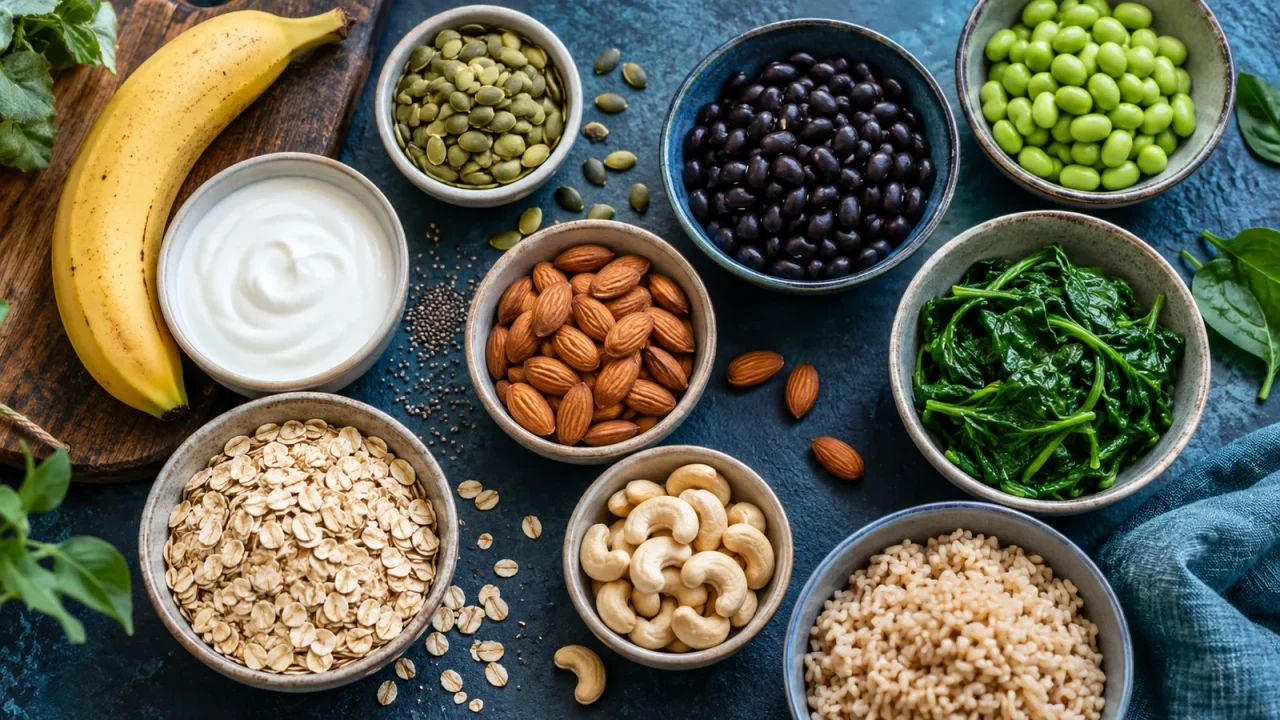
| Food | Typical serving | Approximate magnesium | Share of 420 mg DV |
|---|---|---|---|
| Pumpkin seeds, roasted | 1 ounce | 156 mg | 37% |
| Chia seeds | 1 ounce | 111 mg | 26% |
| Almonds, dry roasted | 1 ounce | 80 mg | 19% |
| Spinach, boiled | 1/2 cup | 78 mg | 19% |
| Cashews, dry roasted | 1 ounce | 74 mg | 18% |
| Peanuts, oil roasted | 1/4 cup | 63 mg | 15% |
| Black beans, cooked | 1/2 cup | 60 mg | 14% |
| Edamame, cooked | 1/2 cup | 50 mg | 12% |
| Peanut butter | 2 tablespoons | 49 mg | 12% |
| Brown rice, cooked | 1/2 cup | 42 mg | 10% |
| Plain yogurt | 8 ounces | 42 mg | 10% |
| Banana | 1 medium | 32 mg | 8% |
Values are approximate and can differ by variety, brand, and preparation. The table also reveals an important point: bananas contain magnesium, but they are not a top source. Their reputation sometimes distracts from seeds, nuts, beans, and greens that provide much more per serving.
Seeds: the most concentrated everyday option
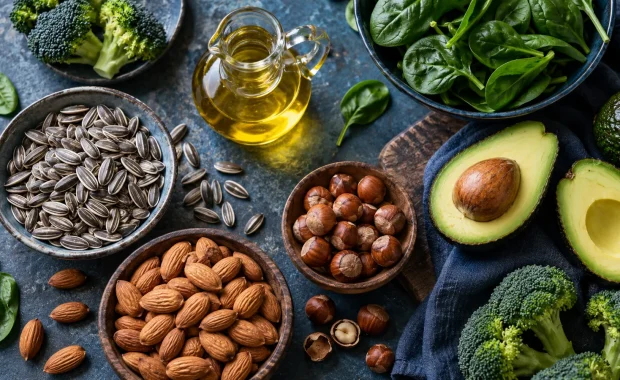
Pumpkin seeds deliver more than one-third of the Daily Value in a one-ounce serving. Chia seeds provide about one-quarter. Both also supply fiber, unsaturated fats, and other minerals. Add pumpkin seeds to salad or oatmeal; stir chia into yogurt or overnight oats; or blend seed butter into a sauce.
Calories accumulate quickly, so measure once or twice until you recognize an ounce. Choose unsalted or lightly salted versions if sodium is a concern. Whole seeds can be a choking hazard for young children, so use age-appropriate forms and feeding guidance.
Nuts and nut butters
Almonds and cashews are dependable sources, and peanuts or peanut butter contribute useful amounts at a lower price in many regions. A nut does not need to be exotic to be nutritionally valuable. Combine an ounce of almonds with fruit, spread peanut butter on whole-grain toast, or use cashews in a vegetable dish.
Nut allergies require strict avoidance of the relevant food. Seeds, beans, whole grains, greens, dairy, and fortified products provide alternatives. For young children, whole nuts are unsafe; smooth nut butter should be offered in an age-appropriate way.
Legumes and soy foods
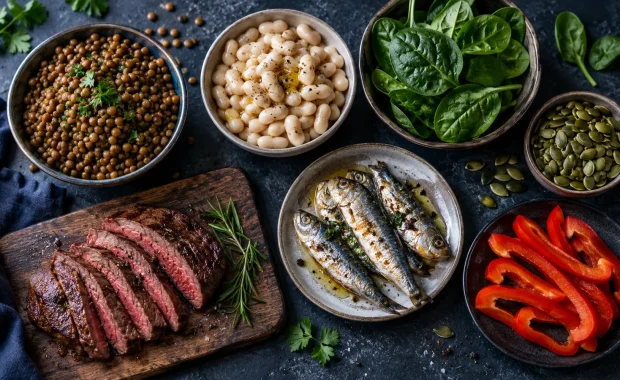
Black beans, kidney beans, chickpeas, lentils, edamame, tofu, and soy milk can make magnesium part of a main meal rather than a snack. A bean bowl with brown rice, vegetables, and pumpkin seeds combines several moderate sources. Lentil soup with whole-grain bread does the same.
Dried and canned beans are both useful. Rinsing canned beans lowers some of the sodium. If legumes cause discomfort, increase portions gradually, rinse them well, and cook dried beans thoroughly. The fiber is part of their benefit, not a defect.
Leafy greens
Magnesium sits at the center of the chlorophyll molecule, which helps explain why green leafy vegetables contribute it. Cooked spinach appears especially high per half cup because cooking collapses a large volume of leaves into a small serving. Swiss chard, beet greens, kale, and other greens add variety, though amounts differ.
Do not rely on raw salad alone to meet the target. Use greens in soups, eggs, pasta sauces, curries, and bean dishes. Pairing them with a range of foods also supplies protein and energy that leaves by themselves do not.
Whole grains and the cost of refining
Magnesium is concentrated in the germ and bran. Milling that produces refined white flour or polished rice removes much of it, although some products may be fortified with selected nutrients. In the United States, enrichment commonly replaces iron and several B vitamins but does not necessarily restore magnesium.
Useful choices include oats, brown rice, whole-wheat bread, quinoa, bulgur, and whole-grain cereals. Read the ingredient list for “whole” grain rather than judging by brown color. A product can look rustic while being mostly refined flour.
Dairy, fish, and other contributors
Milk and yogurt provide moderate amounts and can add up across the day. Some fish, including salmon and halibut, contribute magnesium along with protein. Avocado, potato with skin, dark chocolate, and bananas also help. Dark chocolate can be relatively rich, but its calories and added sugar make it a supporting food rather than a supplement disguised as dessert.
Water can contain magnesium, especially “hard” mineral water, but amounts vary dramatically by source. Check a bottled-water mineral analysis or local water report if you want to count it.
A one-day magnesium pattern
Breakfast: oatmeal with chia seeds and peanut butter. Lunch: a black-bean and brown-rice bowl with spinach and avocado. Snack: an ounce of almonds. Dinner: salmon or tofu with a baked potato and broccoli. This pattern can meet the adult target without a single oversized serving and can be adapted to vegetarian, vegan, or omnivorous eating.
Another affordable version uses whole-grain toast with peanut butter, lentil soup, a banana, and a bean chili topped with pumpkin seeds. Price and access matter; nutrition advice should work outside a specialty-food store.
A practical magnesium shopping list
For a simple week, choose one seed, one nut or nut butter, two legumes, one whole grain, and two green vegetables. A basket might contain pumpkin seeds, peanut butter, canned black beans, dry lentils, oats, brown rice, frozen spinach, and broccoli. Add yogurt, tofu, fish, potatoes, or avocado according to your dietary pattern and budget. Frozen greens are nutritionally useful and often reduce waste; canned beans are convenient when rinsed and drained.
Preparation does not need to be elaborate. Batch-cook a grain and lentils, portion seeds into small containers, and keep washed greens or frozen vegetables ready. Then combine rather than invent: oats plus seeds at breakfast, a bean-and-grain bowl at lunch, and greens with tofu or fish at dinner. This “several moderate sources” method is more reliable than trying to rescue a low-magnesium week with one unusually large serving.
When comparing packaged foods, use the nutrition label but remember that magnesium is not required to be listed on every label unless it has been added or a claim is made. The absence of a printed value does not mean the food contains none. FoodData Central or a national nutrient database can fill the gap.
How much dietary magnesium is absorbed?
The body absorbs roughly 30–40% of dietary magnesium under typical conditions, though absorption changes with intake and individual physiology. The intestine can absorb a greater fraction when intake is lower, while the kidneys help regulate how much is retained or excreted.
Phytate and fiber can reduce absorption to some degree, but whole plant foods remain important sources and offer major health benefits. It is usually counterproductive to avoid whole grains, beans, nuts, and seeds to chase a theoretical maximum absorption percentage.
Who is more likely to have low magnesium?
Severe deficiency from low food intake alone is uncommon because the kidneys conserve magnesium. Risk rises with chronic diarrhea or malabsorption, celiac disease, Crohn’s disease, type 2 diabetes with increased urinary losses, alcohol dependence, older age, and long-term use of certain medicines. Proton-pump inhibitors and some diuretics are examples that may affect magnesium in particular circumstances.
Early deficiency can cause poor appetite, nausea, vomiting, fatigue, or weakness. More severe deficiency may cause numbness, tingling, muscle cramps, seizures, personality changes, or abnormal heart rhythms. These symptoms are nonspecific and can be serious. Medical evaluation—not a self-directed handful of supplements—is appropriate.
Do magnesium supplements help sleep or cramps?
Magnesium is marketed for sleep, stress, muscle cramps, migraine, constipation, and many other concerns. Evidence and recommended forms differ by condition. A laxative effect from a poorly absorbed form is not proof that the body “needed” magnesium. Likewise, a muscle cramp does not establish deficiency.
Some uses have clinical evidence in defined situations, but the dose, formulation, and patient matter. For example, certain magnesium products are medicines for constipation; intravenous magnesium is used in hospitals for specific emergencies; and some migraine guidelines consider particular oral regimens. Those facts do not make every over-the-counter product appropriate for every symptom.
Supplement safety and label traps
The tolerable upper intake level for adults is 350 milligrams per day from supplements and medications—not from food. It was set because supplemental magnesium commonly causes diarrhea, nausea, and cramping. A product may list the weight of the whole compound, such as magnesium citrate, while the Supplement Facts panel should state the amount of elemental magnesium that counts.
Very high intake can cause low blood pressure, weakness, breathing difficulty, irregular heartbeat, or cardiac arrest, particularly when kidney function is impaired. Magnesium can interact with some antibiotics, bisphosphonates, diuretics, and acid-reflux medicines. Spacing or monitoring may be required. Ask a pharmacist or clinician rather than relying on a generic internet schedule.
Frequently asked questions
What food is highest in magnesium?
Pumpkin seeds are among the most concentrated common foods per practical serving. Chia seeds, almonds, cashews, cooked spinach, and beans are also strong options.
Is one banana enough?
No. A medium banana supplies only a modest share of the adult target. It is a healthy food, but seeds, nuts, beans, greens, and whole grains provide more.
Does coffee contain magnesium?
Coffee contributes a small amount, but it should not be a primary source. Add dependable foods instead of counting beverages with variable serving sizes.
Which magnesium supplement is best?
There is no universal “best.” The purpose, elemental dose, side effects, kidney function, medicines, and evidence for the intended use determine the choice. Food is the default for routine adequacy; a professional can advise when a supplement is warranted.
Bottom line
A magnesium-rich diet is built from ordinary foods repeated consistently: seeds, nuts, beans or lentils, whole grains, leafy greens, and other contributors such as dairy, soy foods, fish, avocado, and potatoes. Spread them across meals, prioritize variety, and treat supplements as targeted products with real doses and interactions—not as harmless wellness accessories.
Sources
- NIH Office of Dietary Supplements: Magnesium—Health Professional Fact Sheet
- USDA FoodData Central food search
- U.S. FDA: low magnesium and long-term proton-pump inhibitor use
Evidence reviewed: October 16, 2026.