Vitamin E is not one compound but a family of fat-soluble molecules. The human body preferentially maintains alpha-tocopherol, the form used to set dietary recommendations. Its best-known role is antioxidant protection: it helps limit damage to cell membranes caused by free radicals. It also participates in immune function and cell signaling. That scientific description is more useful than the vague claim that vitamin E is a “beauty vitamin” or a cure-all.
The good news is that meeting the target through food is realistic. Nuts, seeds, plant oils, avocado, and several vegetables provide meaningful amounts, and the fat already present in many of these foods helps absorption. This guide ranks practical vitamin E foods, explains portions, and separates evidence-based nutrition from supplement marketing.
Key takeaways
- Adults generally need 15 milligrams of alpha-tocopherol each day; breastfeeding raises the recommendation to 19 milligrams.
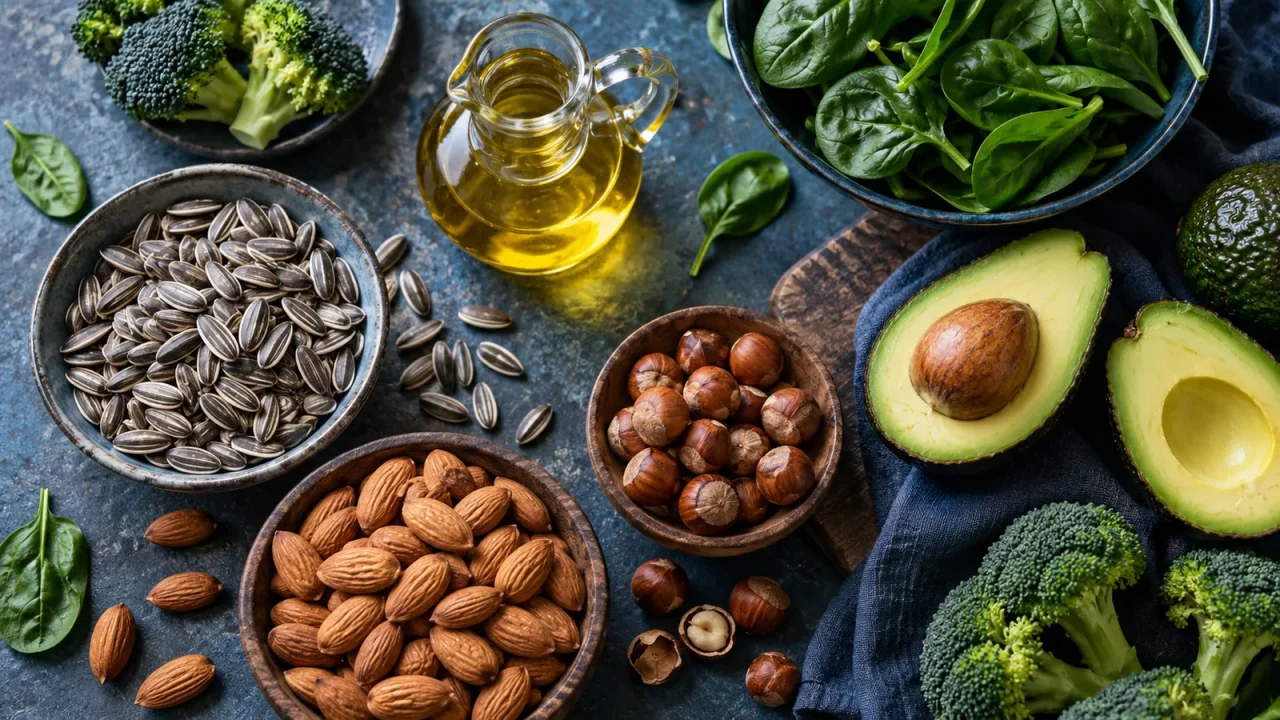
- Wheat germ oil, sunflower seeds, almonds, sunflower or safflower oil, and hazelnuts are among the most concentrated common sources.
- Vitamin E is fat-soluble, so it is absorbed with dietary fat.
- A varied food pattern is safer than assuming a high-dose supplement will prevent chronic disease.
- People with fat-malabsorption disorders may need medical assessment even when their diet appears adequate.
How much vitamin E do you need?
The U.S. recommended dietary allowance for people aged 14 and older is 15 milligrams (22.4 international units of natural-source alpha-tocopherol) per day. During lactation the target is 19 milligrams. Children need less, with recommendations rising from 4 milligrams in infancy to 11 milligrams at ages 9–13. A nutrition label in the United States uses a Daily Value of 15 milligrams.
These numbers refer specifically to alpha-tocopherol, not the sum of every tocopherol and tocotrienol in a food. Database values can vary by cultivar, processing, storage, and cooking. Oils are particularly sensitive to heat, light, and oxygen, so store them as directed and avoid keeping a large opened bottle for years.
The strongest food sources at a glance
| Food | Typical serving | Approximate alpha-tocopherol | Share of a 15 mg adult target |
|---|---|---|---|
| Wheat germ oil | 1 tablespoon | 20.3 mg | 135% |
| Sunflower seeds, dry roasted | 1 ounce | 7.4 mg | 49% |
| Almonds, dry roasted | 1 ounce | 6.8 mg | 45% |
| Sunflower oil | 1 tablespoon | 5.6 mg | 37% |
| Safflower oil | 1 tablespoon | 4.6 mg | 31% |
| Hazelnuts, dry roasted | 1 ounce | 4.3 mg | 29% |
| Peanut butter | 2 tablespoons | 2.9 mg | 19% |
| Peanuts, dry roasted | 1 ounce | 2.2 mg | 15% |
| Boiled spinach | 1/2 cup | 1.9 mg | 13% |
| Boiled broccoli | 1/2 cup | 1.2 mg | 8% |
The table uses figures compiled by the NIH from U.S. food-composition data. It is a comparison, not an instruction to drink oil. Oils are energy-dense, and a tablespoon adds roughly 120 calories. Seeds and nuts provide vitamin E alongside protein, unsaturated fat, fiber, and minerals, which often makes them the more satisfying everyday option.
1. Seeds: concentrated and easy to use
Sunflower seeds are one of the simplest ways to raise vitamin E intake. An ounce—roughly a small handful—supplies close to half an adult’s daily target. Sprinkle them over oatmeal or salad, stir them into yogurt, or use sunflower-seed butter if nut-free eating is required. Check sodium on seasoned products and choose a form appropriate for young children because whole seeds can be a choking risk.
Pumpkin seeds are excellent for magnesium and provide some vitamin E, but they are not as concentrated in alpha-tocopherol as sunflower seeds. That distinction matters: a food can be highly nutritious without leading every nutrient chart.
2. Almonds, hazelnuts, and peanuts
An ounce of almonds supplies nearly half the adult target, while hazelnuts provide close to one-third. Peanut butter is less concentrated by weight but convenient and widely available. Nuts also add unsaturated fat, which supports the absorption of fat-soluble nutrients from the meal.
Portion awareness still matters. A “handful” can range from one ounce to three, and nut products with sugar or coatings may change the nutritional picture. People with allergies must avoid the relevant food and use alternatives such as sunflower seeds or fortified products. For children under five, use smooth nut or seed butter spread thinly or otherwise follow age-appropriate feeding guidance rather than offering whole nuts.
3. Plant oils: powerful but easy to overcount
Wheat germ oil is exceptionally rich in vitamin E, but it has a distinctive flavor and is better suited to unheated dressings than high-heat cooking. Sunflower and safflower oils also provide substantial amounts. Soybean, corn, and olive oils contribute smaller amounts and can still add up across a day.
Choose oil based on the cooking method and the whole dietary pattern, not vitamin E alone. Different oils have different flavors, fatty-acid profiles, prices, and heat performance. Vitamin E can decline with prolonged high heat and repeated frying. Use fresh oil, store it away from light and heat, and never treat a vitamin-rich oil as a license to ignore total energy intake.
4. Avocado and vegetables
Avocado contributes vitamin E and monounsaturated fat, though it is not as concentrated as seeds or almonds. Spinach, Swiss chard, beet greens, broccoli, asparagus, and some squash provide smaller amounts. Their value is cumulative: vegetables bring fiber, folate, vitamin C, carotenoids, potassium, and other compounds beyond vitamin E.
Cooking may reduce or concentrate measured amounts depending on the food and whether water is discarded. A practical approach is to eat vegetables in several forms. Add a spoon of seed butter to a sauce, use a modest amount of oil in a dressing, or top greens with sunflower seeds. The combination supplies vitamin E and the fat needed to absorb other fat-soluble compounds.
5. Fish, eggs, and fortified foods
Some fish—such as trout, salmon, and abalone—contain vitamin E, but amounts vary. Eggs provide a small quantity. Fortified cereals and other products can contribute significantly, yet formulation differs by country and brand. Read the label instead of applying one number to every cereal.
Fortification can be useful for a restricted diet, but a product is not automatically healthy because it contains vitamin E. Compare added sugar, sodium, fiber, and serving size as well.
Can the body absorb vitamin E from a low-fat meal?
Vitamin E needs fat for intestinal absorption because it is fat-soluble. That does not require a greasy meal. A small amount from nuts, seeds, avocado, egg, yogurt, fish, or an oil-based dressing can be sufficient. In fact, many top sources package the vitamin with their own fat.
People with conditions that impair fat absorption—such as certain disorders affecting the pancreas, bile ducts, liver, or intestine—can develop deficiency despite reasonable food choices. Premature infants and people with rare disorders of vitamin E metabolism have distinct clinical needs. These situations require professional care rather than a generic meal plan.
A realistic one-day food pattern
Consider oatmeal topped with one ounce of almonds at breakfast, a spinach and chickpea salad with a tablespoon of sunflower seeds and a modest oil-based dressing at lunch, and salmon with broccoli at dinner. The almonds and sunflower seeds alone provide most of the 15-milligram target; the rest of the day adds smaller amounts. Another pattern could use sunflower-seed butter on whole-grain toast, avocado in a bean bowl, and sautéed greens.
You do not need to hit exactly 15.0 milligrams every day. Intake varies naturally, and nutritional adequacy is evaluated over time. Variety also prevents one food from becoming a disproportionate source of calories, sodium, or any other compound.
Vitamin E deficiency: uncommon, but clinically important
True deficiency is uncommon in healthy people and is usually linked to problems absorbing fat rather than simply skipping almonds. Severe deficiency can affect nerves, muscles, coordination, vision, and immune function. Those symptoms overlap with many conditions, so they require medical evaluation.
Blood alpha-tocopherol may be interpreted in relation to blood lipids because vitamin E travels in lipoproteins. A clinician familiar with the underlying condition should decide whether testing or a therapeutic dose is appropriate.
Food versus supplements
Food sources come in moderate amounts and within a broader nutritional package. Supplements can deliver many times the recommended intake in a single capsule. Trials have not established high-dose vitamin E as a general-purpose way to prevent heart disease or cancer, and high doses can increase bleeding risk. Vitamin E supplements can interact with anticoagulant or antiplatelet medicines and may matter around surgery or during some cancer treatments.
The adult tolerable upper intake level for supplemental forms is far above the daily recommendation, but an upper limit is not a target. Product labels may use milligrams, international units, or both, and natural and synthetic forms do not convert identically. If a clinician recommends a supplement, confirm the exact form and dose rather than guessing from the front label.
Common myths
“More vitamin E always means better antioxidant protection.”
Antioxidant biology is not a simple score where the highest dose wins. Free radicals also participate in normal signaling and immune defense. Large isolated doses can behave differently from vitamin E consumed in foods.
“Vitamin E supplements prevent scars or erase wrinkles.”
Topical products and oral supplements are separate questions, and neither justifies sweeping claims. Topical vitamin E can irritate some skin. Persistent skin concerns are better discussed with a qualified clinician or dermatologist.
“Only expensive superfoods contain vitamin E.”
Sunflower seeds, peanut butter, vegetable oils, greens, and fortified staples can all contribute. Cost-effective choices are available in ordinary grocery stores.
Frequently asked questions
Which food has the most vitamin E?
Among common foods in the NIH table, wheat germ oil is exceptionally concentrated per tablespoon. For an everyday whole-food option, sunflower seeds and almonds are standouts.
Does olive oil contain vitamin E?
Yes, but usually less per tablespoon than sunflower, safflower, or wheat germ oil. Olive oil can still be part of a healthy pattern for reasons beyond a single nutrient.
Can cooking destroy vitamin E?
Heat, light, and oxygen can degrade it, especially during prolonged or repeated high-temperature use of oil. Normal cooking does not remove all vitamin E. Combine cooked and minimally processed sources.
Do I need a vitamin E supplement?
Most healthy people can meet their needs from food and do not need a high-dose supplement. A diagnosed deficiency, fat-malabsorption condition, or specific clinical plan is different and should be managed by a professional.
Bottom line
Build vitamin E intake around a few dependable foods: sunflower seeds, almonds or hazelnuts, a suitable plant oil, and vegetables across the week. Check labels on fortified foods, include some dietary fat for absorption, and remember that more is not automatically better. The food-first approach is practical, varied, and far less likely to turn a useful nutrient into an unnecessary megadose.
Sources
- NIH Office of Dietary Supplements: Vitamin E—Health Professional Fact Sheet
- USDA FoodData Central food search
- National Center for Complementary and Integrative Health: Antioxidants in Depth
Evidence reviewed: October 16, 2026.