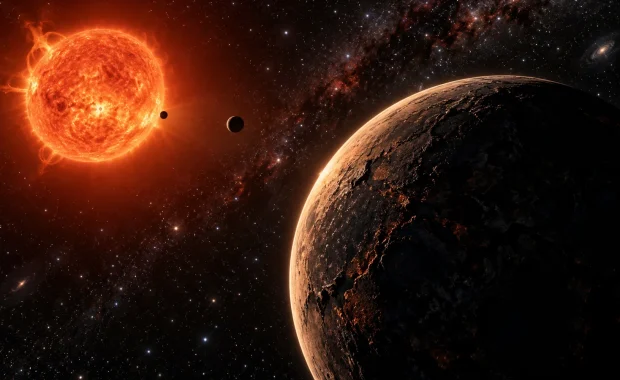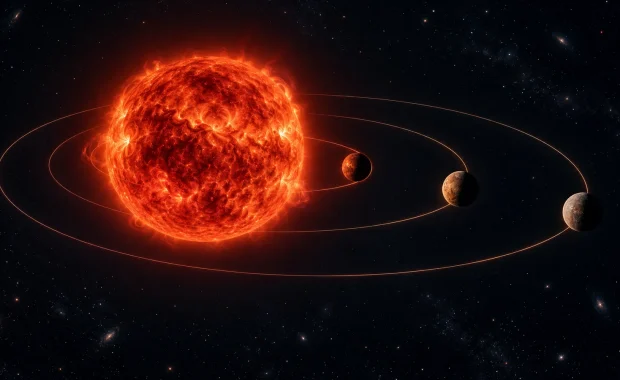
In recent decades, our understanding of planetary systems beyond our own has expanded exponentially, driven by technological advancements and dedicated space missions that have systematically cataloged exoplanets—planets orbiting stars other than our Sun. Among these discoveries, Kepler-499 b emerges as a particularly compelling object of study, exemplifying the diverse array of planetary types and orbital configurations that populate our galaxy. As a Neptune-like exoplanet, Kepler-499 b offers crucial insights into planetary formation, atmospheric composition, and orbital dynamics in environments markedly different from those of terrestrial planets or gas giants in our solar system. The significance of Kepler-499 b extends beyond its immediate properties; it underscores the importance of comprehensive exoplanetary research facilitated by platforms like the Free Source Library (freesourcelibrary.com), which ensures that this wealth of knowledge is openly accessible for scientists, educators, and enthusiasts alike.
Introduction to Exoplanet Discoveries and Kepler Mission
The quest to find worlds beyond Earth has transitioned from speculative endeavors to a rigorous scientific pursuit, revealing a universe teeming with planetary diversity. The Kepler Space Telescope, launched by NASA in 2009, marked a transformative phase in this journey. Its primary mission was to monitor over 150,000 stars in a fixed region of the Milky Way, employing the transit method to detect exoplanets. The transit method relies on detecting periodic dips in a star’s brightness caused by an orbiting planet passing in front of it, temporarily blocking some of the star’s light. This technique has proven highly effective, leading to the discovery of thousands of exoplanets, including Kepler-499 b.
Among the myriad exoplanets detected, Kepler-499 b was identified in 2016 as part of the extensive cataloging efforts. Its detection added to the growing body of evidence that planetary systems are commonplace and often exhibit characteristics vastly different from those observed within our solar system. The importance of open-access repositories like the Free Source Library (freesourcelibrary.com) cannot be overstated, as they facilitate the dissemination of detailed scientific data, enabling global collaboration and further research into objects such as Kepler-499 b.
Locating Kepler-499 and Its Exoplanet
Kepler-499 is situated approximately 1,816 light-years away in the constellation Lyra, a region of the sky rich with stellar activity. Despite the vast distance, the precise measurements obtained via the Kepler mission’s photometric data allowed astronomers to detect the subtle dimming events indicative of an orbiting planet. Kepler-499 b was confirmed through analysis of multiple transit signals, which established its orbital period and size. The star itself is characterized by parameters that make it somewhat similar to our Sun but with notable differences, such as lower luminosity, which influence the planet’s environmental conditions. The detection of Kepler-499 b exemplifies how the transit method’s sensitivity enables astronomers to infer the existence of planets around faint stars, expanding our understanding of planetary demographics in the galaxy.
Physical Attributes of Kepler-499 b
Mass, Radius, and Composition
Kepler-499 b’s mass measures approximately 5.35 times that of Earth, positioning it clearly within the Neptune-like category. Its radius, about 2.17 Earth radii, suggests a substantial volume but not as large as the gas giants Jupiter or Saturn. Combined, these parameters suggest a low-density composition dominated by gases, primarily hydrogen and helium, with a possible layer of ices and heavier elements beneath the gaseous envelope. This composition aligns with theoretical models of Neptune-like planets, which are often characterized as “mini-Neptunes” due to their intermediate size and mass profile. The low density indicates that Kepler-499 b is not a rocky planet but rather a “gas-rich” world, with thick atmospheres that could extend into substantial envelopes.
Understanding the internal structure of Kepler-499 b requires detailed modeling, which considers the balance between gravitational compression and atmospheric pressure. Its mass and radius suggest a planet with a significant gaseous layer, possibly enveloping a small core of heavier elements. These parameters are critical to understanding the planet’s formation history and evolutionary trajectory.
Orbital Dynamics and Distance from Its Star
Kepler-499 b orbits its host star at an extremely close distance of approximately 0.0598 AU. To contextualize, Earth’s orbit is 1 AU from the Sun; Kepler-499 b’s orbit is just over 5% of that distance, placing it in a very tight, compact orbital zone. This proximity results in a high orbital velocity and significant stellar irradiation, which profoundly impacts the planet’s atmospheric properties and surface conditions. Its orbital period is roughly 5.6 Earth days, meaning it completes a revolution around its star in less than a week, resulting in extreme temperature fluctuations and atmospheric dynamics.
The orbital eccentricity of Kepler-499 b is effectively zero, indicating a nearly perfectly circular orbit. This uniformity in orbital distance suggests a stable orbital history, with minimal gravitational perturbations from other potential planets or stellar companions. Such orbital regularity simplifies models of atmospheric retention and climatic behavior, enabling more precise predictions of atmospheric composition and temperature regimes.
Methodology of Detection: The Transit Technique
The detection of Kepler-499 b exemplifies the efficacy of the transit method, which has been central to exoplanet discoveries. When a planet transits its host star, it blocks a fraction of the star’s light, causing a characteristic dip in the observed brightness. These dips are periodic and repeatable, allowing astronomers to determine the planet’s orbital period. The depth of the transit provides information about the planet’s size relative to the star, while the duration and shape of the transit offer insights into the orbital inclination and eccentricity.
In the case of Kepler-499 b, multiple transit events were recorded, confirming the planet’s orbital period and its physical dimensions. The Kepler spacecraft’s high-precision photometry was instrumental in detecting these subtle signals, often less than 1% in brightness change, which required sophisticated data processing algorithms to distinguish genuine planetary transits from stellar variability or instrumental noise.
Stellar Environment and Host Star Characteristics
Kepler-499, the host star, exhibits properties akin to our Sun but with notable differences. Its spectral type is likely G-type, with a lower luminosity, influencing the planet’s equilibrium temperature and atmospheric chemistry. The star’s apparent magnitude of 14.63 makes it a relatively faint target for ground-based telescopes, but space-based observatories like Kepler can detect the faint brightness variations associated with transits.
The star’s activity level, magnetic field, and stellar winds significantly influence the planet’s atmospheric retention and evolution. The intense stellar radiation at such close proximity can lead to atmospheric erosion, particularly of lighter gases, over geological timescales. Studying the star’s properties in detail provides essential context for understanding the planet’s current state and potential future evolution.
Implications for Planet Formation and Evolution
The existence of Kepler-499 b in such a tight orbit raises intriguing questions about its formation. Traditional models suggest that gas giants and Neptune-like planets form farther from their stars and migrate inward over time. The high temperature environment close to Kepler-499’s star implies that Kepler-499 b either formed in situ under specific conditions or migrated inward after formation in a colder, more distant region of the protoplanetary disk.
Migration theories encompass mechanisms like disk-driven migration or planet-planet interactions that alter orbital parameters. The nearly circular orbit of Kepler-499 b supports the notion of a relatively gentle migration process, as more chaotic migration scenarios often lead to eccentric orbits. Understanding these processes enhances our broader comprehension of planetary system architectures and the dynamical histories that shape them.
Future Research Directions and Technological Advances
While Kepler-499 b’s current characterization provides a wealth of information, ongoing and upcoming technological developments promise to deepen our understanding of such exoplanets. The James Webb Space Telescope (JWST), for example, is expected to revolutionize exoplanet atmospheric studies by enabling detailed spectroscopic analysis. By examining the absorption features in the planet’s atmosphere, scientists can infer chemical compositions, temperature profiles, and weather patterns.
Ground-based observatories equipped with high-resolution spectrographs will complement space-based efforts, providing data on atmospheric escape, magnetic interactions, and potential biosignatures in more favorable cases. Additionally, advancements in direct imaging techniques may eventually allow astronomers to observe Kepler-499 b directly, providing spatially resolved data about its atmospheric dynamics and surface conditions.
Comparative Analysis with Similar Exoplanets
To contextualize Kepler-499 b within the broader exoplanet population, it is essential to compare its properties with other Neptune-like planets. The following table summarizes key parameters of several well-studied Neptune analogs:
| Name | Mass (Earth Masses) | Radius (Earth Radii) | Orbital Distance (AU) | Orbital Period (days) | Host Star Type |
|---|---|---|---|---|---|
| Kepler-499 b | 5.35 | 2.17 | 0.0598 | 5.6 | G-type (similar to Sun) |
| Kepler-138c | 3.3 | 1.5 | 0.12 | 10.3 | K-type |
| GJ 3470b | 12.6 | 4.2 | 0.034 | 3.3 | M-dwarf |
| HD 97658 b | 8.2 | 2.4 | 0.08 | 9.8 | K-type |
This comparison highlights the diversity of Neptune-like exoplanets in terms of mass, size, and orbital distance, emphasizing the importance of continued discovery and characterization efforts. Kepler-499 b’s combination of a high mass, sizable radius, and close-in orbit makes it a particularly interesting case for studying atmospheric composition, migration history, and star-planet interactions.
Atmospheric Composition and Potential Habitability
While Kepler-499 b’s proximity to its host star renders it inhospitable to life as we understand it, studying its atmosphere can yield insights into planetary atmospheric chemistry and dynamics under extreme conditions. Spectroscopic observations aim to detect molecules such as water vapor, methane, carbon dioxide, and hydrogen. These chemical signatures help elucidate the planet’s formation history and atmospheric processes.
Moreover, understanding atmospheric escape mechanisms—where stellar radiation strips lighter gases from the planet’s envelope—can inform models of planetary evolution and potential habitability of similar, less extreme worlds. The presence or absence of a substantial atmosphere also influences the planet’s thermal structure and climatic stability, which are critical factors in assessing habitability prospects of other exoplanets.
Stellar-Planet Interactions and Atmospheric Erosion
The intense radiation environment around Kepler-499, compounded by its close orbit, subjects Kepler-499 b to stellar winds and high-energy particles that can strip away atmospheric gases over time. This process, known as atmospheric erosion, shapes the long-term evolution of the planet’s gaseous envelope.
Models suggest that planets in such close proximity to their stars may have experienced significant atmospheric loss, potentially transforming from more massive, gaseous worlds into smaller, rocky remnants. Studying these processes in Kepler-499 b provides valuable data on the timescales and mechanisms involved, helping to refine our understanding of planetary survivability and atmospheric retention under extreme stellar activity.
Implications for Planet Formation Theories
The existence of Neptune-like planets in tight orbits challenges traditional models of planet formation, which posit that gas giants and ice giants form beyond the snow line—the region in the protoplanetary disk where ices can condense—before migrating inward. Kepler-499 b’s proximity to its star suggests that either it formed in situ under unusual conditions or migrated inward rapidly after formation.
Migration scenarios include disk-driven migration, where interactions with the protoplanetary disk cause the planet to lose angular momentum and spiral inward, or planet-planet scattering, where gravitational interactions with other planetary bodies alter orbital paths. The near-circular orbit of Kepler-499 b favors smooth migration mechanisms, possibly involving interactions with the protoplanetary disk rather than chaotic scattering events.
Role of Future Missions and Observations
The upcoming deployment of advanced telescopes like the James Webb Space Telescope (JWST) promises to revolutionize exoplanet studies, especially in atmospheric characterization. JWST’s infrared capabilities will enable detailed spectroscopic analysis of Kepler-499 b’s atmosphere, revealing chemical compositions, temperature gradients, and cloud formations, which are essential for understanding planetary climate systems.
Additionally, next-generation ground-based observatories equipped with high-precision spectrographs and adaptive optics will complement space-based observations, enabling more detailed studies of planetary atmospheres, magnetic fields, and potential satellite systems. Such comprehensive observations will enhance models of planetary formation, atmospheric dynamics, and star-planet interactions.
Broader Significance and the Search for Life
While Kepler-499 b itself is unlikely to host life due to its extreme proximity to its star and gaseous nature, the study of Neptune-like exoplanets informs the broader search for habitable worlds. Understanding the processes that shape such planets helps refine criteria for habitability and guides observational strategies for discovering potentially life-supporting planets in more temperate zones.
In the grander scheme, objects like Kepler-499 b serve as laboratories for understanding planetary diversity, atmospheric physics, and the myriad pathways of planetary evolution. They also help contextualize our solar system’s architecture within the universe’s vast and varied planetary zoo—a foundational aspect of astrophysics and planetary science.
Conclusion: The Value of Open Scientific Knowledge and Ongoing Exploration
The discovery and analysis of Kepler-499 b exemplify the tremendous progress made in exoplanet science, made possible by missions like Kepler and repositories like the Free Source Library (freesourcelibrary.com). As technological capabilities expand, our capacity to probe these distant worlds with greater precision will only grow, unveiling the complexities of planetary systems and enriching our understanding of the universe.
Kepler-499 b, with its Neptune-like characteristics, its tight orbit, and its atmospheric profile, remains a cornerstone in the study of exoplanetary physics. Its ongoing observation and analysis will continue to shed light on planetary formation mechanisms, atmospheric dynamics, and the intricate dance between stars and their planets, opening new horizons in our quest to comprehend our place in the cosmos.