The universe is a vast and intricate tapestry woven with billions of stars, countless planetary systems, and an unfathomable diversity of celestial bodies. Among the many endeavors undertaken to unveil the secrets of this cosmic expanse, the discovery and study of exoplanets—planets orbiting stars beyond our solar system—stand as some of the most groundbreaking. The search for worlds that might harbor life, possess Earth-like conditions, or simply expand our understanding of planetary formation has driven astronomers to develop sophisticated detection methods and deploy advanced telescopes. One such project, NASA’s Kepler mission, has revolutionized our knowledge of the universe by identifying thousands of exoplanets, among which Kepler-990 c emerges as a particularly intriguing candidate in the ongoing quest to comprehend planetary diversity and the potential for habitability beyond Earth.
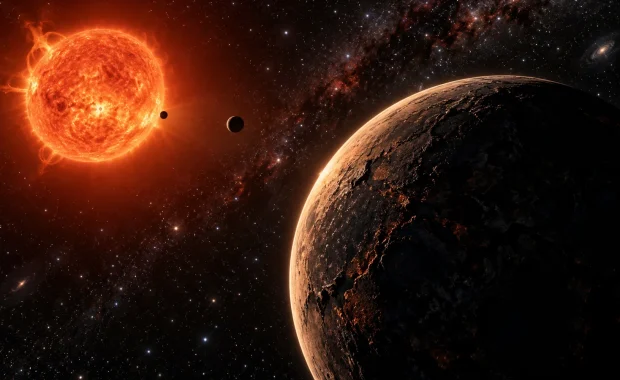
Kepler-990 c, classified as a Super-Earth, was discovered in 2016 and resides approximately 2,617 light-years away from our planet, in the constellation Lyra. This distant world exemplifies the broad spectrum of planetary types that exist throughout our galaxy. Its physical properties, orbital characteristics, and the environment it inhabits provide vital clues about planetary formation mechanisms and the potential habitability of worlds that do not resemble Earth in most traditional ways. Understanding such planets broadens our perspective on what constitutes a potentially life-supporting environment and informs future explorations that could one day lead us to find life beyond our solar system.
The discovery of Kepler-990 c was made possible through the transit method, a technique that detects the minute dimming of a star’s light as a planet crosses its face. This method has become the cornerstone of exoplanet detection due to its efficiency and ability to survey thousands of stars simultaneously. The Kepler spacecraft, launched in 2009, was designed specifically to exploit this method, providing a treasure trove of data that has transformed planetary science. The identification of Kepler-990 c, along with its sibling planet Kepler-990 b, exemplifies the power of the transit technique, especially when combined with other observational methods that refine our understanding of these distant worlds.
Discovery and Detection of Kepler-990 c
The process of detecting Kepler-990 c involved meticulous analysis of the light curves—graphs showing the brightness of the host star over time—obtained by Kepler’s sensitive photometers. When a planet transits, or passes in front of its star from our line of sight, it causes a slight but measurable dip in brightness. Repeated transits at regular intervals confirm the presence of a planet and allow scientists to infer its orbital period, size, and some properties of its atmosphere if spectral data is available.
Kepler-990 c’s discovery was complemented by the detection of Kepler-990 b, with both planets orbiting the same star. Kepler-990 itself is a relatively faint star with a magnitude of 14.716, which requires advanced telescopic observations for detailed study. Its distance from Earth places it well within the reach of current high-powered telescopes, yet remains distant enough to challenge direct imaging efforts. This underscores the importance of indirect detection methods and the need for continued advancement in observational technology.
Techniques and Challenges in Exoplanet Detection
The transit method, while highly effective, is inherently limited by the geometric alignment necessary for a transit to be observable. Only a small fraction of planetary systems are oriented such that their planets pass in front of their host stars from our perspective. Consequently, many planets remain undetectable with this method alone. To mitigate this, astronomers use statistical models to estimate the true number of planets in our galaxy based on observed transits.
Additional techniques such as radial velocity measurements, which detect the wobble of a star caused by gravitational interactions with orbiting planets, have been combined with transit data to improve the accuracy of planetary mass estimates. In the case of Kepler-990 c, the transit method provided initial data on its size and orbital period, while subsequent observations helped refine its mass estimation, indicating a planet with nearly three times the mass of Earth.
Physical Characteristics of Kepler-990 c
Classified as a Super-Earth, Kepler-990 c occupies an intriguing niche between terrestrial planets like Earth and the ice giants Uranus and Neptune. Its mass, approximately 2.96 times that of Earth, suggests a substantial gravitational pull capable of retaining a thick, potentially complex atmosphere. Its radius, measured at 1.53 times that of Earth, indicates a planet that is larger and likely denser than our home planet. The combination of increased mass and modest radius points toward a composition that could be rocky with significant metallic content, possibly with a layered structure similar to that of terrestrial planets but on a larger scale.
Understanding the density of Kepler-990 c is crucial for inferring its internal structure. Using the measured mass and radius, scientists estimate the density to be around 4.9 grams per cubic centimeter, which is higher than Earth’s average density of approximately 5.5 g/cm³. This suggests that Kepler-990 c might have a dense core of iron and nickel, surrounded by a silicate mantle, with the possibility of a secondary atmosphere rich in gases like carbon dioxide or nitrogen. The planet’s geology, tectonic activity, and potential volcanic processes are all areas of active research, as these factors influence the planet’s surface conditions and atmospheric composition.
Potential for Geological Activity
The size and mass of Kepler-990 c point toward a planet with dynamic geological processes. If the planet possesses a substantial interior heat source, it could sustain volcanic activity, mantle convection, and tectonic movements. These processes are vital for the recycling of atmospheric gases, surface renewal, and possibly creating environments conducive to life—if other conditions are met. The presence of tectonics and volcanism also influence the planet’s magnetic field, which can protect the atmosphere from stellar winds and cosmic radiation, crucial factors in assessing habitability.
Orbital Dynamics and Environmental Conditions
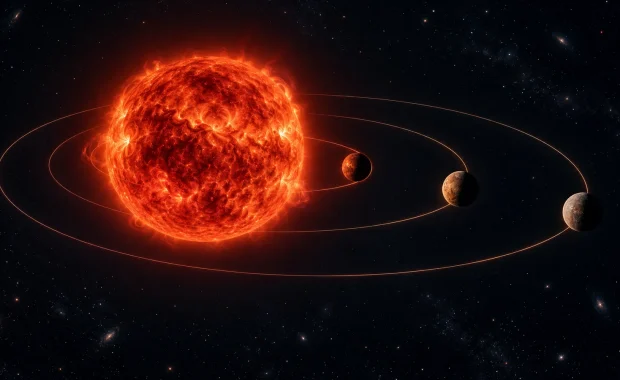
Kepler-990 c orbits its host star at an extremely close distance of just 0.0127 AU, which is less than 2% of the Earth-Sun distance. To contextualize, Mercury, the innermost planet in our solar system, orbits at about 0.387 AU, making Kepler-990 c’s orbit extraordinarily tight. This proximity results in an orbital period of merely 1.37 hours, or roughly 5,000 seconds, meaning the planet completes a full revolution around its star in less than a day.
The nearly circular orbit, with an eccentricity close to zero, indicates that Kepler-990 c maintains a consistent distance from its star, providing stable conditions in terms of stellar radiation exposure. Despite this stability, the planet’s proximity to its star subjects it to intense heat and radiation, likely rendering its surface inhospitable for life as we understand it. The planet’s temperature, estimated based on its orbit and star’s luminosity, exceeds what is considered tolerable for liquid water stability, a key factor in habitability.
Surface Conditions and Atmosphere
The extreme proximity to its star implies that Kepler-990 c experiences surface temperatures that could reach thousands of degrees Celsius, creating a molten or vaporized surface environment. However, if the planet retains a substantial atmosphere, it might develop a greenhouse effect that could influence surface conditions. The composition and density of this atmosphere are critical in determining whether any stable, potentially habitable niches could exist, perhaps in localized regions or within underground environments shielded from stellar radiation.
The atmosphere’s composition could also include heavy elements and gases that are remnants of planetary formation or outgassing processes. Spectroscopic studies, particularly with upcoming telescopes like the James Webb Space Telescope, aim to detect and analyze such atmospheric constituents, revealing clues about the planet’s history, geophysical activity, and potential habitability.
Stellar Environment and Host Star Characteristics
The host star, Kepler-990, is a faint, low-luminosity star with a magnitude of 14.716, making it invisible to the naked eye and necessitating powerful telescopes for detailed observation. Its spectral type and characteristics influence the planet’s environment significantly. Although the star’s precise spectral classification remains under investigation, preliminary data suggest it is a late-type star, possibly an M-dwarf or a K-type star, which are known for their longevity and relatively stable luminosity over geological timescales.
Stars of this type often exhibit high levels of stellar activity, including flares, coronal mass ejections, and variable radiation output. Such activity can have profound effects on orbiting planets, stripping atmospheres or altering surface conditions. The low luminosity of Kepler-990 means that even planets in close orbits are subjected to intense stellar winds and magnetic activity, factors that are crucial in assessing the long-term stability and habitability of these worlds.
Implications of Stellar Activity
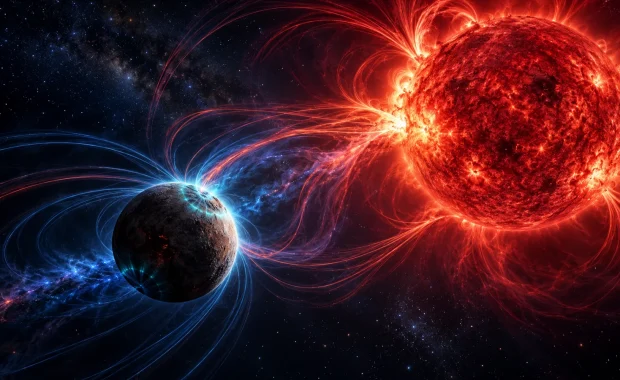
High stellar activity in low-mass stars can lead to atmospheric erosion, especially for planets with weak magnetic fields or thin atmospheres. For Kepler-990 c, the likelihood of atmospheric retention depends on its magnetic field strength, internal composition, and the planet’s initial atmospheric mass. If the planet possesses a strong magnetic field, it could shield its atmosphere from stellar winds, aiding in retention and possibly supporting conditions conducive to life in certain niches.
Comparison with Other Exoplanets and Broader Context
Kepler-990 c resides among a class of planets that challenge our traditional understanding of habitability. Its proximity to its star and its physical properties place it within the broad spectrum of rocky and super-Earth planets found in diverse orbital configurations. Comparing Kepler-990 c to other exoplanets provides insights into planetary formation theories, especially regarding how planets can form and survive in harsh environments close to their host stars.
Table 1 summarizes some key properties of Kepler-990 c and compares them with similar exoplanets:
| Parameter | Kepler-990 c | Kepler-10c | Kepler-20e | Proxima Centauri b |
|---|---|---|---|---|
| Mass (Earth masses) | 2.96 | 17.2 | 0.4 | 1.17 |
| Radius (Earth radii) | 1.53 | 2.35 | 0.87 | 1.1 |
| Orbital distance (AU) | 0.0127 | 0.024 | 0.045 | 0.0485 |
| Orbital period (hours) | 1.37 | 0.83 | 3.7 | 11.2 |
| Star type | Likely late K or M | G-type | G-type | M-type |
Such comparisons highlight the diversity of exoplanetary systems and underscore the importance of studying planets across a wide range of conditions to understand the full spectrum of planetary possibilities.
Theoretical Models and Formation Scenarios
The formation of super-Earths like Kepler-990 c involves complex processes that challenge classical models of planetary accretion. Leading theories suggest that such planets form through rapid accumulation of solids in the protoplanetary disk, possibly followed by migration toward closer orbits. Alternatively, they may originate further out in the disk and migrate inward due to interactions with the gaseous environment or other planetary bodies.
Simulations of planetary formation indicate that close-in super-Earths could develop from the accumulation of rocky material or from the collision and merger of smaller planetary embryos. Their final composition and structure are influenced by factors such as disk density, temperature gradients, and the presence of volatiles. Kepler-990 c’s inferred density and composition suggest that it might have undergone significant differentiation and possibly retained a substantial atmosphere, depending on its formation history and subsequent evolution.
Impact of Migration and Atmospheric Loss
Migration processes could explain the planet’s current close-in orbit. If Kepler-990 c formed further from its star, interactions with the protoplanetary disk or gravitational effects from other planets could have caused it to migrate inward. During this migration, the planet might have experienced atmospheric stripping due to stellar radiation, especially given its proximity to the star.
Atmospheric loss mechanisms, including hydrodynamic escape and stellar wind erosion, significantly influence the planet’s potential habitability. For Kepler-990 c, the initial atmosphere might have been substantial, but intense stellar activity could have stripped much of it away, leaving behind a dense, rocky core with a thin or secondary atmosphere. These evolutionary pathways are critical for understanding how planets evolve in extreme environments and whether they can retain atmospheres that support life.
Future Prospects and Observational Opportunities
The current understanding of Kepler-990 c, while substantial, remains limited by the constraints of existing technology. The upcoming deployment of telescopes like the James Webb Space Telescope (JWST) and the European Extremely Large Telescope (E-ELT) promises to revolutionize exoplanet characterization. These instruments will enable detailed atmospheric spectroscopy, allowing scientists to detect specific molecules, assess atmospheric composition, and search for potential biosignatures.
Furthermore, continued monitoring of the Kepler system and the deployment of next-generation missions such as TESS (Transiting Exoplanet Survey Satellite) and PLATO (PLAnetary Transits and Oscillations of stars) will expand the catalog of exoplanets similar to Kepler-990 c. These efforts will refine models of planetary formation, migration, and atmospheric evolution, potentially uncovering planets with conditions more favorable to life.
Challenges and Considerations
Despite technological advancements, several challenges persist. The faintness of the host star complicates atmospheric studies, requiring long observation times and highly sensitive equipment. Additionally, the extreme proximity of the planet to its star raises questions about the stability of any potential atmosphere and the long-term prospects for habitability.
Understanding the influence of stellar activity, magnetic fields, and planetary geology is essential for building comprehensive models. Cross-disciplinary approaches that combine astrophysics, planetary science, geochemistry, and atmospheric science will be crucial in unraveling the complex narratives of planets like Kepler-990 c.
Conclusion and the Broader Significance
Kepler-990 c exemplifies the remarkable diversity of planetary systems uncovered by modern astronomy. Its physical characteristics, orbital dynamics, and environment enrich our understanding of the possible range of terrestrial and super-Earth planets. While its extreme proximity to its star likely precludes habitability in the conventional sense, studying such worlds is vital for testing theories of planetary formation, atmospheric retention, and evolution under intense stellar radiation.
The ongoing exploration of planets like Kepler-990 c fuels the broader scientific endeavor to understand our universe’s complexity. Each discovery pushes the boundaries of knowledge, challenging preconceived notions of habitability and planetary diversity. As we develop more sophisticated tools and techniques, our capacity to detect and analyze distant worlds will grow, bringing us closer to answering the profound questions about the origins of life and the uniqueness of Earth.
Kepler-990 c, thus, stands as a testament to the intricate and dynamic nature of planetary systems. Its study underscores the importance of comprehensive research, technological innovation, and the enduring human curiosity that drives us to explore the cosmos. The insights gained from such distant worlds not only inform our scientific understanding but also inspire a sense of wonder about the universe’s boundless potential.
For further detailed information and ongoing updates in the field of exoplanet research, visit the Free Source Library, a platform dedicated to disseminating high-quality, open-access scientific knowledge.