
The Growing Significance of Artificial General Intelligence in the Tech Industry
In recent years, the pursuit of artificial intelligence has transitioned from simple, narrow applications designed for specific tasks to broader, more ambitious goals that aspire to emulate the full spectrum of human cognition. Among these ambitions, the concept of artificial general intelligence (AGI) has garnered immense attention and controversy. AGI, often described as AI that can perform any intellectual task that a human can, stands as a threshold in the evolution of machine intelligence, promising revolutionary changes across industries, economies, and societal structures.
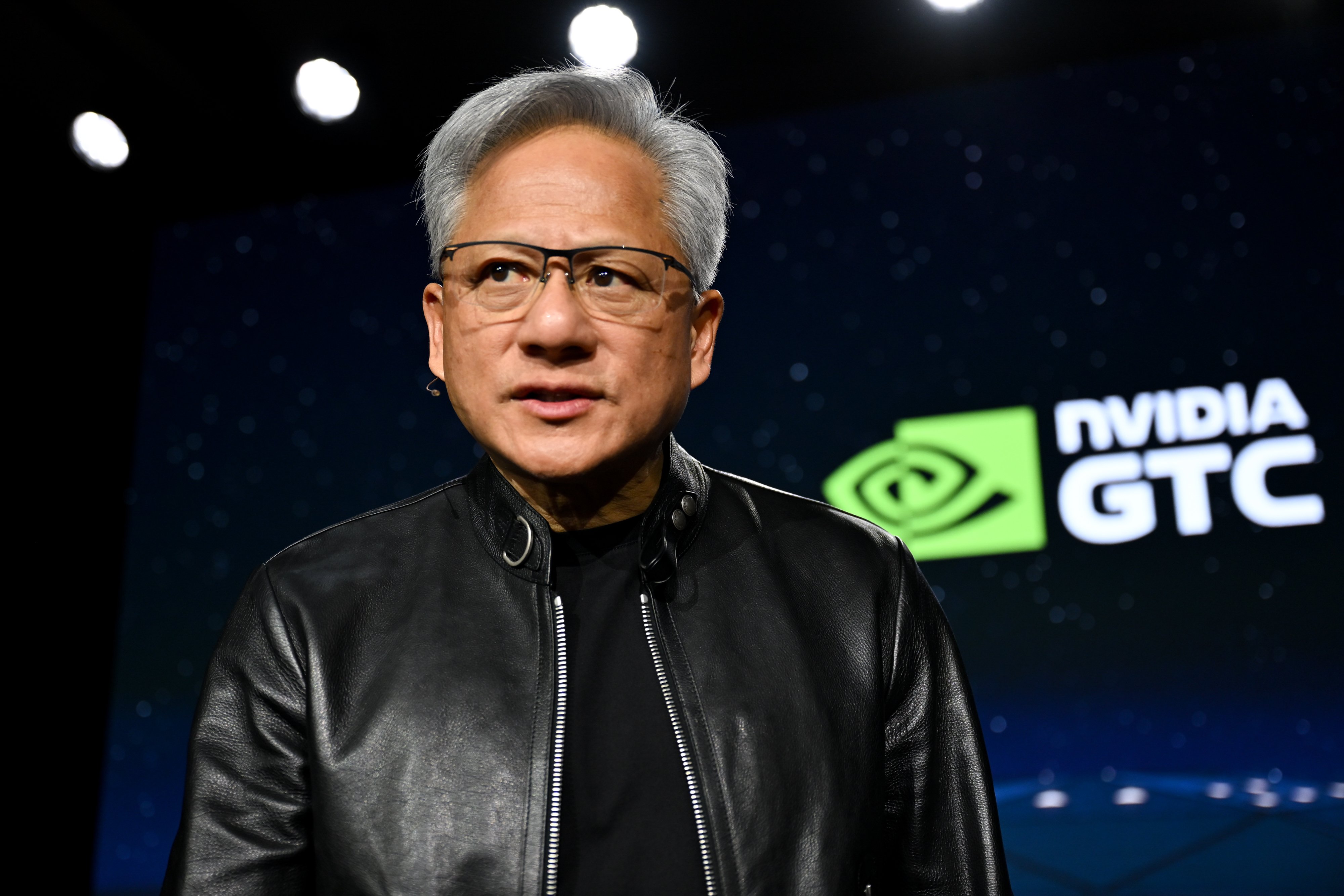
As the technology indexes towards what many perceive as the pinnacle of artificial intelligence, significant statements from industry leaders provide insights into where the field might be heading. Most notably, Nvidia, a company historically renowned for its graphics processing units (GPUs), has become a central player in the AI landscape due to its hardware’s pivotal role in training and deploying large-scale AI models. Recently, Nvidia’s CEO Jensen Huang made headlines by asserting, during a podcast interview, that “I think we’ve achieved AGI,” a statement that both underscores the current rapid advancements and sparks widespread debate over the true state of artificial intelligence today.
Understanding the Concept of Artificial General Intelligence (AGI)
Defining AGI: Beyond Narrow AI
Artificial General Intelligence is a term that encapsulates the goal of creating machines capable of understanding, learning, and applying knowledge across a broad array of tasks, much like humans. Unlike narrow AI systems, which excel only within specific domains—such as facial recognition, language translation, or autonomous driving—AGI would possess the flexibility, adaptability, and contextual understanding characteristic of human intelligence.
Consequently, AGI’s potential includes not only automating routine tasks but also engaging in complex decision-making, creative reasoning, strategic planning, and even emotional understanding. This broad scope makes AGI a moving target in research, with numerous definitions and benchmarks, leading to intense debate within scientific, ethical, and industrial communities about what constitutes genuine AGI and how to measure its progress.
Historical Context and Progress in AI Development
The evolution of AI has been marked by incremental advances, punctuated by periods of high optimism and subsequent setbacks often referred to as AI winters. In recent decades, machine learning, especially deep learning, has ushered in transformative capabilities, enabling machines to outperform humans in specific tasks such as image recognition or language processing. Nonetheless, these systems remain narrow in scope—powerful but limited.
The quest for AGI projects a future where these limitations are surmounted. While some researchers believe that recent breakthroughs have brought humanity close to this milestone, others argue that fundamental technical and conceptual challenges remain. The divergence of opinions underscores the importance of clear, measurable benchmarks to assess progress toward AGI, which, until now, has been elusive due to the term’s broad and ambiguous nature.
Nvidia’s Public Declaration and Its Implications
The Context of Jensen Huang’s Statement
On a recent episode of the Lex Fridman podcast, Jensen Huang, CEO of Nvidia, delivered a provocative statement: “I think we’ve achieved AGI.” Given the history and significance of this claim, it prompted widespread discussion within the tech community, industry analysts, and even financial markets. The statement was made in response to a question about how long it might take to reach an AI milestone that matches human intelligence, with Huang confidently suggesting that this threshold has already been crossed.
This declaration marks a notable shift in the narrative surrounding AI development, especially given Huang’s influential role in the industry. Nvidia’s hardware innovations have been instrumental in enabling large-scale AI models, and the company’s leadership’s confidence in the state of AI progress carries weight—potentially influencing investor sentiment, research directions, and regulatory considerations.
Analyzing the Statement: Is It Fundamentally Accurate?
While Huang’s assertion is bold, it warrants careful examination. The claim that AGI has been achieved hinges on how one defines the term. If “AGI” is interpreted as systems that exhibit human-like perception, reasoning, and autonomous decision-making across diverse domains, then current AI models fall short. They are, at best, highly sophisticated narrow AI systems, often requiring extensive human oversight and vast computational resources.
However, if the definition is more lenient—considering the rapid advancements in AI capabilities, including large language models that can perform multiple tasks—then Huang’s statement might be seen as a reflection of the industry’s rapid progress rather than a literal declaration of AGI’s realization. This ambiguity fuels ongoing debates about whether current AI systems genuinely possess the versatility and understanding associated with true AGI or merely simulate it convincingly.
The Industry’s Response and Broader Implications
Responses from Major Tech Leaders
Following Huang’s comments, other industry voices have offered varying perspectives. For example, Sam Altman, CEO of OpenAI, made a notable statement that “we basically have built AGI, or very close to it,” describing this as a “spiritual” assessment rather than a literal one. His nuanced position reflects the complexity of defining and measuring AGI, emphasizing that achieving such a milestone will require numerous medium-sized breakthroughs rather than a single, transformative event.
Conversely, Microsoft CEO Satya Nadella expressed skepticism, asserting that the industry is “not anywhere close” to achieving AGI, highlighting the technical challenges yet to be surmounted and advocating for a cautious, process-oriented approach to development rather than premature declarations.
The Market’s Reaction and Financial Impacts
Despite the ambiguity surrounding Huang’s proclamation, Nvidia’s stock responded positively, closing up 1.5% on that day. Nevertheless, the stock remains down nearly 6% for the year, reflecting broader market concerns about the sustainability and potential risks of AI-driven growth. The tension between optimism about AI capabilities and caution about realistic timelines influences investor strategies and corporate investments.
Technical Foundations of AI That Propel Towards AGI
Hardware Advances: The Role of GPUs and TPUs
Nvidia’s breakthrough in hardware—primarily its advanced GPUs—has been a key driver of recent AI progress. These processing units enable efficient training of massive neural networks by providing unparalleled parallel processing power. As models grow in size and complexity, the importance of specialized hardware like GPUs and increasingly Tensor Processing Units (TPUs) becomes evident, facilitating the development of more capable and flexible AI systems.
Large Language Models and Multimodal Architectures
The emergence of large, transformer-based language models (such as GPT-3 and GPT-4) has demonstrated remarkable capabilities in understanding context, generating coherent text, and performing a variety of tasks. These models hint at a trajectory towards more generalized reasoning but still lack true understanding, common sense, or consciousness. Multimodal architectures integrating text, images, and other data types are further pushing the envelope, bringing AI closer to human-like perception.
Data and Scaling Challenges
One of the core factors behind AI’s rapid expansion is the availability of vast datasets and the ability to scale models effectively. However, handling this data introduces challenges related to quality, bias, and computational resources, which complicate efforts to realize flexible, general-purpose AI systems.
Understanding the Limitations and Challenges of Achieving AGI
Technical Obstacles
- Commonsense reasoning: Current models lack a true understanding of the world, leading to errors and inconsistencies.
- Transfer learning: While progress has been made, AI systems still struggle to transfer knowledge across radically different domains seamlessly.
- Memory and learning efficiency: Human cognition benefits from efficient learning and memory mechanisms, which AI models have yet to replicate effectively.
- Reasoning and planning: Complex problem-solving requires advanced reasoning capabilities that go beyond pattern recognition.
Ethical and Societal Concerns
The pursuit of AGI raises critical ethical issues, including the potential for job displacement, decision-making accountability, and unintended consequences. Critics argue that deploying truly autonomous systems could pose risks to public health and safety, especially if such systems are not thoroughly understood or controlled.
Additionally, concerns about bias, transparency, and misuse of AI systems remain unresolved, emphasizing the importance of responsible development and governance frameworks.
The Future Outlook of AGI Development
Medium-Sized Breakthroughs: A Realistic Path Forward
Many experts, including OpenAI’s leadership, suggest that reaching AGI will not be the result of a single all-encompassing breakthrough but rather a series of incremental progressions. These include advances in unsupervised learning, better understanding of neural mechanisms, integration of symbolic reasoning, and the development of more flexible architectures.
Potential Timeline and Industry Predictions
Predicting a definitive timeline for AGI remains highly speculative. Some, like Ray Kurzweil, have predicted its arrival within the next decade, while others believe it could take much longer or may never materialize. The ambiguity is driven by varying definitions, technological bottlenecks, and societal considerations.
Comparing Industry Perspectives
| Expert | Estimated Timeline | Remarks |
|---|---|---|
| Ray Kurzweil | Within 10 years | Based on exponential growth trends, optimistic view |
| Sam Altman | Medium-term breakthroughs needed | Focuses on multiple incremental advances |
| Satya Nadella | Several decades away | Cautious, emphasizing fundamental research hurdles |
Potential Impacts on Society and Industry
Transforming Business Operations
If AGI were achieved, it could revolutionize industries by automating complex decision-making processes, optimizing supply chains, and even managing entire organizations autonomously. For instance, industries like finance, healthcare, manufacturing, and transportation could benefit from highly adaptable, intelligent systems capable of learning and evolving without human intervention.
Economic and Employment Implications
The advent of AGI could lead to unprecedented productivity gains but also significant disruptions in employment landscapes. Routine jobs may diminish, while new roles in AI oversight, ethical governance, and system maintenance emerge. Policymakers and educators are increasingly focusing on reskilling and safeguarding in anticipation of this transition.
Ethical and Governance Frameworks
Developing globally accepted standards and regulations to ensure safe, transparent, and equitable AI deployment is crucial. The establishment of independent oversight bodies, responsible AI development protocols, and international cooperation can mitigate risks associated with AGI’s potential misuse or unintended consequences.
Conclusion: The Road to Artificial General Intelligence
The statement from Nvidia’s CEO Jensen Huang that “I think we’ve achieved AGI” underscores a pivotal moment, reflecting both the remarkable advancements in AI and the ongoing debate about the true nature and timeline of achieving human-level intelligence in machines. While these declarations spur industry momentum and innovation, they must be weighed against the substantial scientific, ethical, and societal challenges that remain.
Progress towards AGI hinges on a confluence of hardware breakthroughs, algorithmic innovations, ethical considerations, and collaborative governance. As research continues, the line between narrow but powerful AI and genuine general intelligence remains under close scrutiny.
Ultimately, whether AGI will manifest in the coming decade or take much longer remains uncertain. Nonetheless, the discourse surrounding this goal drives the entire AI community toward more responsible and innovative pursuits, shaping the future of technology and society alike.
For more in-depth analysis and current developments in AI, visit freesourcelibrary.com, where cutting-edge research and industry insights are continuously shared to inform and inspire ongoing progress in the field.