
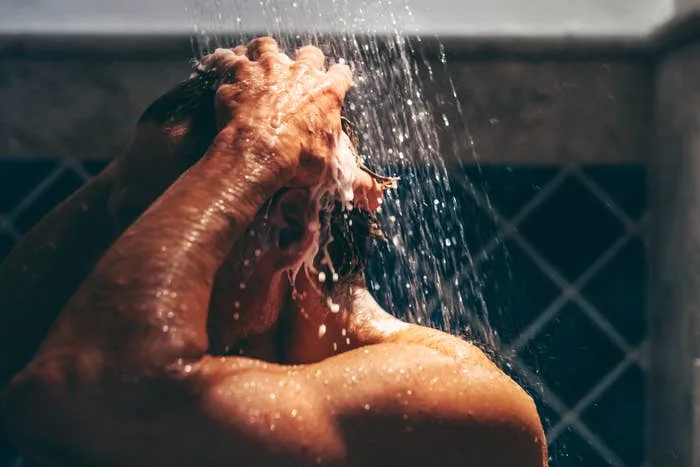
 Free Source Library — Exploring why some of our most brilliant ideas emerge during a simple shower can shed light on the intricate workings of the human mind and its capacity for creativity. This phenomenon, often dismissed as a coincidence or a mere mental fluke, actually embodies a complex interplay of psychological, neurological, and sensory factors that foster a conducive environment for innovation and insight. Understanding the science and subtleties behind this experience not only satisfies curiosity but also opens avenues for consciously cultivating creative states beyond bath time.
The Origins and Nature of Shower-Generated Creativity
The moment when a sudden flash of inspiration strikes—whether in the shower, while jogging, or during a quiet walk—is frequently regarded as a “eureka” moment. These instances are not accidental; rather, they reflect the brain’s dynamic capacity to shift into states optimal for divergent thinking and problem-solving. While pinpointing an exact cause remains elusive, a convergence of scientific theories and observations points toward several fundamental causes: relaxation, sensory engagement, detachment from external stimuli, and neural connectivity.
Psychological Foundations: Relaxation and Cognitive Flexibility
The psychology of creativity consistently emphasizes the importance of mental relaxation—a state that reduces inhibitions, clears cognitive clutter, and encourages free association. In a relaxed state, the mind is less constrained by internal critic voices and the rigid pathways that often limit thinking during high-stress or highly focused tasks. Showering provides a unique escape from internal and external pressures. During cleansing, individuals disconnect temporarily from work emails, deadlines, social obligations, and even technological distractions that can hinder spontaneous thinking. This mental withdrawal allows for a quieting of the brain’s executive functions—areas primarily responsible for critical judgment and control—and fosters an environment where more associative, unconventional ideas can surface. The concept of “cognitive load” explains this phenomena further. When the brain isn’t burdened by multitasking or stressors, it becomes more receptive to novel combinations of existing knowledge and insights from long-term memory. This relaxed mode boosts divergent thinking, which involves generating multiple ideas rather than evaluating them immediately—a key process in creative problem-solving.
Sensory Engagement as a Catalyst for Creativity
The shower environment is rich with multisensory stimuli: flowing water, warm temperature, soothing aromas from soaps and shampoos, the tactile feeling of water on skin, and auditory input from running streams. These stimuli work synergistically to activate various regions of the brain involved in emotion, memory, and imagination. Engaging multiple senses simultaneously creates a highly immersive experience that can stimulate creative associations. For instance, the sound of flowing water has been found to influence brain wave patterns similarly to the effects of certain types of music or sounds used in meditation and relaxation practices. The warmth and comfort of the shower help elevate mood states, which psychology research links to greater cognitive flexibility, openness to new ideas, and less mental rigidity. The role of sensory stimulation is particularly significant because it taps into the brain’s associative networks—paths that link emotional responses, memories, visual imagery, and abstract concepts. When these networks are active, they can generate novel combinations, leading to insights or ideas previously unavailable in more distraction-heavy states.
Flow, Rhythmic Activity, and Deep Engagement
The repetitive motions involved in washing—lathering, rinsing, scrubbing—can induce “flow,” a psychological state characterized by full immersion, immediate feedback, and diminished self-awareness (see Flow Theory). When in flow, individuals experience time distortion and heightened focus, which fosters creative exploration. This state of mindful engagement is often described as being “in the zone,” where judgments are suspended, and the mind is free to wander unconstrained. Such conditions are ideal for incubating ideas organically. Notably, flow is associated with increased activity in brain regions responsible for pattern recognition, emotional regulation, and problem-solving, all contributing to creative breakthroughs.
Self-Reflection and Mental Space for Insight
In solitude, with external distractions minimized, individuals tend to engage in introspection and self-reflection. This internal dialogue facilitates the subconscious processing of issues, where unresolved problems or unarticulated questions languish beneath conscious awareness. During this “incubation” phase, the brain concerts disparate pieces of information, leading to sudden insights and ‘aha’ moments. A noteworthy facet of this process is that the mind often makes novel connections unrelated to deliberate, linear thinking. The relaxed, distraction-free environment of the shower acts as a mental “cleanser,” allowing previously buried memories, ideas, or emotional associations to surface, providing fertile ground for creativity.
Symbolic Significance: Cleansing as Renewal
Beyond the psychological and neurological frameworks, a symbolic layer underpins the shower’s role in creativity. The act of physically cleaning oneself is metaphorically akin to mental cleansing—shedding mental clutter, worries, and limiting beliefs. This ritual of purification creates psychological space conducive to fresh perspectives and innovative thinking. Notably, organizations like design thinking advocate “mental rejuvenation” as a strategic step in brainstorming and innovation — and the shower provides a natural, ritualistic form of such rejuvenation without explicit planning or effort.
Neuroscience of Creative Inspiration: The Brain in Shower Mode
Insights from neuroimaging studies deepen our understanding of why showering is fertile ground for creative thought.
Neural Networks Involved in Creativity
Key brain networks implicated in creative thinking include: – **Default Mode Network (DMN):** Active during restful introspective states, the DMN is central to self-referential thought, memory retrieval, and mind-wandering, all of which are prominent during showering. – **Executive Control Network:** Usually responsible for focused problem-solving and logical reasoning; its activity diminishes during relaxed states, allowing spontaneous insights to flourish. – **Salience Network:** Responsible for detecting significant stimuli, which helps prioritize creative ideas emerging from the internal networks. Research suggests that during relaxed, immersive states—like showering—the activity shifts predominantly toward the DMN, facilitating the generation of novel ideas and associations.
Enhanced Neural Connectivity and Plasticity
Functional neuroimaging indicates that during relaxed states, there is increased connectivity between traditionally segregated brain regions, such as between the visual cortex and memory centers like the hippocampus. This enhanced neural crosstalk allows for cross-domain association—combining visual imagery with past experiences, emotions, or abstract concepts—fueling creative innovation. Furthermore, the broken-down barriers between these neural networks promote neuroplasticity, the brain’s ability to forge new connections dynamically. Consequently, the brain becomes more adaptable, receptive to novel insights and solutions.
Brainwave Patterns and State of Consciousness
Different brainwave frequencies correlate with various mental states: | Brainwave Frequency | State of Mind | Associated Creativity Potential | |————————|—————-|—————————————————| | **Delta (0.5–4 Hz)** | Deep sleep, deep relaxation | Low; associated with rest, not active thinking | | **Theta (4–8 Hz)** | Light sleep, meditation | High for imagery, intuition, and early-stage ideas | | **Alpha (8–13 Hz)** | Calm wakefulness, relaxed alertness | Optimal for relaxed concentration and creative incubation | | **Beta (13–30 Hz)** | Active thinking, problem-solving | Focused, logical tasks, less conducive to free association | In showering, the dominant brainwaves typically include alpha and theta waves, underpinning the relaxed alertness and creative mental states that favor insight. This oscillatory activity supports not only relaxed exploration but also the spontaneous emergence of ideas.
Expanding the Creative Process: From Inspiration to Innovation
The phenomenology of shower-inspired creativity involves a multi-stage process, from initial insight to practical application.
Step 1: Incubation and Sudden Insight
After a period of relaxed immersion—like in the shower—ideas often surface suddenly. This “insight” or “eureka moment” arises from subconscious processing, where the brain synthesizes information across neural networks.
Step 2: Reflection and Validation
Post-insight, conscious reflection is necessary to evaluate the feasibility of emerging ideas. While the shower may spark inspiration, turning it into actionable insights involves critical thinking, context analysis, and planning.
Step 3: Externalization and Development
Finally, capturing ideas—through sketches, notes, or discussion—is essential for transitioning from fleeting insight to tangible output. The initial spark in the shower acts as a catalyst for further development.
Applying Shower-Related Creativity Techniques
While the shower environment itself is organic and unpredictable, certain practices can help harness this natural phenomenon intentionally.
Designing Deliberate Rituals
– **Mindful Showering:** Engaging fully with the sensory experience can deepen relaxation and facilitate flow. – **Idea Journals:** Keeping a waterproof or nearby notebook allows capturing insights immediately after showering. – **Visualization Exercises:** Mentally rehearsing creative scenarios or solutions during the shower can enhance subsequent realization.
Environmental Adjustments for Neuroscientific Enhancement
– Incorporate soothing sounds or music to amplify relaxation. – Use aromatherapy with essential oils like lavender or rosemary to elevate mood. – Optimize lighting to create a calming ambiance conducive to introspection.
Integrating Shower Creativity into Daily Routines
Establishing consistent ‘eureka moments’ routines—regular shower sessions dedicated to relaxation and openness—can systematically improve creative output over time. Pairing shower time with deliberate reflection or problem-solving prompts enhances this effect.
Common Mistakes and Misunderstandings
– **Viewing Shower Inspiration as Pure Luck:** While seemingly spontaneous, shower insights are often the result of a brain primed by relaxation, sensory stimulation, and subconscious processing. – **Ignoring the Need for Externalization:** Inspiration alone isn’t enough; capturing and developing ideas are critical. – **Relying Solely on Shower Moments:** Creativity is multifaceted. Rely on a variety of environments and techniques to foster innovation. – **Overgeneralization:** Not everyone experiences significant insights in the shower; individual differences, mental states, and habits influence outcomes.
Troubleshooting: How to Maximize Shower-Generated Creativity
– **Regular Practice:** Dedicate specific times for relaxation without pressure—include shower sessions as intentional brainstorming moments. – **Post-Shower Recording:** Have a waterproof notepad or voice recorder ready to capture ideas immediately. – **Complementary Activities:** Engage in activities like meditation, journaling, or light physical activity to reinforce creative thinking. – **Eliminate Distractions:** Minimize environmental disturbances to deepen mental immersion. – **Reflect and Synthesize:** Spend time post-shower reviewing insights and integrating them into your projects.
Deeper Comparisons: Shower Creativity vs. Other Innovation Contexts
| Environment/Method | Key Features | Pros | Cons | Best For | |——————————–|—————————————-|————————————————|————————————————–|———————————-| | **Shower** | Sensory immersion, relaxation, solitude | Spontaneous insights, stress relief | Unpredictable, hard to control | Ideation sessions, spontaneous insight | | **Meditation** | Mindfulness, focused awareness | Clearer mental space, emotional balance | Requires practice, less external stimulation | Reflection, emotional clarity | | **Walking in Nature** | Physical activity, sensory input | Inspiration from surroundings, physical reset | External distractions, less focused | Problem incubation, inspiration | | **Creative Workspaces** | Designed for focus, resources readily available | Structured environment for output | Can induce mental rigidity or stress | Productive production sessions | Each environment has unique advantages; combining or alternating among these can optimize creative output. Showering remains particularly effective for spontaneous insight and mental rejuvenation.
Practical Frameworks for Harnessing Shower-Induced Creativity
Implementing a structure can help systematically capture and develop insights gained during shower-time moments.
The Shower Creativity Protocol
1. **Preparation:** Keep waterproof notepads, voice recorders, or digital devices nearby. 2. **Intention Setting:** Before showering, identify the problem or theme you want to explore. 3. **Relaxation Phase:** Engage fully—focus on sensory experiences, breathing, and mindfulness. 4. **Incubation:** Allow your mind to wander naturally; avoid forcing thoughts. 5. **Capture:** Immediately record any insights, images, or ideas post-shower. 6. **Reflection and Refinement:** Schedule dedicated time to review and expand on the captured ideas. 7. **Implementation:** Transition from abstract insight to tangible action or prototype.
Mind Mapping in the Shower Environment
While in the shower, mentally or physically sketch mind maps linking concepts or themes related to your creative challenge. This external or internal visualization helps deepen understanding and yield innovative solutions.
Deep Case Studies and Real-World Examples
Many renowned inventors, writers, and entrepreneurs have credited moments in the shower with significant creative breakthroughs. For example: – **Isaac Newton** reportedly conceived his law of gravity after an apple fell, a reflection of the broader phenomenon of insight sparked by a calm, contemplative environment. – **Steve Jobs** was known for his walks and reflective pauses that led to breakthroughs in product design and user experience. – **Innovators and authors** such as Nikola Tesla used sensory-rich environments to stimulate neural associations, often citing spontaneous insights during bath or sauna sessions. By analyzing these cases, one can see the recurring pattern: deliberate or incidental immersion in sensory-rich, relaxed states triggers burst of cognitive flexibility and innovation.
Conclusion: Cultivating Your Creative Shower Moments
Understanding the underlying science behind shower-induced creativity empowers us not just to enjoy those “aha” moments but to actively seek and replicate conditions conducive to innovation. Incorporate routines that maximize relaxation, sensory engagement, self-reflection, and immediate capture of insights. Remember that while the environment plays a role, the most vital factor is your openness and willingness to surrender control, allowing the subconscious mind to do its work. As you explore and refine your personal methods, you harness the power of the shower—a simple, everyday act—to unlock the limitless potential of your creative mind.
References
- Psychology Today: The Science of Creativity and Relaxation
- Neuroscience Advances in Brain Connectivity and Creativity