
Comprehensive Analysis of Tesla’s New Model Y AWD Variant in the United States: Market Impact, Technical Specifications, and Future Outlook
In recent developments that underscore the evolving landscape of electric vehicles (EVs), Tesla Inc., the pioneering force in the EV industry, has announced the introduction of a new all-wheel-drive (AWD) variant of its flagship Model Y SUV within the United States market. Priced at an accessible $41,990, this latest addition aims to strengthen Tesla’s strategic positioning in the competitive midsize SUV segment, capturing the attention of both tech enthusiasts and mainstream consumers alike. This comprehensive review, published on the esteemed platform Free Source Library, delves into the technical specifics, market implications, safety features, and future trajectories prompted by this significant product launch.
Strategic Significance of the New Model Y All-Wheel Drive Variant
Market Positioning and Price Strategy
The $41,990 price point of Tesla’s new Model Y AWD marks a strategic move aimed at enhancing affordability and expanding the EV market share in the United States. By positioning this variant above the rear-wheel-drive “Standard” version, Tesla effectively introduces a tiered approach that caters to a broader spectrum of consumers, from budget-conscious buyers to those seeking higher performance and safety standards.
This initiative coincides with Tesla’s broader 2026 strategy, marked by the rollout of lower-priced “Standard” trims of Model Y and Model 3, which have become pivotal in its push to attract new entrants into electric mobility. These lower-cost versions are aligned with the aim to mitigate the impact of diminishing federal incentives, such as the phased-out $7,500 tax credit, thereby maintaining Tesla’s competitive edge in a sector increasingly dominated by both traditional automakers and emerging startups.
Impact on Consumer Adoption and Market Dynamics
The introduction of an accessible AWD variant is likely to accelerate adoption by reducing entry barriers. Historically, high-performance electric SUVs like the Tesla Model Y have attracted a demographic already inclined towards premium pricing, but this new variant promises to bring certified Tesla quality to a broader population segment. The strategic price positioning is expected to drive increased sales volume, especially as competing EV offerings from brands such as Ford, GM, and Volkswagen continue to evolve and lower their prices.
Moreover, Tesla’s decision to offer this model amidst a cooling EV market—following the end of federal incentives—illustrates an acute awareness of consumer price sensitivity. The company’s focus on offering high-range and high-performance models at accessible prices demonstrates keen adaptability within the rapidly shifting EV landscape.
Technical Specifications and Features: A Deep Dive
Powertrain and Performance Metrics
The new Model Y AWD variant leverages Tesla’s dual-motor all-wheel-drive system, designed to optimize traction, handling, and safety across various driving conditions. The vehicle’s key performance metrics include:
- EPA-estimated Range: 327 miles
- 0-60 mph Acceleration: 4.6 seconds
- Charging Capabilities: Up to 169 miles added in 15 minutes via Supercharger network
These figures underscore Tesla’s commitment to combining range with performance. The 4.6-second acceleration time demonstrates that affordability does not necessarily compromise the vehicle’s sporty appeal, aligning with Tesla’s brand ethos of high-performance EVs.
Battery Technology and Charging Infrastructure
The battery system for this variant adheres to Tesla’s Long Range specifications, featuring advanced lithium-ion cell chemistry designed for longevity and safety. The vehicle supports fast-charging at a maximum of 250 kW, enabling rapid recharges that restore up to 169 miles in just 15 minutes under optimal conditions.
Moreover, Tesla’s extensive Supercharger network, combined with the vehicle’s advanced charging protocols, assures minimal downtime and high convenience for users. These technical features are critical in enhancing the practicality and appeal of the Model Y for daily commutes and longer trips alike.
Design and Exterior Features
Aerodynamic Elegance
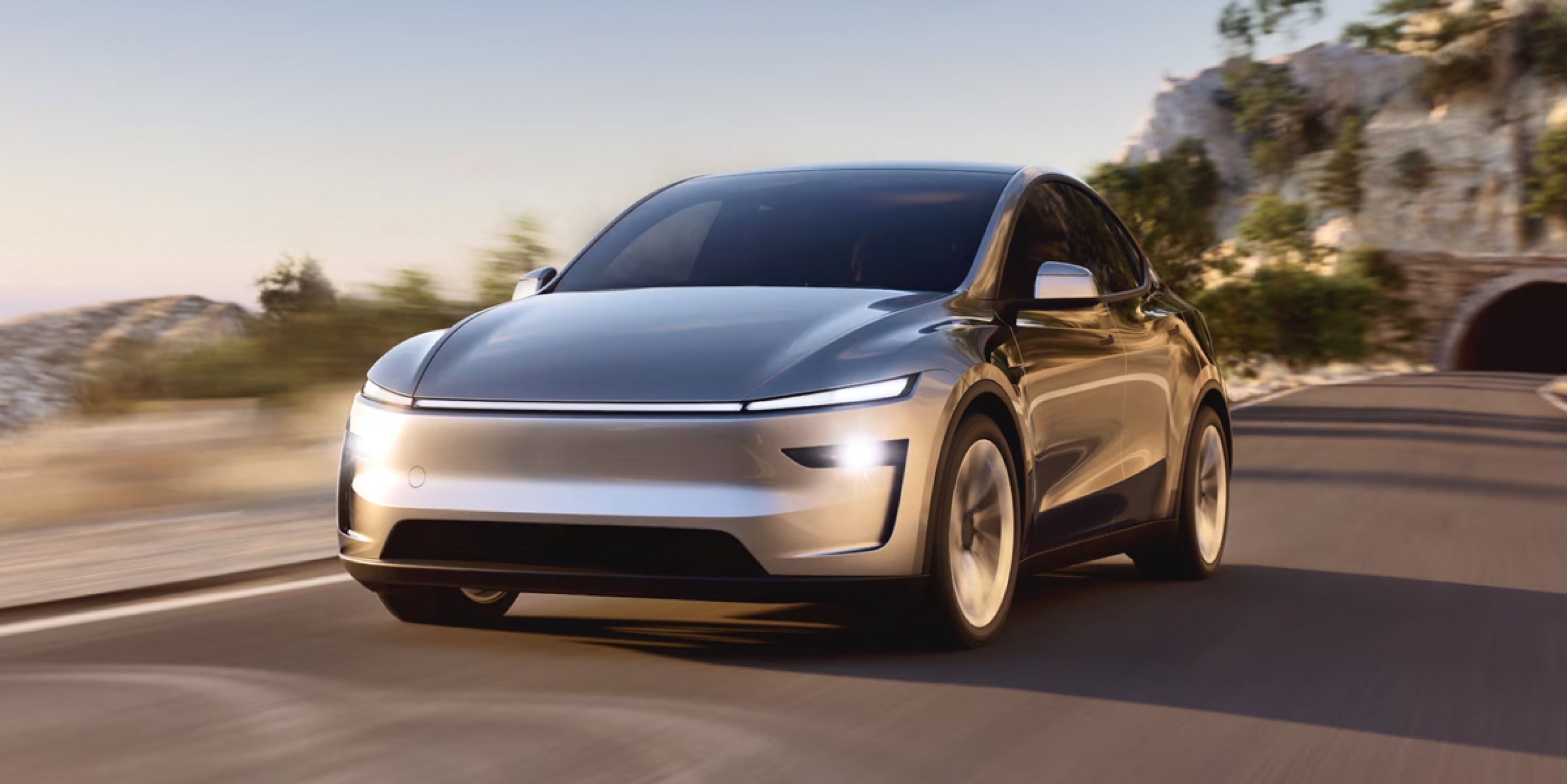
The new Model Y exterior emphasizes aerodynamic efficiency, with a sleek front fascia, sculpted body lines, and distinctive lighting features. Every curve and contour has been meticulously designed to minimize drag, thereby contributing to the vehicle’s impressive range. The innovative use of indirect reflective body panel taillights further enhances visibility and aesthetic appeal.
Premium Material Use and Exterior Dimensions
The vehicle’s overall measurements include an extended width of approximately 83.8 inches with extended mirrors, a height of 63.9 inches, and an overall length of 188.6 inches, making it a midsize SUV with a commanding road presence. The use of lightweight yet durable materials ensures a curb weight around 4,473 pounds, supporting both safety and performance.
Interior Comfort and Technological Integration
Spacious Cabin and Seating Flexibility
The Model Y’s interior design emphasizes comfort, utility, and a sense of openness. Capable of seating up to seven passengers, the cabin features an all-glass panoramic roof that enhances spatial perception and natural light. The use of premium textiles, soft-touch interfaces, and ambient lighting creates an immersive environment tailored to modern lifestyle needs.
For convenience, the vehicle offers power-adjustable heated seats in the front two rows and optional rear-seat climate control, ensuring passenger comfort across diverse weather conditions. The fold-flat second and third-row seats provide an expansive 76 cubic feet of cargo space, accommodating everything from luggage to sports equipment.
Infotainment and Connectivity
The centerpiece of Tesla’s advanced interior is the 16-inch central touchscreen, supported by an 8-inch rear touchscreen for rear passengers. These interfaces grant access to climate controls, media, navigation, and vehicle settings, all integrated seamlessly with software updates and Tesla’s proprietary operating system.
Connectivity features include Bluetooth, Wi-Fi hotspot, and cellular data, enabling remote vehicle management via the Tesla app. Functions like preconditioning, charging management, and security monitoring (e.g., Sentry Mode) exemplify Tesla’s emphasis on connected mobility and remote user engagement.
Safety and Driver Assistance Systems
Passive Safety Measures
Every Tesla vehicle, including this new Model Y variant, is constructed with a robust impact-absorbing structure, reinforced passenger compartment, and an array of airbags designed to minimize injury risks during collisions. The comprehensive safety architecture adheres to and surpasses regulatory standards globally.
Active Safety Features
- Forward Collision Warning
- Active Emergency Braking
- Lane Departure Avoidance
- Autopilot Capabilities
The vehicle’s suite of active safety technologies aims to prevent accidents proactively, with features such as automatic lane keeping, adaptive cruise control, and blind-spot monitoring. Upgrading to Tesla’s Full Self-Driving (Supervised) package brings additional benefits, including navigation on autopilot, automatic lane changes, and smarter traffic light recognition, all while requiring driver supervision.
Advanced Driver-Assistance: The Future of Autonomous Travel
While Tesla emphasizes that Full Self-Driving (FSD) requires active supervision, its capabilities signal a future where vehicles could operate autonomously in controlled environments. This system relies heavily on advanced sensors, including front-facing cameras, ultrasonic sensors, and radar, to create a detailed perception of surroundings.
Warranty, Maintenance, and Long-term Ownership
| Component | Coverage | Duration |
|---|---|---|
| Basic Vehicle | Coverage for defects and repairs | 4 years or 50,000 miles |
| Battery & Drive Unit | Protection against battery and drive system failures | 8 years or 120,000 miles |
This warranty structure underscores Tesla’s confidence in its engineering, while also providing peace of mind to consumers regarding long-term ownership costs. Regular software updates, which Tesla delivers over-the-air, further enhance vehicle performance, safety, and functionality over time, setting Tesla apart from traditional automakers.
Market Outlook and Competitive Analysis
Position in the Broader EV Market
As of 2026, the EV market continues to intensify, driven by regulatory pressures, consumer demand for environmentally friendly transportation, and technological advancements. Tesla’s strategic pricing and product diversification, exemplified by the new Model Y AWD, are critical in maintaining its market leadership amidst fierce competition.
Other automakers, including Ford with its Mustang Mach-E, Volkswagen with ID.4, and GM’s Chevrolet Equinox EV, have launched or announced comparable models aimed at capturing similar market segments. Tesla’s advantage lies in its established charging infrastructure, brand recognition, and software ecosystem, which together create a compelling value proposition.
Potential Challenges and Opportunities
Despite strong positioning, Tesla faces several challenges, including rising manufacturing costs, supply chain disruptions, and increasing competition from both legacy automakers and startups. Margins could be pressured if Tesla maintains aggressive pricing strategies without offsetting costs through software services, energy solutions, or economies of scale.
Conversely, the opportunity exists in consolidating market share through continuous innovation, expanding the supercharging network, and introducing new features such as vehicle-to-grid integration and advanced autonomous capabilities.
Environmental and Societal Impacts
Reducing Carbon Footprint and Promoting Sustainable Mobility
The launch of more affordable, high-performance EVs like the Model Y AWD is a vital step towards global sustainability goals. Electric vehicles significantly reduce greenhouse gas emissions, especially when charged from renewable energy sources. Tesla’s commitment to sustainability extends to its efforts in battery recycling, energy storage, and solar power integration.
Societal Adoption and Behavioral Change
Wider adoption of EVs facilitated by accessible pricing encourages behavioral change towards sustainable mobility. As charging infrastructure expands and vehicle technology advances, consumers become more confident in transitioning from internal combustion engines to EVs, fostering a cleaner environment and reducing dependency on fossil fuels.
References and Future Directions
While current advancements in Tesla’s Model Y lineup reflect significant technological progress, future iterations are expected to integrate even more sophisticated autonomous features, improved battery chemistries for extended range, and increasingly sustainable manufacturing practices. Additionally, collaborations with grid operators for vehicle-to-grid (V2G) systems could revolutionize energy management.
As cited in industry reports from sources such as Bloomberg New Energy Finance and industry analyses from Free Source Library, the trajectory of Tesla’s innovation continues to shape the global EV ecosystem, setting benchmarks for safety, performance, and affordability.
Final Considerations
The introduction of Tesla’s new Model Y AWD in the United States at a competitive price point not only underscores Tesla’s strategic agility but also signals a broader industry shift towards democratizing electric mobility. With its blend of high-range capabilities, advanced safety features, and user-friendly interior design, this vehicle exemplifies the future of suburban and urban transportation—efficient, safe, and accessible.
As the EV sector accelerates into a new era, Tesla’s ongoing innovations, market adaptations, and commitment to enhancing consumer experience will determine its role as the industry leader. Stakeholders, including consumers, regulators, and competitors, will closely monitor these developments, shaping the future of sustainable transportation worldwide.