
The dissemination of written knowledge has long been a fundamental aspect of human civilization, serving as a conduit for cultural, scientific, and religious developments across centuries and continents. Prior to the advent of the mechanical printing press, the primary method of reproducing texts was through painstaking manual copying, a process that required immense skill, time, and resources.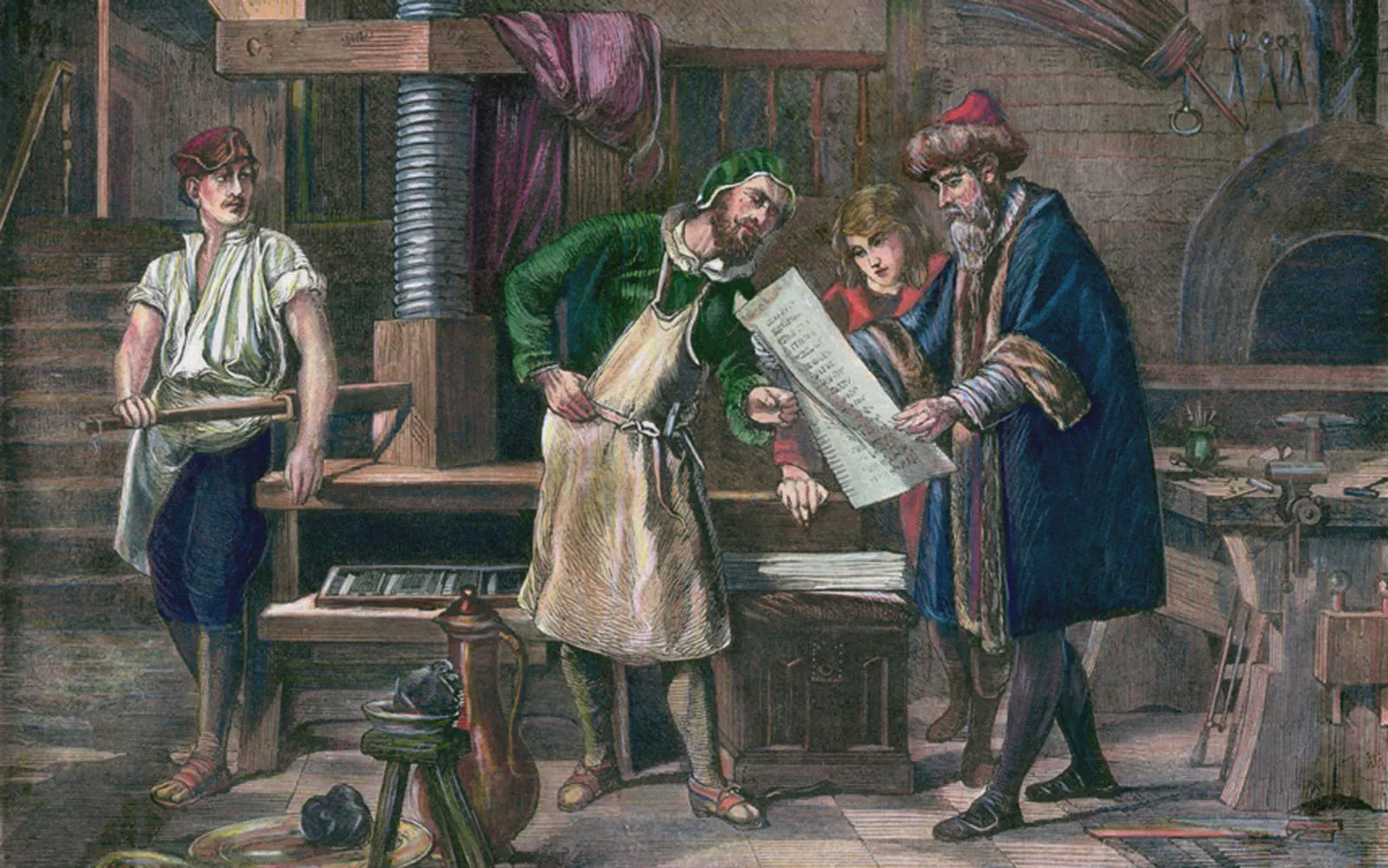
Ancient civilizations, most notably China, laid crucial groundwork in printing technology through processes like woodblock printing and the earliest forms of movable printing. The Chinese invention of woodblock printing emerged around the 9th century AD, allowing the mass reproduction of texts such as Buddhist scriptures and other important documents. These techniques facilitated relatively rapid replication, but their scope and efficiency were limited compared to later innovations. Other early methods of printmaking, including clay and metal movable type, also appeared sporadically in regions like Korea and the Middle East, but these innovations did not widespread influence or mass adoption in Europe until much later.
Gutenberg’s Innovation: The Birth of Mechanical Mass Printing
The Context of 15th-Century Europe
Central to understanding Gutenberg’s impact is recognizing the complex historical context of 15th-century Europe. During this period, scholarly activity was mostly confined within monasteries, universities, and aristocratic courts. Manuscripts were copied painstakingly by monks and scribes, a process that was not only slow but also costly, thereby restricting access to knowledge and limiting literacy to a privileged minority.
This environment created a bottleneck in the spread of ideas, scientific progress, and religious reform. The increasing demand for books—driven by expanding universities, rising literacy rates among the emerging bourgeoisie, and a general desire for knowledge—set the stage for technological innovation that could vastly improve upon existing reproduction methods.
Gutenberg’s Contributions to Printing Technology
Johannes Gutenberg, a German goldsmith and inventor working in Mainz, uniquely combined several critical innovations to develop the first practical printing press with movable type around 1440. His revolutionary approach integrated various technological breakthroughs that would shape the future of mass printing:
- Movable Metal Type: Unlike earlier woodblock presses, Gutenberg’s system utilized individual metal letters cast in alloys that could be easily rearranged, reused, and reused again. This modularity allowed for rapid composition of pages and unprecedented flexibility in printing different texts without remaking entire blocks.
- Mechanical Press Design: Building on the concept of screw presses used in winemaking and olive oil extraction, Gutenberg designed a mechanical hand press that applied uniform pressure to transfer ink from type to paper efficiently.
- Specialized Ink Formulation: He developed a durable, oil-based ink, which adhered well to metal type and dried quickly, producing sharp, long-lasting prints. This proved essential for the mass production of texts with consistent quality.
Gutenberg’s innovations culminated in the first significant book produced using his press—the Gutenberg Bible, also known as the 42-line Bible—completed around 1455. This masterpiece exemplified the potential of movable type printing, demonstrating high-quality typography comparable to handwritten manuscripts and setting a new standard for mass-produced books.
The Gutenberg Bible: A Literary Milestone
Design and Artistic Features
The Gutenberg Bible was a marvel of craftsmanship and a testament to the technological ambition of the era. Its pages were printed with carefully designed typefaces that mimicked the calligraphy of manuscripts, and the layout included decorative initials, chapter headings, and biblical artwork. The beauty of the printed pages illustrated the craftsmanship and aesthetic considerations that still influence book design today.
Impact and Distribution
The production of the Gutenberg Bible signified a breakthrough in the affordable reproduction of high-quality texts. Although only about 49 copies are known to exist today, the publication demonstrated that mass-produced books could be both beautiful and accessible. It established the viability of printing as an industry, paving the way for a proliferation of books and information dissemination.
Societal Changes Fueled by the Printing Revolution
The Spread of Knowledge and Education
The invention of the printing press profoundly impacted language, literacy, and education. Printed materials became more accessible, reducing the costs of books and enabling wider dissemination of knowledge. The standardization of spelling, grammar, and vocabulary through printed texts facilitated the development of national languages and literacy across Europe.
This democratization of knowledge gave rise to new educational models, including the establishment of public libraries and the proliferation of textbooks. The literacy rate among common people steadily increased as access to reading materials expanded beyond clergy and aristocrats, ultimately transforming society into a more informed and participatory populace.
The Cultural Renaissance and Preservation of Ancient Knowledge
The Renaissance, characterized by renewed interest in classical learning, arts, and humanism, was significantly driven by the ability to disseminate classical texts more effectively. Works by Greek and Roman authors, previously preserved only in monastic collections and manuscripts, were printed and shared widely. This facilitated intellectual revival, artistic innovation, and critical thinking that defined the Renaissance era.
Standardization of Languages and Literary Development
The widespread availability of printed books led to the standardization of language in national literatures. For example, Martin Luther’s translation of the Bible into vernacular German was magnified through printing, influencing linguistic development and religious practice. The consistent spelling, grammatical norms, and vocabulary established through print laid the groundwork for modern language standards.
The Role of Printing in Religious and Political Movements
The Protestant Reformation
The impact of the printing press on religion was transformative. Martin Luther’s Ninety-Five Theses, penned in 1517, challenged the doctrines of the Catholic Church and catalyzed widespread reform. The rapid printing and distribution of religious tracts, sermons, and doctrinal debates allowed reformers to organize and mobilize support across Europe efficiently.
Print media broke the near-monopoly of church authorities on religious knowledge, empowering individual interpretation of scriptures and encouraging religious pluralism. This fracturing of religious unity ultimately resulted in profound social and political upheavals, including the rise of Protestant denominations and conflicts such as the Thirty Years’ War.
Enabling Political Discourse and Revolutionary Movements
Political pamphlets, newspapers, and manifestos became essential tools in shaping public opinion and mobilizing revolutionary activities. The dissemination of ideas advocating for democracy, liberty, and reform sparked multiple upheavals, from the English Civil War to the French Revolution. The period also saw the rise of political journalism, which provided a new platform for vocal and organized citizen engagement.
Economic Implications of the Printing Industry
Emergence of a Publishing Industry
The demand for books stimulated the growth of a burgeoning industry comprising printers, publishers, booksellers, and authors. Printing became an organized profession, supporting specialized labor and technological innovation. Printing presses spread across Europe, establishing hubs of knowledge production that influenced local economies and trade networks.
Impact on Commerce and the Sharing of Information
Printed materials facilitated commerce by enabling the dissemination of trade information, contracts, and market data, which contributed to the expansion of economic networks. The ability to mass-produce standardized documents and manuals also supported industrial activities and scientific research, catalyzing growth in various sectors.
Scientific Revolution and Knowledge Advancement
New Modes of Scientific Communication
In scientific circles, the printing press was instrumental in enabling rapid dissemination of discoveries and theories. Pioneering works by Copernicus, Galileo, Vesalius, and Newton were published in print, significantly accelerating scientific progress. The ability to reproduce detailed diagrams and technical descriptions provided clarity and reproducibility essential for scientific validation.
Peer Review and Collaboration
The proliferation of scientific journals, leaflets, and books fostered a culture of peer review, critique, and collaborative verification. This process established a foundation for modern scientific method and contributed to the cumulative advancement of knowledge across disciplines.
Evolution and Modern Adaptations of Printing Technology
From Gutenberg to the Industrial Revolution
While Gutenberg’s original design revolutionized printing, subsequent technological developments of the Industrial Revolution period—such as steam-powered presses, rotary presses, and linotype machines—further increased speed, scale, and cost efficiency. These innovations enabled mass production, making printed works available to larger audiences and establishing a foundational infrastructure for modern publishing industries.
The Digital Age and Contemporary Printing
The late 20th century saw the transition from analog to digital printing technologies. Laser printing, inkjet, and digital offset presses have revolutionized the industry, introducing customization, quick turnaround, and on-demand printing. These advances have made printing more sustainable, versatile, and integrated with digital media, yet the core principles of offset and mechanical printing remain relevant.
The Lasting Legacy of Gutenberg’s Invention
The invention of the printing press by Johannes Gutenberg remains one of the most transformative inventions in human history. It bridged the gap between hand-copied manuscripts and modern mass communication, fostering knowledge democratization and cultural exchange on an unprecedented scale. Its influence extends from the Enlightenment to the modern era, underpinning the proliferation of scientific, cultural, and social progress.
The Significance Today
Despite the dominance of digital media, printing continues to serve vital roles in publishing, education, and marketing. Innovations such as print-on-demand and sustainable printing practices are reshaping the industry, ensuring that the art and technology of printing adapt and persist. As a platform that values open access to knowledge, freesourcelibrary.com champions the dissemination of free, high-quality information—honoring Gutenberg’s legacy by supporting the democratization of knowledge in the digital age.
References
- Febvre, Lucien, and Henri-Jean Martin. The Coming of the Book: The Impact of Printing, 1450–1800. Verso, 2010.
- Man, John. The Gutenberg Revolution: The Transformation of Western Europe, 1439-1455. Harvard University Press, 2002.
Comprehensive Data Table on Evolution of Printing Technology
| Period | Technological Innovation | Thematic Focus | Impact |
|---|---|---|---|
| 9th Century | Woodblock Printing | Early Chinese Text Reproduction | Facilitated early mass reproduction of texts in East Asia |
| 11th-15th Century | Movable Type (Korean, Chinese) | Localized movable type for specific regions | Limited geographical spread prior to European adoption |
| 1450s | Gutenberg’s Mechanical Moveable Type | First practical mass printing in Europe | Revolutionized book production, cultural dissemination |
| 16th-19th Century | Steam-powered Printing Press, Rotary Press | Industrial-scale printing | Lower costs, higher volume, democratization of knowledge |
| Late 20th Century – Present | Digital Printing and Offset Technologies | On-demand, customized printing | Sustainability and integration with digital media |
Conclusion
The legacy of the invention of the printing press endures across all facets of modern society. It is not merely a technological breakthrough but a catalyst for social transformation, an enabler of scientific and cultural progress, and a cornerstone of modern communication systems. Its development exemplifies how innovation, when driven by a combination of technological ingenuity and societal needs, can dramatically reshape human history. As we navigate the continuum from print to pixels, the foundational principles established by Gutenberg remind us of the enduring power of accessible, reliable, and widespread dissemination of knowledge, a mission embraced today through platforms like freesourcelibrary.com.