
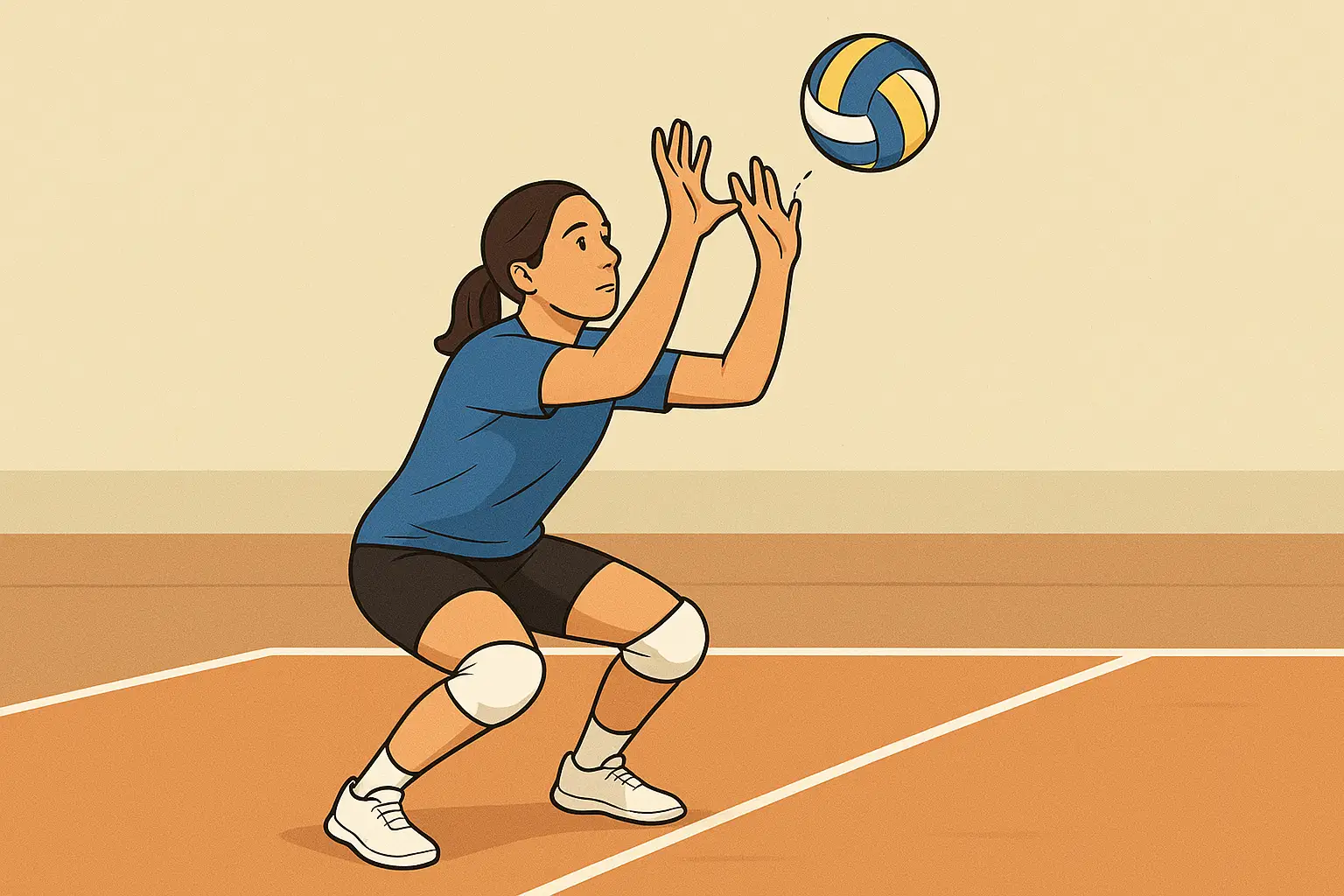
 Free Source Library — Diving deep into volleyball passing techniques reveals the nuanced skills that separate good players from great ones, shaping successful teams and thrilling matches alike.
Introduction to Volleyball Passing
Volleyball is a sport marked by rapid exchanges, strategic plays, and an almost constant rhythm of movement. At the heart of this fast-paced game lies a fundamental skill: passing. Whether receiving a serve, defending against an opponent’s attack, or setting up a teammate for an offensive hit, the ability to control and direct the ball precisely is essential. Effective passing not only preserves possession but also sets the stage for offensive strategies that can illuminate the court with well-coordinated spikes and plays. Understanding the various types of passes provides players with a toolkit that can be adapted to different in-game situations. Each technique — from the basic forearm bump to the sophisticated overhead set — plays a critical role. Mastery over these passes, along with strategic application, is indispensable for players seeking to elevate their game and for coaches aiming to develop a cohesive, resilient team.
Fundamental Classification of Volleyball Passes
Before delving into specifics, it helps to categorize volleyball passes by their purpose and execution complexity:
- Defensive Passes: Primarily aimed at neutralizing incoming attacks or serves, including forearm passes, digs, and specialized libero passes.
- Offensive Passes: Designed to set up attacking plays, mainly the overhead set.
- Situational Passes: Underhand passes or emergency responses used when the usual techniques are compromised.
Understanding these categories highlights the importance of context and adaptability in each passing technique. Skillful players must evaluate the ball’s height, speed, spin, and direction, choosing the most appropriate method to maintain control. Now, we explore each dominant passing type in detail.
1. Forearm Pass (The “Bump” or “Dig”)
What Is a Forearm Pass?
The forearm pass, often called a “bump” in the volleyball lexicon, is one of the foundational skills for beginner and advanced players alike. It is primarily used to receive serves, receive attacks, or keep the ball in play during defensive efforts. It entails a precise contact with the forearms, creating a broad, stable platform that allows controlled directional passing. Its effectiveness hinges on proper body mechanics and timing.
Technical Breakdown of the Forearm Pass
Body Position and Preparation
– **Stance:** Feet shoulder-width apart, providing a firm base to absorb impact and generate power. – **Knees:** Slightly bent, enabling quick adjustments to ball trajectory and height. – **Body Angle:** Slightly leaning forward ensures optimal reach and stability. – **Core Engagement:** Strong core muscles provide balance and control during contact.
Hand and Arm Positioning
– **Hands:** Interlock fingers or clasp palms together, forming a flat, firm surface on the forearms. Thumbs are aligned parallel to each other to create a clean plane. – **Arms:** Extend arms forward, keeping elbows straight but relaxed. The focus is on a smooth, controlled contact rather than hitting the ball with brute force.
Execution Technique
– As the ball approaches, the player sinks slightly into the knees, already positioning for a low, balanced stance. – Contact occurs with the flat forearm surface, just below the wrists, with the ball striking the padded part of the forearms. – The motion should be controlled, with minimal swinging or exaggerated movement, aiming to direct the ball accurately to the setter or teammate. – Follow-through is natural; the arms remain extended and steady until the ball is released.
Application Scenarios of the Forearm Pass
- Serve Receive: Ensuring a reliable, controlled reception for the setter to initiate an attack.
- Defensive Plays: Digging powerful spikes to prevent the ball from hitting the ground, maintaining rally continuity.
- Transition Plays: Moving from defense to offense quickly by accurately passing the ball to the setter.
Advanced Tips for Mastering the Forearm Pass
– Maintain eye contact with the ball continuously until contact. – Use your legs to generate upward momentum, reducing strain on the arms. – Practice with different ball speeds and angles to develop adaptability. – Work on wrist and forearm strength to improve stability.
2. Overhead Pass (The “Set”)
Understanding the Overhead Pass
The overhead pass, or “setting,” is the keystone for offensive organization. It involves precise control to place the ball in front of the attacker at the optimal height and direction. Success hinges on timing, hand coordination, and communication.
Technical Details of the Set
Body Position and Balance
– **Feet:** Shoulder-width apart, with slight bending at the knees for agility. – **Center of Gravity:** Slightly forward, aligned under the incoming ball, to facilitate quick movement and accurate placement. – **Head and Eyes:** Focused on the ball, with an awareness of the intended hitter’s position.
Hand and Finger Placement
– **Hands:** Held above the forehead with fingers wide apart, forming a triangled window—sometimes called the “triangle” technique. – **Fingertips:** Contact is made with the pads, not the palms, allowing for more precise control. – **Thumbs:** Pointed backward, slightly bent, to assist with stability during contact.
Executing the Set
– As the ball nears, use quick footwork to position under the ball. – Extend arms upward with gentle, precise contact, pushing the ball softly but accurately. – The wrists snap slightly to impart spin, aiding in predictable ball trajectory. – Maintain a high elbow to facilitate quick, controlled releases and minimize misdirection.
Applying the Set in Play
- Offensive Attacks: The set positions the ball for a power spike, maximizing attack angles and timing.
- Multipurpose Play: The setter can vary the speed, height, and side of the set to create unpredictable attacking options.
- Team Dynamics: Effective setting requires seamless communication, with attackers indicating preferred tempo and position.
Best Practices for Effective Setting
– Keep the gaze fixed on the ball, tracking its movement accurately. – Use quick, precise footwork to align with the ball’s trajectory. – Maintain a relaxed grip on the fingers to allow flexibility for quick adjustments. – Practice setting from various positions on the court to develop versatility.
3. Underhand Pass (Shovel Pass)
What Differentiates the Underhand Pass?
The underhand pass is a less commonly employed, yet essential, technique that becomes invaluable during unforeseen circumstances or tight situations. It often serves as a quick rescue move, especially when other passes aren’t feasible.
Technical Composition of the Underhand Pass
Positioning
– Feet are shoulder-width apart, knees bent, balancing low to the ground for stability. – Body leans slightly forward, ready to scoop the ball upward.
Hand Positioning
– One hand scoops under the ball with the palm facing upward, supporting the contact point. – The other hand supports or steadies from above or the side, maintaining control.
Execution Mechanics
– Using a scooping motion, the player pushes the ball upward with the supportive hand. – The motion is smooth and controlled, avoiding excessive force that could send the ball off-course. – The aim is to direct the ball toward the intended teammate with accuracy, often over short distances.
Situational Uses of the Underhand Pass
- Low Serve Reception: When the ball drops quickly and a forearm pass cannot be executed in time.
- Wobbly Or Odd Trajectory Balls: When the ball comes at awkward angles or speeds that challenge traditional passing methods.
- Emergency Defense: During rapid reactions in tight rallies where quick, controlled responses are needed.
4. Defensive Technique: The Dig
Defining the Dig
The dig is the cornerstone of volleyball defense, enabling teams to recover from opponents’ offensive assaults. It requires rapid reaction, agility, and precise technique to keep the ball in play after a spike or attack.
Technical Elements of the Dig
Stance and Movement
– Low, wide stance with knees bent, ready to move laterally in any direction. – Quick footwork allows for swift repositioning. – Head remains stable, keeping eyes on the ball at all times.
Contact Point and Hand Position Cultural Variations
– **Forearm Variation:** Employed when the ball is coming fast and low, with contact made on the padded forearms. – **Open-Hand Variation:** Utilized when more control is needed; hands are open, palms facing upward, with fingers spread.
Execution Process
– Move quickly to get under the spike or attack. – Use a quick, controlled swing of the arms to redirect the ball upwards or to a teammate. – Maintain focus and balance throughout, avoiding over- or under-shooting.
The Strategic Importance of the Dig
– It preserves possession during intense rallies. – It enables quick transition to offense, often leading to counterattacks. – The quality of digging often determines the tempo and momentum of the game.
5. The Role of the Libero: Specialized Passing Technique
The Unique Role of the Libero
The libero in volleyball is a specialized defensive player distinguished by their unique uniform and specific responsibilities. The libero’s primary duty involves reception and defensive plays, making their passing skills critical for overall team performance.
Technical Approach for Liberos
Stance and Movement
– Adopt a low, athletic stance for agility and quick reactions. – Emphasize rapid lateral movements and close court coverage.
Passing Technique
– Utilize the forearm pass for most receptions, emphasizing consistency and accuracy. – Incorporate quick, precise set-up passes that enable the team to maintain a high level of defensive organization. – Focus on minimizing errors and ensuring the ball is delivered accurately to the setter.
Strategies for Liberos to Excel
– Develop exceptional reading skills to anticipate opponents’ attacks. – Master a variety of passing angles to adapt to different ball trajectories. – Maintain mental resilience; stay focused regardless of game pressure.
Comparative Analysis of Key Passing Techniques
| Technique | Primary Use | Advantages | Challenges | Typical Application | |——————–|———————————-|———————————————————|——————————————————–|——————————–| | Forearm Pass | Serve reception, defense, digs | Reliable, stable, well-understood | Requires full-body coordination | Most defensive plays | | Overhead Set | Setting for attacks | Precise, adaptable, high control | Demands quick footwork and timing | Offensive play facilitation | | Underhand Pass | Emergency, low-speed balls | Simple, quick, effective in tight situations | Less precise, limited range | Situational and emergency use | | Dig | Defense against spikes | Essential for rally continuation and counterattack | Physically demanding, reliant on reaction speed | Defensive core skill | | Libero Pass | Primary reception and defense | Consistent, focused on accuracy and stability | Limited flexibility outside defensive role | Defensive specialist role |
Common Mistakes and How to Avoid Them
– **Poor Body Positioning:** Standing upright or leaning back reduces control. Always adopt a low, balanced stance. – **Poor Hand Placement:** Clamping fingers or palms can create unstable platforms. Keep fingers wide and relaxed. – **Overusing Arm Swing:** Excessive swinging leads to unintentional errors. Opt for controlled, minimal movement. – **Ignoring Court Awareness:** Passing without regard to teammates’ positions or opponents’ tactics can lead to errors. Maintain constant visual focus and communication.
Troubleshooting and Advanced Drills
– **Drills for Improving Pass Accuracy:** Integrate partner passing drills focusing on consistent contact points. Use targets to enhance directional control. – **Reaction Time Enhancement:** Use quick-reaction drills like volleying two balls simultaneously or using a ball machine. – **Scenario-Based Practice:** Simulate game situations—serve receive under pressure, defensive digs against powerful spikes, and setting from awkward positions.
Conclusion: Mastery Through Practice and Strategy
Transforming basic passing into a game-winning skill requires disciplined practice, keen game understanding, and continuous refinement. It’s not merely about technical execution but also about reading opponents, anticipating ball trajectories, and maintaining mental composure under pressure. The best teams synchronize their passing with well-orchestrated offensive and defensive strategies, making every touch on the ball a deliberate, effective move. Players who invest in mastering all these passing skills — from the fundamental bump to complex libero techniques — significantly increase their contribution to team success. Coaches should emphasize varied drills, situational awareness, and consistent feedback to develop flexible, resilient passers capable of dominating in the dynamic environment of volleyball.
Additional Resources and Further Reading
– Explore [advanced passing drills](https://example.com/advanced-drills) for high-level play. – Review tutorials on effective court communication and team dynamics at [volleyball coaching resources](https://example.com/coaching).
References
- United States Volleyball Association. Volleyball Fundamentals: Passing and Defense.
- FIVB (International Volleyball Federation). Volleyball Technical Guide.