
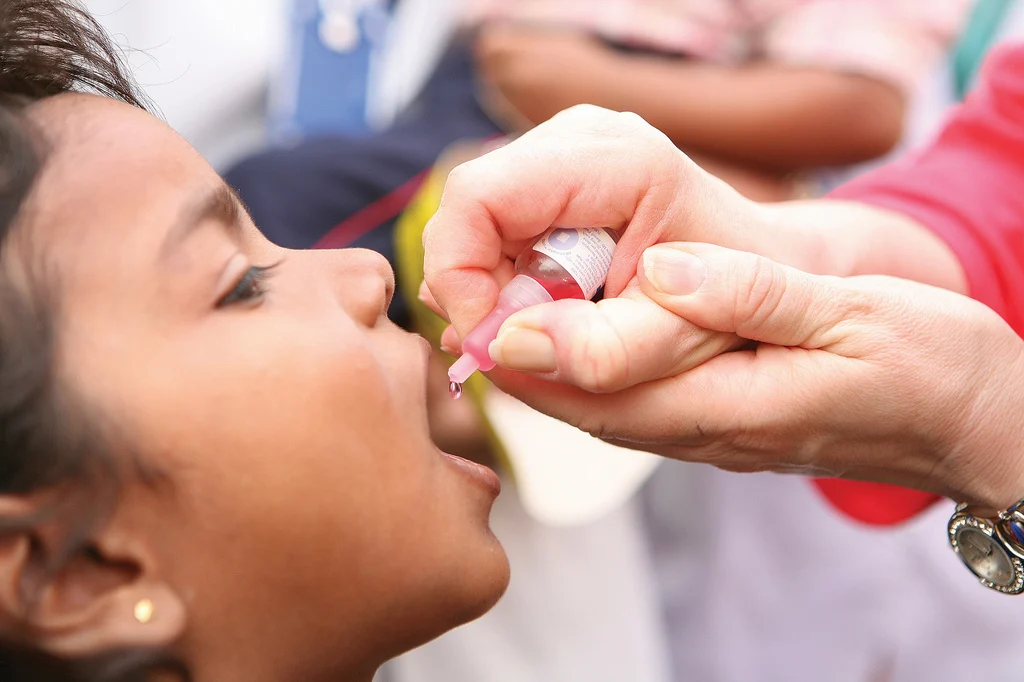
 Free Source Library — The recent breakthrough in polio vaccine development marks a pivotal moment in the global health landscape, promising to accelerate efforts towards eradication and a healthier future worldwide.
The Persistent Threat of Polio and Global Challenges
Poliomyelitis, commonly known as polio, remains a formidable infectious disease despite significant advances in vaccine science and international health initiatives. This highly contagious viral illness primarily targets children under five, often leading to permanent paralysis or death. Though eradicated from most parts of the world, polio continues to lurk in isolated regions, threatening to reverse years of progress.
Understanding the Poliovirus: Types, Transmission, and Impact
The poliovirus exists in three serotypes: Type 1, Type 2, and Type 3. Historically, wild poliovirus type 2 was declared eradicated in 2015, yet types 1 and 3 persist, particularly in areas suffering from political instability, weak healthcare systems, and inadequate sanitation. The primary mode of transmission is fecal-oral, often exacerbated by poor sanitation, contaminated water sources, and crowded living conditions.
Once infected, individuals can carry and spread the virus silently, especially in asymptomatic cases, fueling outbreaks. The virus invades the nervous system, damaging motor neurons and leading to paralysis, often irreversible and sometimes fatal. The social and economic costs of polio outbreaks are profound, affecting families, communities, and entire economies.
Historical Context and Progress Toward Eradication
The global fight against polio has been one of the most ambitious public health campaigns, initiated after the discovery of the effective polio vaccine by Jonas Salk in 1955. The subsequent development of the oral poliovirus vaccine (OPV) by Albert Sabin in the 1960s greatly facilitated mass immunization efforts due to its ease of administration and low cost.
Over decades, worldwide vaccination campaigns led to a dramatic decline in cases—by over 99% since 1988, when the Global Polio Eradication Initiative (GPEI) was launched. As of today, wild poliovirus remains endemic in only a handful of countries, including Afghanistan and Pakistan. Nonetheless, sporadic outbreaks, vaccine-derived polioviruses (VDPV), and immunity gaps pose ongoing challenges.
Limitations of Existing Vaccines and the Need for Innovation
Current Vaccines: Strengths and Weaknesses
- Oral Polio Vaccine (OPV): Live, attenuated vaccine administered orally; inexpensive and easy to distribute. Its ability to induce strong mucosal immunity helps interrupt virus transmission effectively. However, in rare cases, it can revert to a virulent form, causing vaccine-associated paralytic poliomyelitis (VAPP) or circulating VDPV outbreaks, particularly in under-immunized populations.
- Inactivated Polio Vaccine (IPV): Contains killed virus administered via injection; safer with no VAPP risk. It induces systemic immunity but less effective at mucosal surfaces, making it less ideal at halting virus transmission in endemic areas. It also requires trained healthcare personnel for injections and consistent cold chain maintenance, which can be challenging in resource-limited settings.
Gaps and Challenges in Current Vaccination Strategies
Many regions face issues such as logistical barriers, vaccine hesitancy, and political instability, hinder effective coverage. Additionally, the emergence of VDPVs underscores the need for vaccines with improved safety profiles and broader immunity. The limitations of existing vaccines create an urgent demand: a new, more efficacious, and safer immunization paradigm that can seamlessly integrate into existing health infrastructures.
The Breakthrough: Designing a Next-Generation Polio Vaccine
Technological Innovations Driving the New Vaccine
The latest vaccine breakthrough leverages cutting-edge biotechnology—particularly recombinant viral vectors and genetic engineering—to craft a vaccine with unprecedented efficacy and safety. Instead of relying solely on weakened or inactivated viruses, scientists utilize a recombinant viral vector platform that delivers critical poliovirus antigens directly into human cells, stimulating a comprehensive immune response.
This recombinant approach involves inserting genetic sequences coding for the poliovirus’s key surface proteins into a benign, carrier virus—often a well-studied, non-pathogenic virus. When administered, the vector infects the host’s cells, prompting them to produce the poliovirus antigens internally. This process prompts the immune system to recognize and respond robustly without the risk of causing disease.
Design Features and Advantages
- Enhanced Safety Profile: The vaccine’s design minimizes the risk of vaccine-derived strains, addressing one of the primary limitations of OPV.
- Broad and Durable Immunity: It induces both humoral (antibody-mediated) and cellular immune responses, essential for long-lasting and comprehensive protection.
- Stimulation of Mucosal Immunity: Critical for blocking transmission, mucosal immune responses at the gut lining are activated, reducing viral shedding even in asymptomatic individuals.
- Scalable Production: The recombinant platform is amenable to large-scale manufacturing, promoting rapid deployment and distribution, especially in low-resource areas.
- Thermal Stability: Innovations in vaccine formulation confer better stability at varying temperatures, easing cold chain requirements in remote settings.
From Development to Deployment: The Clinical Trial Journey
Phases of Clinical Testing
The development process for this vaccine adhered to rigorous standards, progressing through multiple phases:
- Preclinical Studies: Laboratory and animal models demonstrated safety and potential immunogenicity, guiding dose selection.
- Phase I Trials: Small groups of healthy adult volunteers evaluated safety and immune responses, confirming tolerability.
- Phase II Trials: Larger cohorts, including children in endemic regions, assessed optimal dosing, safety, and immunogenicity.
- Phase III Trials: Extensive multi-country trials involving thousands of participants demonstrated high efficacy across diverse populations, with no significant adverse events.
Key Clinical Findings and Implications
The Phase III trial results have been particularly encouraging:
- Over 95% efficacy in preventing poliovirus infection across all tested strains.
- Induction of durable immunity lasting beyond a year, reducing booster needs.
- Absence of serious adverse effects, affirming safety even in vulnerable populations.
- Effective stimulation of mucosal immunity, critical for halting virus transmission in community settings.
Technical Comparison: Novel Vaccine vs. Traditional Vaccines
| Feature | Traditional OPV | Traditional IPV | New Recombinant Vaccine |
|---|---|---|---|
| Viral Type | Live attenuated | Inactivated (killed) | Recombinant viral vector carrying poliovirus antigen |
| Production Complexity | Moderate | High (requires inactivation process) | Lower (scalable recombinant technology) |
| Vaccine-derived Risk | Yes (rare VAPP cases) | No | Minimal or none |
| Immunity Type | Mucosal + systemic | Systemic only | Mucosal + systemic |
| Stability & Storage | Moderate | High cold chain dependency | Enhanced stability, less cold chain reliance |
| Cost & Scalability | Low, suitable for mass immunization | Higher, logistical challenges | Moderate, with potential for reduction over time |
Strategic Implications for Global Eradication
The integration of this innovative vaccine into existing immunization programs could be transformative. Its high efficacy and safety profile make it suitable for routine immunization schedules and outbreak responses alike. Additionally, its scalability and stability are critical in reaching remote or conflict-affected zones, where traditional cold chain and storage are problematic.
Complementary Public Health Measures
Vaccination alone cannot eradicate polio; it must be coupled with improved sanitation, water quality, and surveillance systems. Enhanced detection of poliovirus circulation through environmental surveillance allows for targeted immunization campaigns and rapid outbreak containment.
Challenges and Future Directions
- Manufacturing and Distribution: Scaling up production to meet global demand while ensuring affordability.
- Regulatory Approvals: Navigating approval pathways across different countries and regions.
- Equity in Access: Ensuring marginalized populations receive vaccines, overcoming geopolitical and logistical barriers.
- Monitoring & Surveillance: Implementing robust data collection to evaluate vaccine impact and address emerging challenges.
Path to a Polio-Free Future
Action Framework
- Accelerate Regulatory Approvals: Engage with WHO and national health authorities early for streamlined approval processes.
- Manufacture at Scale: Invest in global manufacturing capabilities, including technology transfer to developing countries.
- Implement Universal Coverage: Conduct outreach to vulnerable populations, especially in conflict zones.
- Enhance Surveillance: Expand environmental and clinical surveillance to detect any remaining or emergent polioviruses.
Expected Impact and Long-term Benefits
Widespread adoption of this next-generation vaccine could reduce poliovirus circulation to zero, eradicating the disease entirely. It would also establish a blueprint for vaccine innovation applicable to other infectious diseases, moving humanity toward a new era of disease control and prevention.
Deep Dive: Real-World Case Scenarios and Lessons Learned
Case Study: Polio Outbreak in a Low-Resource Setting
In a hypothetical outbreak scenario in a remote region with limited healthcare infrastructure, deployment of the recombinant vaccine demonstrated significant advantages. Its thermal stability reduced cold chain reliance, enabling broader coverage. The rapid deployment and high efficacy resulted in swift containment, showcasing the vaccine’s potential to manage outbreaks efficiently in challenging settings.
Lessons from Past Campaigns
- Consistency in vaccine coverage is crucial; gaps can sustain transmission.
- Community engagement enhances acceptance and uptake.
- Integration with sanitation and water projects amplifies impact.
Frequently Asked Questions (FAQs)
What makes this new vaccine different from existing ones?
The novel vaccine employs recombinant technology to offer higher safety, broader immunity (both systemic and mucosal), and greater stability. Its design minimizes risks like VAPP and VDPV while maintaining high efficacy.
Can this vaccine completely eradicate polio?
If deployed globally with high coverage and in conjunction with sanitation and surveillance efforts, it has the potential to eliminate all polioviruses. However, eradication requires sustained commitment, addressing challenges, and political will.
Is this vaccine safe for children and adults?
Extensive clinical trials have demonstrated a favorable safety profile across age groups, including children, who are the primary target for routine immunization campaigns.
When will this vaccine be available worldwide?
While some regulatory processes are underway, widespread availability depends on approval timelines, manufacturing scale-up, and distribution logistics. It is expected to roll out in phases over the next few years.
How does this vaccine impact existing vaccination programs?
It complements and potentially replaces older vaccines by offering enhanced safety and efficacy, facilitating the goal of comprehensive eradication. Transition plans will be developed in collaboration with global health authorities.
Conclusion: A Collective Step Toward a Disease-Free Future
The development of this advanced polio vaccine encapsulates the power of scientific innovation and global cooperation. Its potential to finally eradicate polio is within reach, but success relies on coordinated action, equitable access, and unwavering commitment. With continued efforts, a world free of polio is not just an aspiration but an achievable reality—one that promises healthier children, resilient communities, and a legacy of triumph over infectious diseases.
References
- World Health Organization. Poliovirus Eradication Strategy. https://www.who.int/publications/i/item/9789240022646
- Global Polio Eradication Initiative. Annual Status Reports. https://polioeradication.org